

A workplace injury can raise urgent questions about medical care, lost income, and what to do next. Workers’ compensation lawyers serving West Covina, Pomona, Ontario, Covina, Chino, Fontana, San Bernardino, Baldwin Park, and Azusa can help workers understand the claims process and consider their options.
When an injury affects your health and ability to work, clear answers matter. Knowing what to look for in attorney listings can help you decide what kind of support fits your situation.
This guide covers common claim challenges, choosing a doctor, and practical factors to consider when reviewing attorney listings. You’ll learn what to document and how to approach the next step.
Key Takeaways
- Learn which medical care and wage-replacement benefits may apply after a Kentucky workplace injury.
- Spot common claim-denial issues, from late reporting and incomplete records to disputes about whether an injury is work-related.
- Understand how to approach doctor selection and document symptoms when an injury develops over time or involves an occupational condition.
- Use practical criteria to assess Louisville attorney listings and identify the kind of support your claim may need.
Are you searching for a top workers’ compensation lawyer in Louisville, Kentucky?
While looking for local guidance, clients facing workplace injuries often wonder how to navigate complex state laws and secure the support they need. Although our firm, the Law Offices of Michael D. Payne, primarily assists clients within our California service areas rather than Louisville, Kentucky, understanding how workers’ compensation benefits function remains crucial. Workers’ compensation benefits generally help cover medical treatment and lost income after an on-the-job injury, and qualified workers compensation lawyers can review claim records, explain potential benefits, and help address disputes.
Medical benefits typically cover treatment considered necessary under applicable state rules. Wage-replacement and disability benefits may apply when an injury limits or prevents work. Keep provider records, work restrictions, and treatment recommendations together. For example, a doctor’s written lifting limits can help explain why you cannot perform your regular duties.
Some systems provide temporary disability benefits during recovery and permanent disability benefits for lasting impairment. Vocational rehabilitation may help if an injury prevents a return to previous work. Eligibility and benefit calculations depend on the jurisdiction and how the injury affects work capacity. Review these details carefully before making decisions about a claim.
Families may be eligible for death benefits after a work-related fatality, subject to applicable rules. Other potential benefits include prescribed care, medical devices, and treatment-related travel expenses. Keep receipts and provider instructions with claim documents to show what each expense covers and how it relates to treatment.
Legal fees and allowable charges depend on applicable state rules and the arrangement with the attorney. The cost depends on the case and is given after a quote request; relevant factors include claim complexity and the work required. Review the fee terms before retaining counsel.
A knowledgeable attorney can assess a claim, explain what to document, communicate about disputes, and help pursue benefits. Consider seeking legal guidance if an insurer challenges whether the injury is work-related, questions medical evidence, or denies benefits. Early advice can help organize records and clarify next steps while you focus on treatment and recovery.
Reasons workers’ compensation claims are denied
In Southern California, workplace injury claims may be challenged over timing, medical evidence, or whether the injury arose from work. Knowing the common disputes can help you preserve useful records and respond thoughtfully when an insurer questions your claim.
Claim filing and denial reasons
Claim procedures and deadlines depend on the applicable state system, so identify the correct process before filing. Late reporting, paperwork errors, incomplete medical records, and inconsistent statements can complicate a claim. An insurer may dispute whether an accident happened at work, whether an occupational condition is work-related, or whether a pre-existing condition explains your symptoms.
Tell the doctor about prior treatment, including care for an injury that has returned or worsened. Keep medical records and workplace reports consistent. If your claim is denied, review the written decision and follow the applicable appeal process. An appeal may challenge a denial or a failure to pay benefits you believe are owed.
Retaliation after filing a claim
An employer may pressure or retaliate against a worker after a claim is filed, creating a separate dispute. Keep messages, schedule changes, disciplinary notices, and written explanations of employment actions. Record dates and the names of people involved. These details can help establish what happened and whether workplace pressure followed an injury report.
Don’t let workplace pressure undermine your medical record. Report symptoms accurately to your doctor, attend appointments, and keep copies of claim communications. If an employer’s conduct affects your ability to pursue a claim, discuss the issue with an attorney familiar with workplace injury disputes.
A workplace accident may also involve someone other than the employer. A negligent subcontractor, equipment or machinery manufacturer, property owner, cleaning company, or driver could be responsible for damages. For example, a driver’s conduct in a work-related vehicle collision may raise issues separate from a workers’ compensation claim. Identify who controlled the hazard and preserve incident records to clarify whether a third-party claim may apply.
Can I choose my own doctor for a work injury?
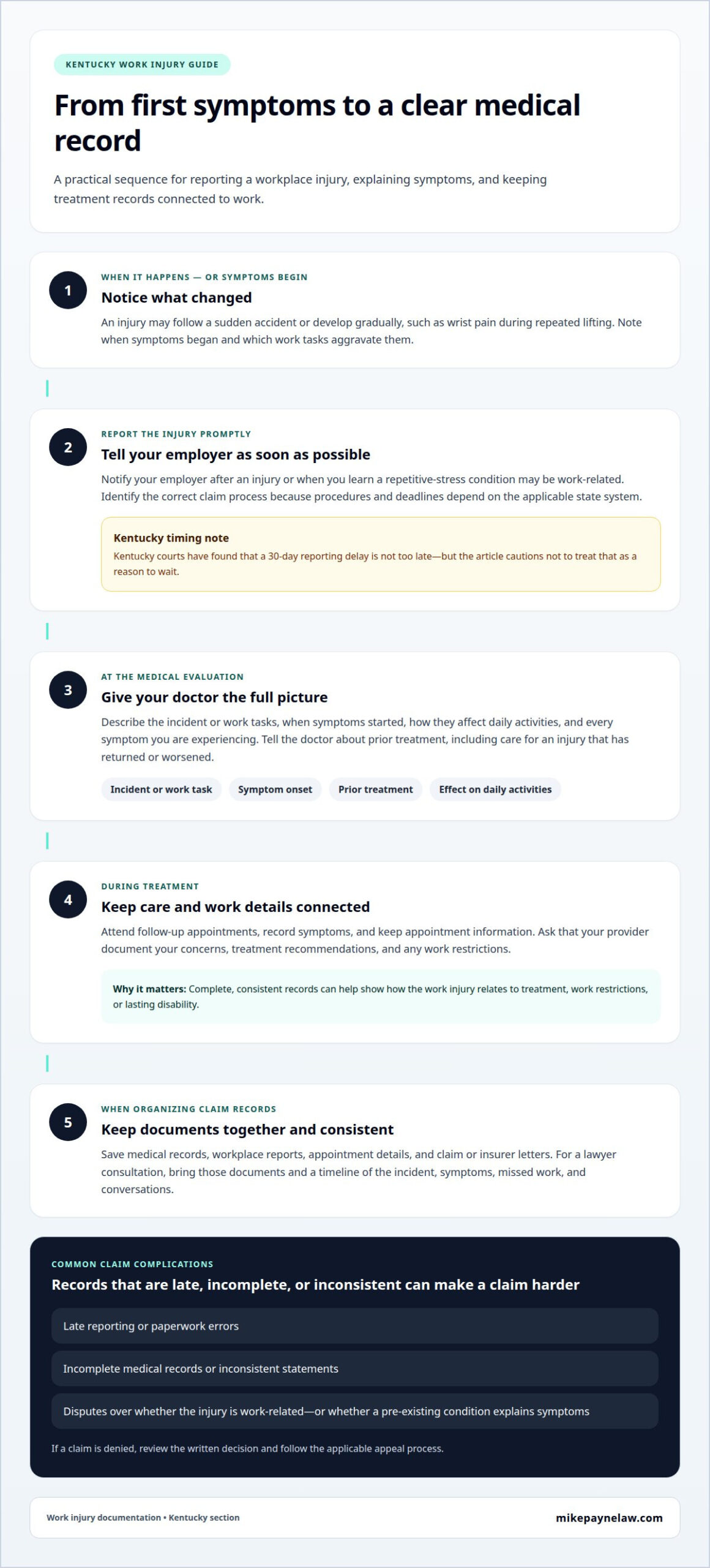
Kentucky workers may have important rights regarding medical treatment and physician selection. After a sudden accident or gradual-onset condition, prompt reporting and clear medical records can help connect treatment to work.
Notify your employer as soon as possible after an injury or learning a repetitive stress condition may be work-related. Kentucky courts have found that a 30-day reporting delay is not too late, but don’t treat that as a reason to wait. For example, report wrist pain that builds during repeated lifting, even if symptoms first seem minor.
Repetitive stress injuries and occupational diseases can develop over time rather than after one event. Tell your doctor when symptoms began, which work tasks aggravate them, and how they affect daily activities. The same approach matters after a construction-site electrical injury: describe the incident and every symptom during medical evaluation, then attend follow-up appointments.
Workers’ compensation benefits may include a worker’s choice of doctor, along with coverage for reasonable and necessary treatment. Record your symptoms, keep appointment information, and make sure your provider documents your concerns. A complete account can show how the work injury relates to treatment, work restrictions, or lasting disability.
Bring the employer’s injury report, medical records, appointment details, and claim or insurer letters to a lawyer consultation. Add a timeline of the incident, symptoms, missed work, and conversations with your employer. For a repetitive or occupational condition, include the tasks that trigger symptoms and when they began.
Photographs can document visible injuries or the scene after an accident. Keep relevant messages and witnesses’ names and contact information. These details help organize a claim review and reveal gaps between the incident report, medical records, and claim communications.
After a construction-site electrical injury, preserve incident documents and identify witnesses who saw the event or its immediate aftermath. Tell your doctor about delayed symptoms rather than assuming they are unrelated. Accurate, consistent details help Kentucky workers explain the injury and its effects.
Louisville workers’ compensation attorney listings
Louisville listings can help you identify attorneys who handle workplace injury claims. Look beyond ranking labels and assess relevant experience and how clearly each listing describes its services.
Comparing listed attorneys
Use each listing to compare practice focus, case types, and the attorney’s role in handling claims. A profile focused on workplace injuries may be more relevant than one emphasizing unrelated matters. Note whether it explains how the attorney handles disputed medical evidence, delayed benefits, or insurer decisions.
Look for specific descriptions of case work, not just broad claims of success. Recognition can offer context: Super Lawyers selects the top 5 percent of attorneys in each state for its annual list, while its Rising Stars list selects the top 2.5 percent. Neither designation tells you how an attorney would handle your claim.
License and track record checks
To verify a license, match the attorney’s full name with Kentucky’s official attorney records and review the listed status and disciplinary information. Confirm that the listing identifies the attorney you would speak with, not just a firm or intake team. Clear identification matters before sharing claim documents.
Assess experience by looking for relevant workplace injury cases and asking how the attorney handles insurer disputes, medical evidence, and appeals. Past results cannot predict what another Louisville worker will recover. Focus on whether the attorney can explain the process and the issues that may affect your claim.
Before deciding, compare listings with your situation: a disputed work connection, an occupational condition, or an insurer’s refusal to pay may call for different experience. A useful conversation should address your injury, records, work restrictions, and next steps for pursuing benefits. Choose based on relevance and clarity, not ranking alone.
Discuss your workplace injury and the questions raised by your claim.
Law Offices of Michael D. Payne
Law Offices of Michael D. Payne represents people injured in car, motorcycle, and bicycle accidents, as well as slip and fall incidents. If a workplace accident also involved one of these events, the firm can help you understand the related personal injury claim and how it differs from a workers’ compensation claim. For example, a collision while working or a fall on another party’s property may raise separate questions about responsibility and recovery. The firm’s representation applies to those accident-related claims, not Kentucky workers’ compensation benefits. If you’re injured and want to discuss whether the firm can help with a related personal injury claim, contact Law Offices of Michael D. Payne.
Take the next step with a clear plan
The right next step is a focused review of your situation, not a rushed decision. Workers’ compensation lawyers can help you understand what information may matter and how a disputed claim could proceed. Organize your records and be ready to explain what happened, how the injury affects your work, and what questions remain.
Law Offices of Michael D. Payne handles workplace injury matters. If a workplace incident also involved a vehicle crash, motorcycle collision, or slip and fall, the firm can help with the separate injury claim. The firm represents people in car accidents, motorcycle accidents, and slip and fall cases. Each claim depends on its own facts.
Contact Law Offices of Michael D. Payne to discuss your situation. Taking a thoughtful next step can help you move forward with greater confidence.
Frequently Asked Questions
How long do I have to appeal a denied claim?
Kentucky uses Form 101 to formally appeal a denied workers’ compensation claim, but the appeal deadline depends on the claim’s procedural circumstances. Don’t confuse the appeal process with the separate rule that a formal claim must be filed in Frankfort within two years. Keep the denial notice and related claim papers together, then promptly get guidance on the filing deadline that applies to your case.
What Benefits Can You Receive?
Depending on the injury and its effects, benefits may include medical care, wage replacement, disability payments, vocational rehabilitation, or death benefits for eligible family members. They may also cover prescriptions, medical devices, and travel related to treatment. Keep receipts, travel records, and provider instructions together to connect expenses and care to the workplace claim.
What if my injury prevents me from returning to work?
If your injury prevents you from returning to your previous job, vocational rehabilitation may help you pursue work suited to your limitations. Disability benefits may also apply, depending on whether the impairment is temporary or permanent and how it affects your ability to earn. Keep written work restrictions and treatment updates, and accurately report changes in your capacity during claim discussions.
What steps should I take after a workplace injury in Louisville?
Report the injury to your employer as soon as possible, seek medical attention, and describe every symptom to your provider. Preserve photographs, incident details, and witnesses’ names and contact information. For example, if pain from a machine injury worsens later, note when it changes and tell your doctor at a follow-up visit. Keep copies of reports and appointment records.
Are warehouse workers entitled to workers’ comp?
Kentucky’s workers’ compensation system covers most employees, including full-time, part-time, seasonal, and temporary workers. A warehouse employee injured while doing assigned work may therefore have a claim to pursue. Worker classification matters because some independent contractors may be excluded. Job titles alone do not settle the question; records describing the work arrangement and injury can help clarify the claim.
Can I get workers’ comp after a car accident at work?
A work-related car accident may support a workers’ compensation claim for resulting injuries. The circumstances matter, including the work task underway and the medical effects of the crash. A driver or another responsible party may also be involved in a separate third-party claim. Preserve accident and treatment records, and identify witnesses and other involved parties so each potential claim can be assessed.