

A workers’ comp vs. personal injury claim comparison comes down to fault, available damages, and who caused the injury. Workers’ compensation generally provides benefits for a work-related injury without requiring proof that the employer was negligent. A personal injury claim may involve showing that another party was responsible, and may include damages such as pain and suffering.
It’s natural to think you must choose one path. But if someone outside your employer’s business caused your workplace injury, you may be able to pursue workers’ compensation and a separate personal injury claim. Understanding the difference can clarify how the claims serve separate purposes and why benefits already paid may affect a later settlement.
This article explains what each claim may cover, how workers’ compensation can limit a lawsuit against an employer, and when a third-party claim may be possible alongside benefits. You’ll also learn why a personal injury claim may involve broader damages and what factors matter when weighing the claims after a workplace accident.
Key Takeaways
- Workers’ compensation generally provides benefits for work-related injuries without requiring proof of fault, while a personal injury claim requires evidence that another party caused the harm.
- Workers’ compensation is usually the exclusive remedy against an employer for a workplace injury, so a lawsuit against the employer may be limited.
- Pain and suffering may be available in a personal injury claim, but workers’ compensation generally does not pay separate damages for it.
- If someone outside your employer’s business caused your injury, you may be able to pursue both claims; benefits already paid may affect the personal injury recovery.
Workers’ Compensation vs Personal Injury: What’s the Difference?
Workers’ compensation generally pays benefits for a work-related injury without requiring proof of fault; a personal injury claim requires proof another party caused harm. Accepting benefits can limit a lawsuit against an employer, while settling a personal injury claim may require reimbursing the workers’ compensation insurer.
No-Fault Workers’ Compensation Benefits
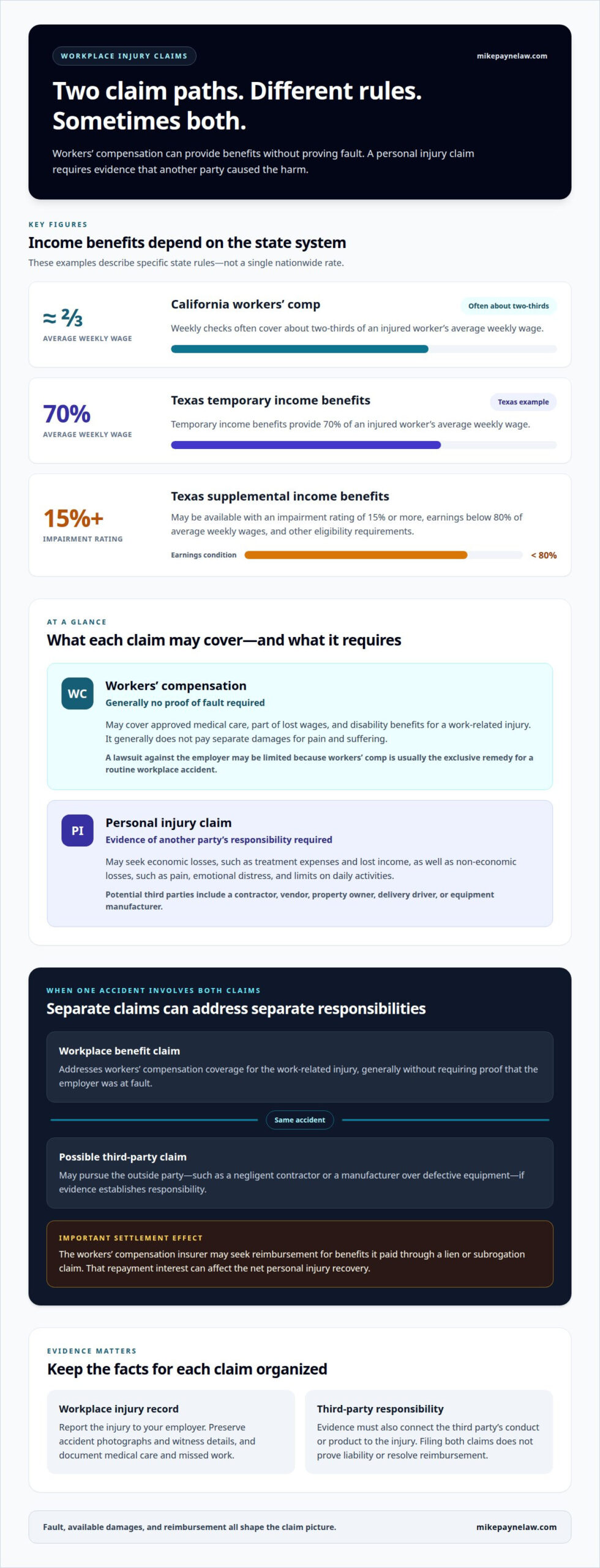
After an on-the-job injury, workers’ compensation may cover approved medical care, part of lost wages, and disability benefits. The key difference is fault: an employee generally doesn’t need to prove employer negligence to seek benefits. According to the California Division of Workers’ Compensation, weekly checks often cover about two-thirds of an injured worker’s average weekly wage.
Temporary and Long-Term Income Benefits
Income benefits can address different stages of a workplace injury. In Texas, temporary income benefits provide 70% of an injured worker’s average weekly wage. Supplemental income benefits may be available with an impairment rating of 15% or more and earnings below 80% of average weekly wages, subject to other eligibility requirements. Impairment and lifetime income benefits are distinct categories; eligibility depends on the applicable state system and injury findings.
Personal Injury Recovery and Benefit Effects
A personal injury recovery may not simply add to workers’ compensation payments. The workers’ compensation insurer may seek reimbursement for benefits it paid through a lien or subrogation claim against a settlement. For example, after a work-related car accident caused by another driver, the injured worker may have both claims, but the insurer’s repayment interest can affect the net recovery.
Benefits Compared With Recoverable Damages
Workers’ compensation focuses on medical expenses, wage replacement, and disability benefits related to a workplace injury. A personal injury claim may seek compensation for injury-related losses, but typically depends on showing that another party was responsible. Workers’ compensation generally doesn’t pay separate damages for pain and suffering.
| Option | Fault required | Potential recovery | Key risk |
|---|---|---|---|
| Workers’ compensation | Generally no | Medical care, wage and disability benefits | Employer lawsuit may be limited |
| Personal injury | Yes | Economic and non-economic damages | Insurer reimbursement may reduce settlement |
Consider who caused the injury, what losses are involved, and whether an insurer may seek reimbursement.
The effect of a workers’ compensation claim on lawsuits against an employer
A workers’ compensation settlement follows benefit rules; a personal injury settlement reflects proven liability and losses. A third-party lawsuit may name a negligent contractor, vendor, property owner, or product manufacturer. To manage these types of liabilities, businesses often consult firms like MyGen Insurance Brokers to navigate tailored risk management and commercial coverage.
Fault-Based and No-Fault Claims
Workers’ compensation generally provides benefits without requiring proof that the employer caused the injury. A personal injury lawsuit, by contrast, requires evidence that another party’s actions caused harm. In many cases, workers’ compensation is the exclusive remedy for a routine workplace accident, limiting a lawsuit against the employer. Intentional harm may be treated differently, depending on applicable law.
Claims for the Same Accident
One accident can lead to separate claims involving different defendants and legal tests. For example, a worker injured by faulty equipment may seek workers’ compensation benefits and pursue the manufacturer over a defective product. The benefit claim addresses workplace coverage; the personal injury claim must establish the third party’s responsibility. A workers’ compensation insurer may seek reimbursement from a personal injury settlement for benefits already paid.
Filing Both Types of Claim
Keep evidence and paperwork for each claim organized from the start. Report the workplace injury to your employer, preserve accident photographs and witness details, and document medical care and missed work. For a personal injury claim, evidence must also connect the third party’s conduct or product to the injury. Filing both claims does not resolve reimbursement issues or prove liability.
Third-Party Workplace Injury Claims
A third party is someone other than the employer who may have caused the workplace injury. Possible defendants include a careless contractor, vendor, property owner, delivery driver, or manufacturer of defective equipment. The claim depends on evidence of negligence, a defect, or another basis for responsibility. Workers facing a worksite accident involving an outside party can review construction worksite accident claims.
Pain and suffering damages
Workers’ compensation generally doesn’t pay separate damages for pain and suffering or emotional distress. A personal injury claim may seek those non-economic losses when evidence shows another party’s negligence caused the injury. For example, a worker injured by a careless driver may claim physical pain alongside medical expenses and lost income. This difference can affect the potential value of each claim.
Personal injury damages can include economic and non-economic losses. Economic damages relate to measurable costs, such as treatment expenses and income lost during recovery. Non-economic damages address effects without a simple bill, including ongoing pain, emotional distress, and limits on daily activities. Medical records documenting treatment, along with a clear account of how the injury disrupts work or home life, can help show those effects.
Some personal injury claims may also seek punitive damages. These are separate from compensation for medical costs, lost income, or suffering, and may apply in some cases involving especially blameworthy conduct. They aren’t automatic. The claim must establish the required legal basis, and evidence about the responsible party’s actions can affect whether this category of damages is available.
Document damages with specific evidence. Keep medical records, bills, wage information, and notes about pain or changes to daily routines. For example, record when a back injury prevents lifting at work or interrupts sleep. A lawyer can connect those details to the losses claimed and assess how negligence, injury severity, treatment, and recovery affect the case. Workers’ compensation focuses on benefits such as medical care and wage replacement, not separate damages for suffering.
Pursuing workers’ comp and personal injury claims together
A workplace accident caused by someone outside the employer can create two potential routes to recovery. Workers’ compensation addresses eligible workplace benefits, while a personal injury case seeks damages from the responsible third party. For example, a delivery driver who strikes a worker may face a separate claim while the injured employee pursues benefits.
The claims serve different purposes. Workers’ compensation can help cover medical expenses, part of lost wages, and disability benefits. A third-party personal injury claim may seek additional losses, including pain and suffering, when evidence establishes the other party’s responsibility. The claims can proceed at the same time, but pursuing both doesn’t mean the injured worker receives every payment twice.
Coordinate records and tell each claim handler about the other claim. Keep medical bills, wage records, accident photographs, witness details, and communications together. These materials can show how the accident happened, who caused it, what treatment followed, and how the injury affected earning capacity. Consistent records also help distinguish the losses involved in each claim.
Account for reimbursement before accepting a personal injury settlement. A workers’ compensation insurer may assert a lien or subrogation interest for benefits it paid, affecting the settlement proceeds available to the injured worker. Review the proposed settlement alongside benefits paid and any reimbursement claim. The settlement’s headline amount alone doesn’t show the worker’s final recovery.
Identify every party involved, not just the employer. A contractor, property owner, careless driver, vendor, or product manufacturer may be responsible for a workplace injury. In complex third-party cases, uncovering liability often requires thorough fact-finding, an area where professional investigative firms like canadianinvestigations.com operate to gather crucial evidence. Preserving evidence linking that party’s conduct or product to the harm, while tracking medical expenses and wage losses, supports the separate liability claim.
If a third party may have caused your workplace injury, discuss coordinating both claims with an attorney before settling or resolving reimbursement issues.
Law Offices of Michael D. Payne: Car Accident Representation
Law Offices of Michael D. Payne represents people injured in car accidents, including workers hurt by another driver while on the job. For people in West Covina, Pomona, Ontario, Covina, Chino, Fontana, San Bernardino, Baldwin Park, and Azusa, legal guidance can help clarify how a personal injury case relates to workers’ compensation and what evidence may support responsibility and damages. The firm also represents people injured in motorcycle and bicycle accidents, as well as slip and fall incidents. Preserve accident reports, witness details, photographs, and medical records to help establish what happened and how the injury affected you. Contact Law Offices of Michael D. Payne to discuss your situation and possible next steps.
Take a Clear Next Step Toward Recovery
Before making decisions that could affect your recovery, organize the details showing how the injury affects your life. Keep accident records, treatment information, work history, and communications together. A clear timeline can help an attorney assess your options and identify questions that need attention.
Your workers comp vs personal injury claim decision should consider who may be responsible, which losses need documenting, and whether resolving one claim could affect another. A careful workers comp vs personal injury claim review can help clarify those choices before you commit to a course of action.
Law Offices of Michael D. Payne represents people in car accident, slip and fall, and motorcycle accident cases. If one of these injuries has disrupted your work and recovery, get guidance on possible next steps.
Contact Law Offices of Michael D. Payne to discuss your concerns and move forward with greater clarity.
Frequently Asked Questions
What’s the Time Limit To File a Personal Injury Claim?
The deadline depends on the state and claim type. Missouri generally gives an injured person five years to file a personal injury lawsuit, while Illinois usually allows two years. These periods can vary based on the circumstances and parties involved. Identify where and when the injury happened, then promptly get advice about the deadline that applies to your claim.
Can I Get Compensation for Pain and Suffering in a Workers’ Comp Case?
Workers’ compensation generally doesn’t award separate damages for pain and suffering. If someone outside your employer’s business caused the injury, a personal injury claim may seek compensation for those losses when liability is established. For example, keep a treatment journal noting pain, sleep disruption, and activities you can no longer manage. These details can help document the injury’s effects beyond medical bills.
Can You File Both?
Yes. When a third party caused your work-related injury, you may pursue workers’ compensation and a separate personal injury claim. For example, a worker hurt in a road collision while performing job duties could seek workplace benefits and bring a claim against the other driver. Keep records for each claim current, and account for any insurer reimbursement interest before resolving the personal injury case.
Can You Sue Your Employer After a Work Injury in Missouri or Illinois?
Usually, workers’ compensation is the primary remedy for an employee’s routine workplace injury, limiting a negligence lawsuit against the employer. The specific facts and applicable state law matter, including whether an exception applies. A separate claim may be possible against a responsible third party, such as a contractor or equipment manufacturer. Distinguish that party from your employer when evaluating a lawsuit.
How Can A Workers’ Compensation Attorney Help You?
A workers’ compensation attorney can help organize medical records, wage information, and evidence connecting an injury to job duties. If the insurer disputes treatment, disability, or return-to-work status, an attorney can address those issues through the claim process. They can also examine whether a third party may share responsibility and how a separate recovery could affect benefits.
How Long Does it Take to Settle a Workman’s Comp Case?
There’s no single settlement timeline for every work injury. A claim can take longer when medical treatment is ongoing, the degree of disability is disputed, or the insurer challenges whether care relates to the workplace injury. For example, unresolved questions about future treatment can complicate settlement discussions. Track treatment, missed work, and claim correspondence to make delays and disputed issues easier to identify.