

A denial is not the final word. If you’re deciding what to do if your insurance denies your claim in West Covina, Pomona, Ontario, Covina, Chino, Fontana, San Bernardino, Baldwin Park, Azusa, or the surrounding Southern California communities, get the denial and its reasons in writing, preserve your records and evidence, and act promptly. For California personal-injury claims, the general deadline to file suit is two years from the injury, according to the California Legislature.
A denial can leave you facing bills and uncertainty, but it does not automatically mean the insurer’s decision is correct. The reason given, the evidence supporting your claim, and the deadlines that apply all matter.
This guide explains common reasons insurers deny claims, practical steps to challenge a decision, and possible legal options if the company still refuses to pay. It also covers when an attorney from the Law Offices of Michael D. Payne may help, especially with an accident injury claim.
Key Takeaways
- Match the insurer’s stated reason for denial against your policy and claim evidence to identify what needs to be challenged.
- Build an organized appeal that directly answers the insurer’s concerns and supports your position with relevant records.
- If the insurer still refuses to pay, consider the review options and legal remedies that may apply to your type of claim.
- For an injury claim after a car, slip and fall, motorcycle, or bicycle accident, legal representation can help you assess the denial and pursue your claim.
What Should I Do If My Personal Injury Claim Was Denied In California?
If you’re wondering what to do if insurance denies my claim in Los Angeles, first identify the insurer’s reason and preserve records related to your injury and the accident.
-
Review the Denial Letter and Policy
Read the denial carefully and compare its explanation with the policy’s coverage, exclusions, conditions, and claim deadlines. California Insurance Code §10123.14 requires written denial notice with specific reasons and references to applicable policy provisions. For a homeowners, auto, or renters claim in Los Angeles, match each stated reason to the relevant policy language and your submitted claim. Keep the letter, policy, and insurer correspondence together. If you’re searching for what to do if insurance denies my claim in Los Angeles, this comparison helps pinpoint the issue to challenge.
-
Identify the Reasons for Denial
Pinpoint whether the insurer cites a missed deadline, incomplete paperwork, a coverage exclusion, or a disagreement about medical necessity. Health insurance denials may also involve eligibility, the care setting, or a service described as experimental. For medication denials, compare the letter with your plan’s formulary and follow its appeal instructions. California Health and Safety Code section 1367.22 addresses continued coverage for a person already taking a drug for a condition, even if it is removed from the formulary. Section 1367.21 addresses legal protections involving a claimed lack of FDA approval.
-
Gather Evidence to Challenge the Denial
Build a file that answers the insurer’s stated reason. For an injury claim, gather medical records, bills, accident photographs, witness details, repair records, and proof of lost income. Include the policy, denial letter, claim forms, and dated communications. For a medication appeal, add the prescription, treatment history, and records explaining why the drug is needed. Evidence should connect the loss or treatment to coverage and address the insurer’s specific objection. Keep copies and organize them by date before submitting your appeal.
What If The Insurance Company Still Refuses To Pay?
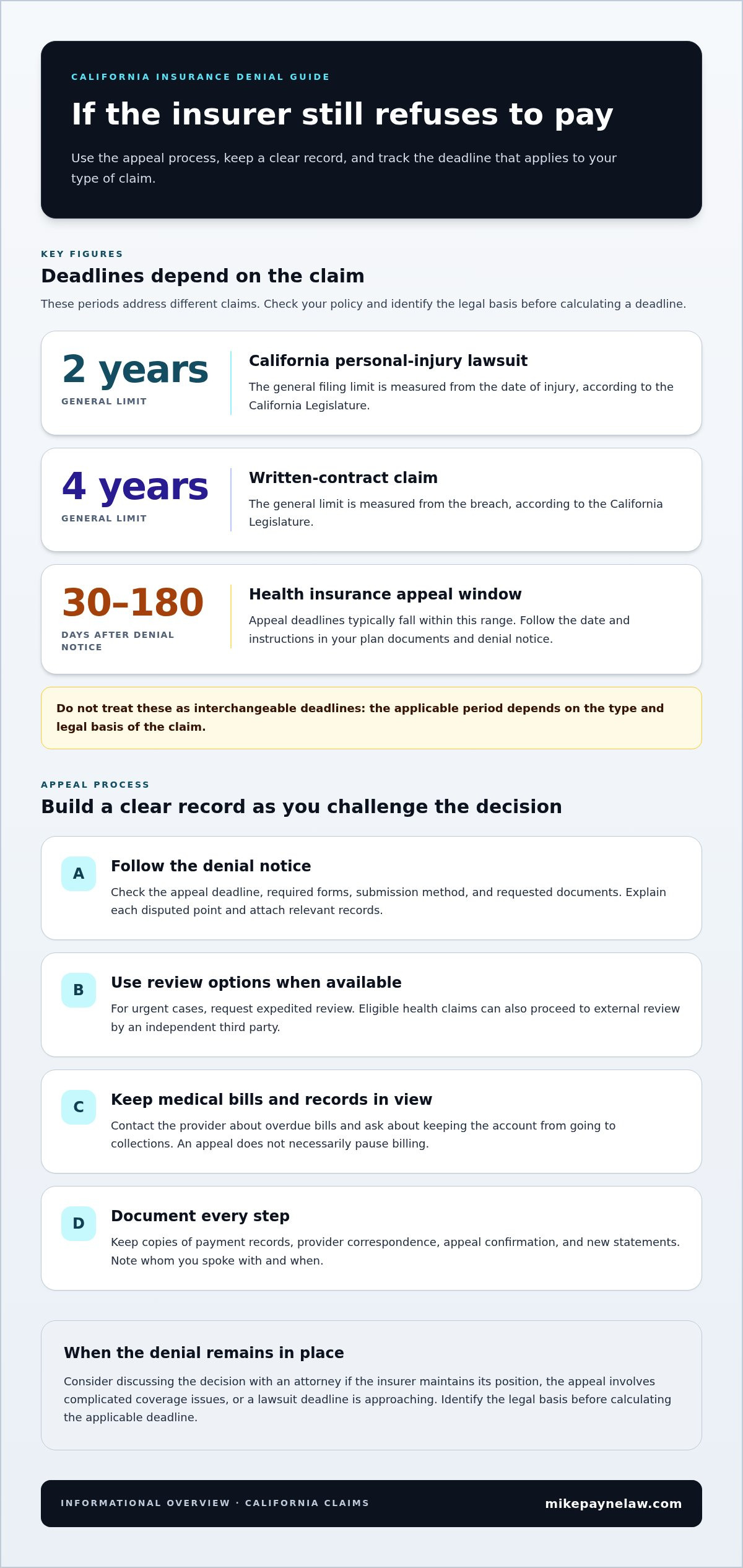
Use the appeal process, preserve your options, and track every deadline. For an injury lawsuit, the California Legislature sets a general two-year limit from the injury date; a written-contract claim generally has a four-year limit from breach.
-
Check Appeal Deadlines and Instructions
Read the denial letter for the appeal deadline, required forms, submission method, and documents the insurer needs. Health insurance appeal deadlines typically range from 30 to 180 days after the denial notice, so follow the date stated in your plan documents. Explain each disputed point and attach relevant medical records. If the insurer cancels health coverage, use the notice’s appeal instructions to challenge that decision too. If you need to re-evaluate your health plan options or better understand coverage terms, The Modern Medicare Agency can help guide you through Medicare choices. In urgent cases, request expedited review; eligible health claims can also proceed to external review by an independent third party.
-
Address Medical Bills During the Appeal
Contact the medical provider about overdue bills while the appeal is pending, and ask about keeping the account from going to collections. Give the billing department the insurer’s denial letter and appeal confirmation, then document whom you spoke with and when. Continue reviewing new statements rather than assuming an appeal pauses billing. Keep copies of payment records and provider correspondence alongside your appeal documentation.
-
Consider Legal Representation and Court
Discuss the denial with an attorney if the insurer maintains its position, the appeal raises complicated coverage issues, or a lawsuit deadline is approaching. A California personal-injury lawsuit generally must be filed within two years of injury; a written-contract claim generally has four years from breach, according to the California Legislature. These periods address different claims, so identify the legal basis before calculating a deadline. For an injury claim after a crash, motor vehicle accident representation can help assess the insurer’s position and possible next steps.
Common reasons insurance claims are denied
Identify the insurer’s stated reason before preparing a dispute. The denial category determines which policy language, accident evidence, medical records, or filing documents matter most.
- Compare the denial with the policy terms and the claim you submitted. An insurer may reject a claim because the policy excludes the loss, the evidence does not establish coverage, or a required filing deadline was missed. Check the insurer’s explanation against the applicable policy language and the documents in your file. Distinguish a missing-paperwork issue from a genuine coverage dispute before preparing an appeal.
- Check whether the insurer disputes medical necessity or the care setting. Health insurance plans may deny a service they consider unnecessary or inappropriate for the specific healthcare setting or level of care. A treatment approved for one setting may face questions in another. Review the denial’s explanation against treatment records and the care requested, then identify which facts directly answer the insurer’s stated concern.
- Review medication denials for formulary, eligibility, or experimental-treatment reasons. A plan may deny a drug it considers investigational for the condition, or a benefit unavailable under the member’s coverage. Prior authorization doesn’t guarantee payment. California Health and Safety Code section 1367.22 addresses continued coverage for someone already taking a drug for a condition, even after formulary removal. Section 1367.21 addresses protections involving claimed lack of FDA approval.
- Use the denial reason to shape your next filing, not a generic response. If the insurer cites missing records, identify the exact document and submit it with a dated explanation. If it disputes eligibility or medical necessity, organize the policy terms and relevant records around that issue. A law firm consultation may help clarify a complex dispute; don’t assume the phrase “free consultation” describes every firm’s terms.
Bad faith insurance practices and legal remedies
A claim denial alone does not prove bad faith. Preserve the denial letter, policy, claim documents, and communications so an attorney can assess the insurer’s handling under California law.
-
Identify Bad Faith Insurance Practices
Review the insurer’s investigation, communications, and explanation for signs of unfair handling. California Insurance Code §790.03 is cited as prohibiting unfair claims practices, while the Fair Claims Settlement Practices Regulations set standards for communications, investigations, and claim decisions. Save letters, emails, call notes, and requests for documents. A delay or disagreement alone doesn’t establish bad faith; focus on specific conduct and its effect on your claim.
-
Seek Legal Help for Denied Claims
Ask an attorney to review the policy, denial letter, claim file, and insurer’s stated reasons together. For an injury claim, legal representation can help evaluate the underlying case and whether the insurer’s handling raises separate concerns. An attorney can explain the difference between disputing coverage and alleging bad faith. Bring dated correspondence, submitted evidence, and the insurer’s responses so the review reflects the actual record.
- After completing the insurer’s internal appeal, consider filing a complaint with the California Department of Insurance. California residents can submit a complaint for free, but a complaint is not the same as a court judgment or a guarantee of payment. Keep copies of the complaint and supporting documents. If the dispute still involves unpaid benefits or an injury claim, discuss litigation options and applicable deadlines with an attorney.
If an insurer’s conduct raises concerns, discuss your denied injury claim with an attorney and review the evidence and available legal options.
Law Offices of Michael D. Payne: Car Accident Representation
Law Offices of Michael D. Payne represents people injured in car accidents who face an insurer’s denial, delay, or disputed settlement. The firm can review how the denial affects your injury claim, assess the available evidence, and pursue car accident representation when an insurer refuses fair payment. The firm also represents people in slip and fall, motorcycle, and bicycle accident cases.
Consider legal help if the insurer questions fault, challenges your injuries, or offers a settlement that does not account for the documented harm. Organized records, including the denial letter, medical documentation, and insurer communications, can help explain the dispute and guide next steps. Contact Law Offices of Michael D. Payne to discuss your injury claim and possible representation.
Take the Next Step With a Clear Plan
An unresolved claim can leave you focused on paperwork instead of recovery. Make your next move deliberate: identify what is blocking progress, decide what outcome you need, and consider whether legal support could help. If you’re asking what to do if insurance denies your claim in Los Angeles, look at how the dispute affects your injury claim and what you need to move forward.
Law Offices of Michael D. Payne represents people pursuing car accident, slip and fall, and motorcycle accident claims. If an insurer’s decision has left you unsure how to proceed, discuss the denial and your potential next steps with the firm.
Contact Law Offices of Michael D. Payne to discuss your claim. You deserve a clear path forward, and taking the next step can help you regain a sense of direction.
Frequently Asked Questions
What If My Claim Was Denied After I Needed Surgery?
Separate a denied surgery payment from a denied injury claim, because they involve different coverage questions. If health insurance rejected the surgery, compare the denial’s medical-necessity reasoning with the surgeon’s records, treatment plan, and explanation of why the procedure was needed. Ask the plan how to request expedited review if waiting could seriously affect your health. For an accident-related claim, keep surgery records documenting the injury and treatment.
What If the Appeal Is Also Denied?
Read the appeal decision for any remaining review options, then act on the instructions and deadlines it gives. For a health insurance dispute, you may be able to request an external review by an independent third party. California residents can also file a complaint with the California Department of Insurance after internal appeals are unsuccessful. Keep the final decision and appeal materials together, since they show which issues remain disputed.
What’s a claim denial letter?
A claim denial letter is the insurer’s written notice explaining why it rejected a claim or coverage request. In California, written denials must give specific reasons and refer to applicable policy provisions under California Insurance Code §10123.14. Keep the complete letter, including any attachments and the envelope or electronic notice date. Those details help identify the insurer’s position and the relevant appeal instructions.
What should I do first after an insurance claim denial in California?
Save the denial notice and note when and how you received it. Then make a working copy of the policy, claim forms, and communications, so you can compare the insurer’s explanation with what you submitted. If the claim concerns an injury, keep treatment and accident records in a separate folder. This simple record system helps prevent missing documents from complicating your next response.
How can I find the reason for an insurance claim denial and get my claim file?
Start with the denial letter, then write to the insurer asking for a clearer explanation and copies of the materials it relied on. Identify the claim number and list specific items, such as medical reviews, adjuster notes, or records received, if relevant to your dispute. Keep your request and any reply. Comparing those materials with your submission can reveal which facts or policy terms the insurer contests.
How long do I have to appeal an insurance claim denial in California?
Use the deadline in your denial notice and plan documents; appeal periods can differ by claim and coverage. California health insurance appeals generally must be filed within 180 days, while insurance appeal deadlines commonly range from 30 to 180 days after the denial notice. Record the date, required delivery method, and submission instructions, then keep proof that your appeal was sent on time.