

Getting a fair settlement from a trucking company in San Bernardino means accounting for the full impact of the crash, not just the first bills or insurance offer. California’s filing deadline can also affect your right to pursue compensation.
It’s understandable to want a clear number after a serious collision. But a claim’s value depends on the evidence, the harm you’ve suffered, and how responsibility is divided. Accepting a settlement usually means releasing your claims, which can prevent you from seeking more later.
This article explains what can shape a truck accident settlement, which damages may be recoverable, and how California’s two-year statute of limitations for most personal injury claims applies, according to the California Legislature. You’ll also learn why preserving evidence and understanding the full extent of your injuries matter before resolving a claim.
Key Takeaways
- Settlement value depends on the evidence, the injuries, the losses, and how fault is assigned. Understand what the insurer’s offer covers before agreeing to release your claims.
- Recoverable damages may extend beyond immediate medical bills to include lost income, future care, property damage, and the personal effects of the crash.
- Keep records of treatment, expenses, missed work, and lasting symptoms to help show how the collision has affected your life.
- Truck claims can involve multiple responsible parties and evidence that may be lost over time. Legal representation can help investigate the crash and negotiate with the insurer.
How Much Can You Get From a Truck Accident Settlement?
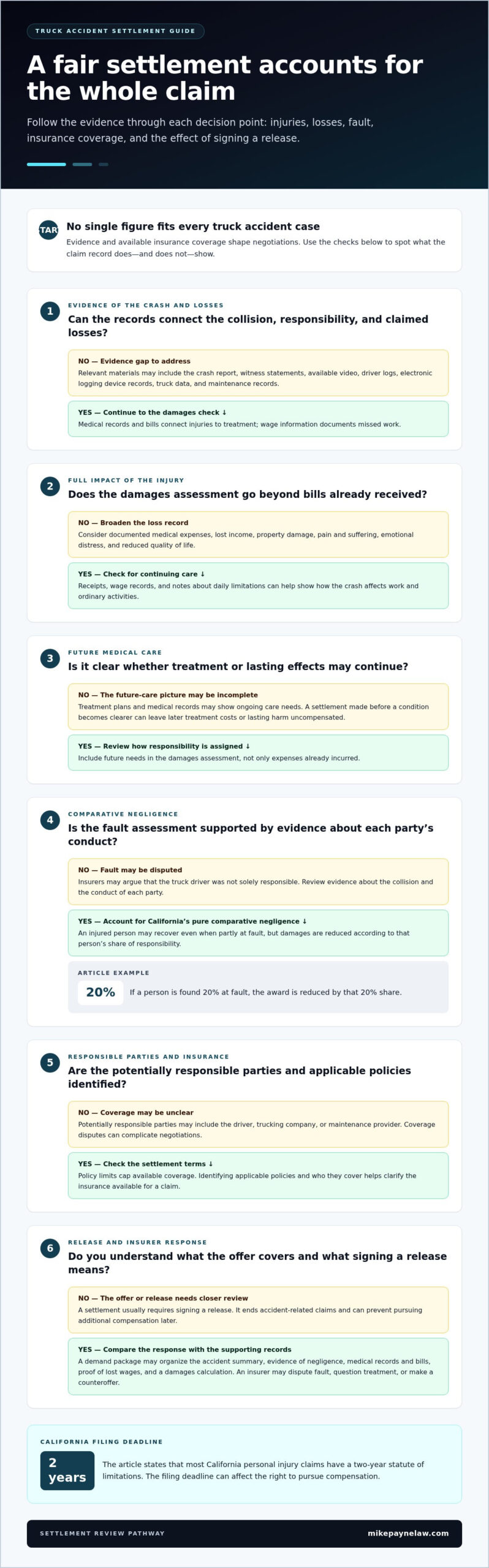
In San Bernardino, evidence and available insurance coverage shape negotiations. No single figure fits every truck accident case.
Settlement Negotiation Strategy
Negotiation strategy is how a claimant presents evidence and responds to the trucking company’s insurer. It matters because the adjuster represents the insurer, not you, and early statements may be used to challenge your injuries or shift blame. If you’re getting a fair settlement from a trucking company in San Bernardino, weigh each request carefully before responding. Before giving a recorded statement, understand how your words could affect your claim. A lawyer can negotiate while gathering medical bills and records.
Demand Packages and Insurer Responses
A demand package organizes the claim’s evidence and explains the compensation sought. It typically includes an accident summary, evidence of negligence, medical records and bills, proof of lost wages, and a damages calculation. A clear package helps the insurer assess the claim, but the response may dispute fault, question treatment, or make a counteroffer. Compare each response with the supporting records, not just the initial amount offered. Getting a fair settlement from a trucking company in San Bernardino also depends on addressing specific objections with relevant evidence.
Comparative Negligence and Settlement
California uses pure comparative negligence, so an injured person may recover even when partly at fault. Damages are reduced according to that person’s share of responsibility. For example, a person found 20% at fault may still seek damages, but the award is reduced by that 20% share. Insurers may argue that a truck driver wasn’t solely responsible, so evidence about the collision and each party’s conduct can influence negotiations.
Insurance Policy Limits
Policy limits cap the coverage available under an insurance policy, while coverage disputes can complicate negotiations. Truck accident cases may involve several potentially responsible parties, including the driver, trucking company, or maintenance provider. Identifying applicable policies and who they cover helps clarify the insurance available for a claim. A settlement usually requires signing a release, which ends accident-related claims and can prevent you from pursuing additional compensation.
Recoverable truck accident damages
Evidence must connect each claimed loss to the accident and the responsible party’s conduct. Documented damages give negotiations a factual foundation, rather than leaving the insurer to assess losses without supporting records.
Economic and Non-Economic Damages
Economic and non-economic damages cover measurable expenses and the human impact of an injury. This distinction matters because invoices alone may not show the full effect of a truck accident. Economic losses can include medical bills, lost income, and property damage. Non-economic losses may include pain and suffering, emotional distress, and reduced quality of life. Keep receipts, wage records, and notes about daily limitations to show how the crash affects your work and ordinary activities.
Evidence of Liability and Damages
Evidence links a driver’s or company’s negligence to the crash and supports the losses claimed. It matters because the insurer can challenge both responsibility and the extent of harm. Relevant records may include the crash report, witness statements, available video, driver logs, electronic logging device records, truck data, and maintenance records. Medical records and bills connect injuries to treatment, while wage information documents missed work. Together, these materials help explain liability and damages.
Future Medical Care Damages
Future medical care damages account for treatment needs that continue after the initial recovery period. They matter when an injury requires ongoing care or limits daily function. For example, a treatment plan and medical records may show that a head, neck, or back injury needs continued care. Settling before the condition becomes clearer can leave later treatment costs or lasting harm uncompensated. Include future needs in the damages assessment, not just bills already received.
Recoverable Injury Damages
Recoverable injury damages reflect physical harm and its effects on a person’s life. Head, neck, and back injuries can require costly care or cause lasting disability, affecting recovery and work. Getting a fair settlement from a trucking company in San Bernardino means connecting each injury to medical documentation and explaining resulting limitations, such as difficulty performing job duties or routine tasks. This detail helps show the crash’s real consequences beyond a diagnosis or initial visit.
Medical expenses, lost wages, and pain and suffering
A sound accident settlement evaluation connects medical records and crash reports to specific losses. The same evidence helps explain how injuries affect work, treatment, and daily life.
Treatment and Injury Documentation
Medical treatment documentation records injuries, care received, and changes during recovery. It matters because a timeline can connect symptoms to the truck accident and support compensation. Keep appointment summaries, prescriptions, bills, and instructions from each provider together. Note when pain or changes in mobility affect routine tasks, such as driving or lifting. A truck accident lawyer can compare these records with the crash report to identify gaps or conflicting details before negotiations.
Future Medical Expenses
Future medical expenses are anticipated costs tied to continuing care or lasting effects. They matter because a settlement based only on bills already received may overlook later needs. Review treatment plans and medical records for recommendations such as follow-up visits, rehabilitation, or continued medication. If a head, neck, or back injury affects daily function, document ongoing limitations alongside the care plan. This gives the parties a clearer basis for evaluating future losses.
Wages and Other Losses
Lost wages and other losses include income missed during recovery, property damage, and non-economic harm. Document missed shifts with employer records, pay information, and dates of medical appointments. For example, if treatment prevents a return to regular duties, records showing work restrictions help explain the income loss. Pain and suffering, emotional distress, and reduced quality of life also belong in the evaluation. Describe specific changes, such as trouble sleeping or giving up a regular activity, and connect them to the injury. A truck accident lawyer can assess how records support these categories and address disputes over which parties caused the losses.
California personal injury filing deadlines
In California, most personal injury claims must be filed within two years from the crash date, according to the California Legislature. For a San Bernardino truck collision, this deadline can determine whether you can bring a lawsuit to pursue compensation. Record the crash date and treat the filing deadline as separate from discussions with insurance companies. A serious injury, ongoing treatment, or unresolved claim doesn’t remove the need to protect your right to file.
The two-year period applies to most personal injury claims, not necessarily every possible claim. Identify who may be responsible, including the truck driver or trucking company, and keep the crash report and medical records organized. Those records can help explain your injuries and their connection to the accident. Don’t assume an insurer’s review or settlement discussions have filed a lawsuit for you. Claim negotiations and court filings are different actions.
Timing matters even when injuries persist or their effects are changing. Keep treatment records current and note how symptoms affect driving, work, and daily activities. If an insurance company disputes liability or delays its response, the calendar still matters. Use the crash date to track the two-year period while evaluating the evidence and losses. Waiting for every medical bill or disagreement to be resolved can make it harder to act before the deadline.
A lawsuit may be necessary to preserve a personal injury claim if settlement negotiations don’t resolve it in time. Gather the crash date, insurance correspondence, medical records, and any lawsuit papers before discussing the deadline with an attorney. These details help clarify the claim’s timeline and what remains to be done. If you’re weighing a truck accident claim against the filing deadline, contact an attorney about your filing timeline before time runs short.
Law Offices of Michael D. Payne: Car Accident Representation
The Law Offices of Michael D. Payne provides Car Accident Representation for people facing injury claims after a collision. If a trucking insurer disputes fault, questions your medical treatment, or presses for a release before you understand your losses, legal guidance can help you assess the claim and its evidence.
Bring the crash report, medical records, insurance letters, and a record of missed work to a discussion about your case. These materials can help clarify liability, damages, and how settlement negotiations affect your options. An attorney can review the documentation and communicate with the insurer on your behalf, so you can focus on treatment and recovery.
If you’re weighing a settlement or concerned about a filing deadline, contact the Law Offices of Michael D. Payne to discuss your situation. You can also visit mikepaynelaw.com.
Move Forward With a Clear Plan
A deliberate next step can make getting a fair settlement from a trucking company in San Bernardino feel more manageable. Organize important documents, track communications, and protect time for recovery. You don’t have to let the insurer’s pace dictate your choices. A clear plan helps you approach the next conversation with purpose and keep your priorities in view.
The Law Offices of Michael D. Payne offers Car Accident Representation, Slip and Fall Representation, and Motorcycle Accident Representation. If you’re unsure how to respond to an insurer or what to do next, legal guidance can help you consider your options and move forward with greater clarity. The right next step depends on your situation, your recovery, and the decisions ahead.
Contact Law Offices of Michael D. Payne to discuss your situation. Take the next step at your own pace, with a clearer path forward.
Frequently Asked Questions
Who Can Be Liable in a Truck Case?
Liability may involve the truck driver, trucking company, maintenance provider, or another party whose conduct contributed to the crash. A company may also be responsible for an employee driver’s actions while the driver is working. For example, investigators may examine whether a maintenance failure or improperly loaded cargo played a role. Identifying every responsible party matters because their actions and insurance coverage can affect the claim.
Can you help if the truck left the scene?
A truck leaving the scene doesn’t automatically prevent you from pursuing a claim, but identifying it can be critical. Write down the truck’s color, markings, direction of travel, and any plate details you saw. Tell law enforcement what happened, and preserve contact information for witnesses or nearby businesses that may have video. These details can help investigators identify the vehicle and connect it to the collision.
Do you take 18-wheeler cases?
Yes. Law Offices of Michael D. Payne offers Truck Accident Representation, including cases involving 18-wheelers. A truck collision in San Bernardino, Fontana, Ontario, or another nearby community may require examining both driver conduct and company records. The firm also serves communities including West Covina, Pomona, Covina, Chino, Baldwin Park, and Azusa. Preserve crash-related documents and insurer correspondence for a discussion about your case.
How is the value of my settlement determined?
Settlement value is assessed by connecting documented losses to the crash, evaluating evidence of fault, and accounting for available coverage. A treatment record, for example, can help show how an injury relates to the collision, while work documentation can support income losses. The insurer’s proposed release also matters because accepting payment can end further claims related to the accident. No single calculation fits every case.
What Are the Risks and Benefits of Going to Trial?
At trial, a jury decides liability and compensation, but the result is uncertain. A jury may award less than the insurer offered or find for the defense, and an appeal can delay payment after a favorable verdict. A settlement avoids a jury decision and resolves the claim for an agreed payment, but accepting it generally means releasing accident-related claims. Compare the certainty of a settlement with the potential trial outcome before deciding.
What Factors Affect Whether You Should Settle or Go to Trial?
The decision depends on the strength of the liability evidence, whether the parties dispute fault, how clearly losses are documented, and what coverage is available. Consider whether the proposed settlement accounts for your documented needs and requires a release of all related claims. Trial also involves litigation steps such as depositions, document requests, and expert analysis, as well as court scheduling. Weigh those demands against the jury’s role and the uncertainty of the outcome.