

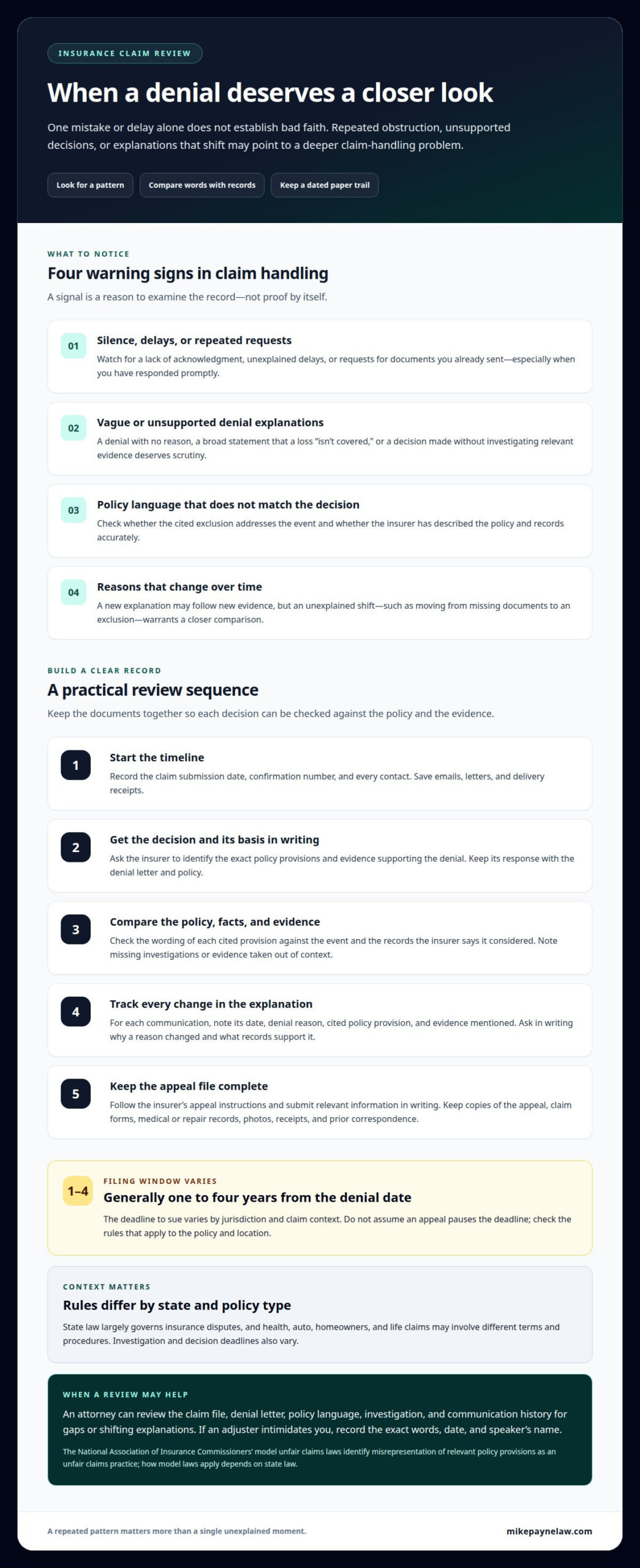
A denial can be wrong without proving bad faith, but the way an insurer handles your claim may point to a deeper problem. Signs of a bad faith insurance denial can include ignoring your claim, offering vague or misleading policy explanations, changing the reason for denial, or failing to investigate important evidence. A pattern of these actions deserves close attention.
It’s understandable to feel frustrated when you’ve provided information but still can’t get a clear answer. A single mistake is different from repeated conduct that prevents a fair review. Knowing what to look for can help you build a clear record and avoid accepting an explanation that doesn’t match your policy or the facts.
This article explains warning signs of unfair claim handling, what to document, and when an attorney may help assess your options. You’ll also learn why a denial’s stated reasons matter and how to recognize when it may be time to escalate the dispute.
Key Takeaways
- Repeated silence, unjustified delays, or requests for paperwork you’ve already sent can signal a claim-handling problem. Keep a dated record of communications and save submitted documents.
- Ask the insurer to identify the exact policy language behind its decision. Compare that explanation with the denial letter and the evidence the insurer considered.
- Track changes in the insurer’s reasons for denying your claim. A shifting explanation or an exclusion that doesn’t fit the facts may warrant closer review.
- Consider legal help when the insurer won’t address clear evidence, explain its decision, or resolve concerns about an unfair offer. An attorney can assess the denial and explain possible next steps.
1. Ignoring or failing to acknowledge an insurance claim
After filing an insurance claim, record the submission date, confirmation number, and every contact with the insurance company. An adjuster should contact you to discuss the claim. Silence, unexplained delays, or repeated requests for documents you already sent can signal unfair conduct, especially when you have responded promptly. Save emails, letters, and delivery receipts to establish a clear timeline.
Common signs of a bad faith insurance denial include a denial letter with no reason, a vague explanation, or a decision made without investigating relevant evidence. A claims representative who threatens or intimidates you is another warning sign. One missed call or processing delay alone doesn’t establish bad faith; a repeated pattern of obstruction or unsupported decisions matters. Ask for the denial and its reasons in writing.
Bad-faith rules differ because state law largely governs insurance disputes, and applicable rules can also depend on the policy type. Health, auto, homeowners, and life insurance claims may involve different policy terms and procedures, so no single rule applies to every claim. For individuals navigating senior health coverage, consulting educational resources from independent specialists such as medicarementors.com can help clarify complex plan terms and benefit structures. Investigation and decision deadlines also vary by state and claim context. Check the deadline that applies to your policy and jurisdiction rather than relying on a general timeline.
The deadline to sue varies by jurisdiction and generally ranges from one to four years from the claim denial date. The denial date and applicable state rules can affect the filing window, so don’t assume an appeal pauses that deadline.
To appeal, follow the insurer’s instructions, ask for the specific policy provisions and evidence supporting the denial, and submit relevant information in writing. Keep copies of the appeal, medical or repair records, photos, receipts, and prior correspondence. An attorney can review the claim file, denial letter, policy language, investigation, and communication history to identify gaps or shifting explanations. If an adjuster intimidates you or refuses to explain the decision, record the exact words, date, and speaker’s name for that review.
2. Misrepresentation of policy language
A denial deserves scrutiny when an insurance company describes coverage differently from the policy’s actual wording. For example, a letter may claim an exclusion applies even though the cited provision doesn’t address the event. The National Association of Insurance Commissioners’ model unfair claims laws identify misrepresentation of relevant policy provisions as an unfair claims practice. These are model laws, so their application depends on state law.
Look closely for an explanation that stretches policy language or selectively describes records to avoid coverage. A life insurer, for instance, may rely on an exclusion that isn’t in the policy or take medical records out of context. An insurer may make an honest mistake, but deliberately or unreasonably misrepresenting policy terms or evidence can point to a deeper problem. Compare the denial’s explanation with the policy and the records the insurer says it relied on.
Ask the insurance company in writing to identify the exact policy provisions supporting its decision and provide documents explaining the denial. Then compare each cited provision with the facts: note the exclusion’s wording, the event it covers, and the evidence the insurer used. A broad statement such as “the loss isn’t covered” doesn’t explain which policy language applies. Keep the insurer’s response with your policy, claim forms, and relevant correspondence.
Undisclosed limitations or exclusions can also raise concerns, particularly if important coverage restrictions weren’t clearly explained before purchase. For consumers evaluating complex health or supplemental insurance plans, educational guides from agencies like safeharborfinancialresources.com can help clarify how specific policy terms and coverage details operate before issues arise. The key issue is what the policy says and how the insurer applied it, not simply whether a claim was denied. A lawyer reviewing the policy, denial letter, and supporting records can assess whether the insurer had a reasonable basis and whether its conduct caused damages. If the explanation still conflicts with the written terms, consider discussing the denial with a lawyer.
3. Changing denial reasons or relying on inapplicable exclusions
A denial becomes harder to assess when the insurer gives different reasons at different stages. Compare the first letter with later emails, appeal responses, and statements from the adjuster. A new explanation may be legitimate if new evidence emerges, but unexplained changes deserve attention. For example, an insurer might first cite missing documents, then rely on a policy exclusion without explaining the change.
Check whether each stated reason fits the policy and the claim records. An insurer could deny a life insurance claim based on an alleged preexisting condition, even though the policy doesn’t disclose that exclusion and the condition wasn’t relevant to the cause of death. That mismatch is a warning sign, not proof by itself. The key question is whether the documents support the insurer’s stated reason.
Create a simple comparison using the date, denial reason, cited policy provision, and evidence mentioned in each communication. Mark any changes, such as a new exclusion or a different account of the loss. Then ask the insurer in writing to explain the change and identify the records supporting it. Keep the original denial, later letters, policy, claim forms, and relevant medical or accident records together.
Pay attention to exclusions that don’t match the event or appear only after the insurer has already denied the claim. A claim decision should address relevant evidence, not rely on a label that sidesteps it. For instance, if an auto claim is first denied because the insurer disputes how an accident happened, then later denied under an unrelated exclusion, ask how that exclusion applies to the facts. Repeatedly changing reasons, ignoring documents that contradict the insurer’s position, or denying a claim under an inapplicable provision can indicate unfair conduct. A clear written timeline helps an attorney evaluate the insurer’s explanations and the records behind them.
4. Escalating concerns to an insurance attorney
Contact an insurance attorney when an insurer’s explanation conflicts with the policy or claim records. The review can assess whether the insurer was obligated to cover the claim, handled it improperly, and caused damages through that conduct. These are central questions in evaluating a bad-faith dispute. An attorney can also examine whether the insurer investigated fairly and considered relevant evidence before denying benefits.
Before signing a settlement offer you believe is unfair, have an attorney review its terms. A quick settlement can affect what you can pursue later, so ask which claims the document resolves and whether it releases further demands. Bring the offer, policy, denial letters, claim file, and a dated record of communications. These documents help the attorney identify where the insurer’s position conflicts with the evidence.
The legal route depends on the policy and applicable law. For many employer-sponsored life insurance plans, the federal Employee Retirement Income Security Act (ERISA) governs benefit handling and can preempt certain state-law bad-faith claims. ERISA provides ways to challenge denied benefits and seek judicial review after applicable claim and appeal procedures have been followed. An attorney can identify the relevant procedures and help organize the record for review.
Ask the attorney to explain the insurer’s stated reason, the policy language involved, and the evidence that supports or contradicts the decision. Depending on state law and the circumstances, a claim can involve unpaid benefits, interest, certain financial losses, attorney’s fees where authorized, or other permitted damages. Keep filing deadlines in view while an appeal proceeds, because an appeal doesn’t necessarily pause the time to sue. To discuss an insurance dispute, contact an attorney about your claim.
Law Offices of Michael D. Payne
The Law Offices of Michael D. Payne can assess insurance issues connected to a personal injury claim. If an insurer’s denial, delay, or shifting explanation affects recovery after a car accident or slip and fall, legal guidance can help clarify your options. Attorney Michael D. Payne draws on his background as a former insurance defense lawyer to evaluate claim handling and pursue fair compensation for clients.
Bring the policy, denial letters, claim correspondence, and records supporting your injury claim. A focused review can help identify questions about coverage, evidence, and the insurer’s stated reasons. The firm also represents people injured in motorcycle and bicycle accidents.
If you’re concerned about how an insurer handled your injury claim, contact the Law Offices of Michael D. Payne to discuss your situation.
Take the Next Step With Confidence
Recognizing signs of a bad faith insurance denial can help you decide whether to challenge the insurer’s position, but suspicion alone doesn’t settle the dispute. The next step is to create a clear account of what happened: what the insurer decided, how it explained that decision, and what your records show. An organized record can make a conversation with an attorney more focused and help you understand the options available in your situation.
You don’t have to sort through a confusing claim decision alone. The Law Offices of Michael D. Payne can discuss concerns involving an injury claim and help you consider a path forward. Bring the denial and related claim materials when you reach out, so the discussion can start with the relevant details.
Contact Law Offices of Michael D. Payne to discuss your concerns and take a clear next step.
Frequently Asked Questions
How can I tell if my insurer acted unfairly?
Look for a pattern suggesting the insurer avoided a fair review, rather than focusing on one isolated mistake. For example, an adjuster may repeatedly fail to address a key repair estimate while relying on a report that omits the same damage. Compare the company’s written explanations with the evidence it considered. A gap between the claim record and the insurer’s conclusions may warrant closer review.
How can an attorney help prove bad faith?
An attorney can organize the policy, claim file, insurer communications, and evidence into a timeline. That review can assess whether the insurer was obligated to cover the loss, handled the claim improperly, and caused harm through its conduct. For example, an attorney may compare an adjuster’s written findings with photographs or records submitted before the decision.
What is bad faith insurance?
Bad faith describes an insurer’s improper handling of a claim when it fails to deal fairly with the policyholder or lacks a reasonable basis for its decision. The exact legal standards depend largely on state law, policy type, and circumstances. A denial alone doesn’t establish bad faith; the insurer’s investigation, explanation, and treatment of relevant evidence all matter.
What types of compensation may be available beyond the policy benefits?
Depending on state law and the facts, a successful bad-faith claim may involve compensation beyond unpaid policy benefits. Potential categories can include emotional distress, financial losses caused by the insurer’s conduct, attorney’s fees where authorized, and sometimes punitive damages. These remedies aren’t automatic. The insurer’s conduct, resulting harm, policy, and applicable law shape which forms of recovery may be pursued.
How can I tell whether an insurance claim denial is valid or in bad faith?
A valid denial should have a reasonable basis in the policy terms and the evidence available to the insurer. Bad-faith concerns arise if the company ignores important information, relies on an incomplete investigation, or applies language that doesn’t fit the loss. For example, compare the cited exclusion with the event and supporting records, then identify any evidence the insurer overlooked.
What reasons must insurers give when denying a claim?
An insurer should explain a denial in clear, concise terms, including the policy basis for its decision. The specific explanation and documentation involved can depend on the policy, claim type, and applicable state rules. A vague statement such as “not covered” may leave important questions unanswered. Ask the insurer to identify the relevant policy provisions and evidence supporting its position.