

What if the most lasting injury from an accident is the one no one else can see? If you’re seeking compensation for PTSD after an accident, you may wonder whether California law recognizes psychological harm and whether an insurer will take your symptoms seriously. Those concerns are understandable. Emotional trauma can disrupt sleep, work, relationships, and everyday routines, even when there’s no visible injury.
A PTSD claim may be supported when the condition is connected to an accident caused by someone else’s negligence. A diagnosis alone, however, may not show the full impact or establish how the accident relates to your condition. Treatment records, an accurate timeline, and evidence of changes in your daily life can help explain what happened. Each claim depends on its facts and applicable law.
This guide explains how to document an accident-related PTSD claim in California, including treatment records, accident information, and notes about symptoms and related losses. You’ll also find practical steps for organizing evidence, understand which damages may be relevant, and learn how legal guidance may help you assess your options.
Key Takeaways
- Learn what may distinguish accident-related PTSD from short-term distress, and why a claim depends on the facts, evidence, and applicable California law.
- If you’re seeking compensation for PTSD after an accident, organized treatment records and notes about how symptoms affect daily life may help support your account.
- Understand which economic and non-economic losses may be relevant, and why compensation depends on the evidence and circumstances of the case.
- Preserve accident records, document changes, and seek legal review of deadlines and possible exceptions.
- An accident lawyer may help gather evidence, communicate with insurers, and present a claim without promising a particular result.
Can You Seek Compensation for PTSD After an Accident in California?
Psychological harm may be relevant to a California injury claim when symptoms follow a car crash, fall, or another accident. Seeking compensation for PTSD after an accident isn’t automatic. A claim may depend on whether another party was legally responsible, whether the evidence connects the condition to the incident, the care you receive, and the law that applies to your circumstances. Symptoms can be real and disruptive even when they leave no visible mark.
PTSD is a mental health condition that may develop after a traumatic event. It’s different from the short-lived fear or upset many people feel immediately after an accident. Only a qualified professional can assess and diagnose it. The overview of Post-traumatic stress disorder (PTSD) describes the condition and symptoms; it isn’t a substitute for an individual clinical assessment.
Which post-accident experiences may warrant professional attention?
People respond to trauma in different ways. Some experience intrusive memories, avoid places or activities that remind them of the accident, struggle to sleep, or feel intense distress when something brings the event to mind. These experiences alone don’t establish a diagnosis. If they persist, interfere with daily life, or concern you, discuss them with a qualified mental health professional. Seeking care can help you understand what you’re experiencing, regardless of whether you pursue a legal claim.
Does a PTSD claim require a physical injury?
Physical injuries and psychological harm are distinct issues. A person may have both, but the presence or absence of a visible physical injury doesn’t, by itself, resolve whether an emotional harm claim is possible. California-specific legal guidance can help assess how responsibility, evidence, treatment, and the circumstances of the accident may affect your situation.
For a potential claim, the question is not simply whether you feel distressed. Evidence may need to show that a professionally assessed condition is connected to the accident and that another party’s conduct led to the accident. Treatment records and evaluations may help explain symptoms and their course; accident records and witness accounts may help establish what happened. Clear, consistent documentation can make the effects easier to understand, particularly when they aren’t externally visible.
If the accident involved a vehicle, legal issues may also depend on how the collision occurred and who may be responsible. A California motor vehicle accident claim can involve evidence about the crash as well as the injuries reported afterward. Don’t try to diagnose yourself or assume that a difficult recovery proves or disproves a claim. Get professional support, keep records, and seek legal guidance tailored to your accident before drawing conclusions about your options.
How to Document PTSD and Connect It to the Accident
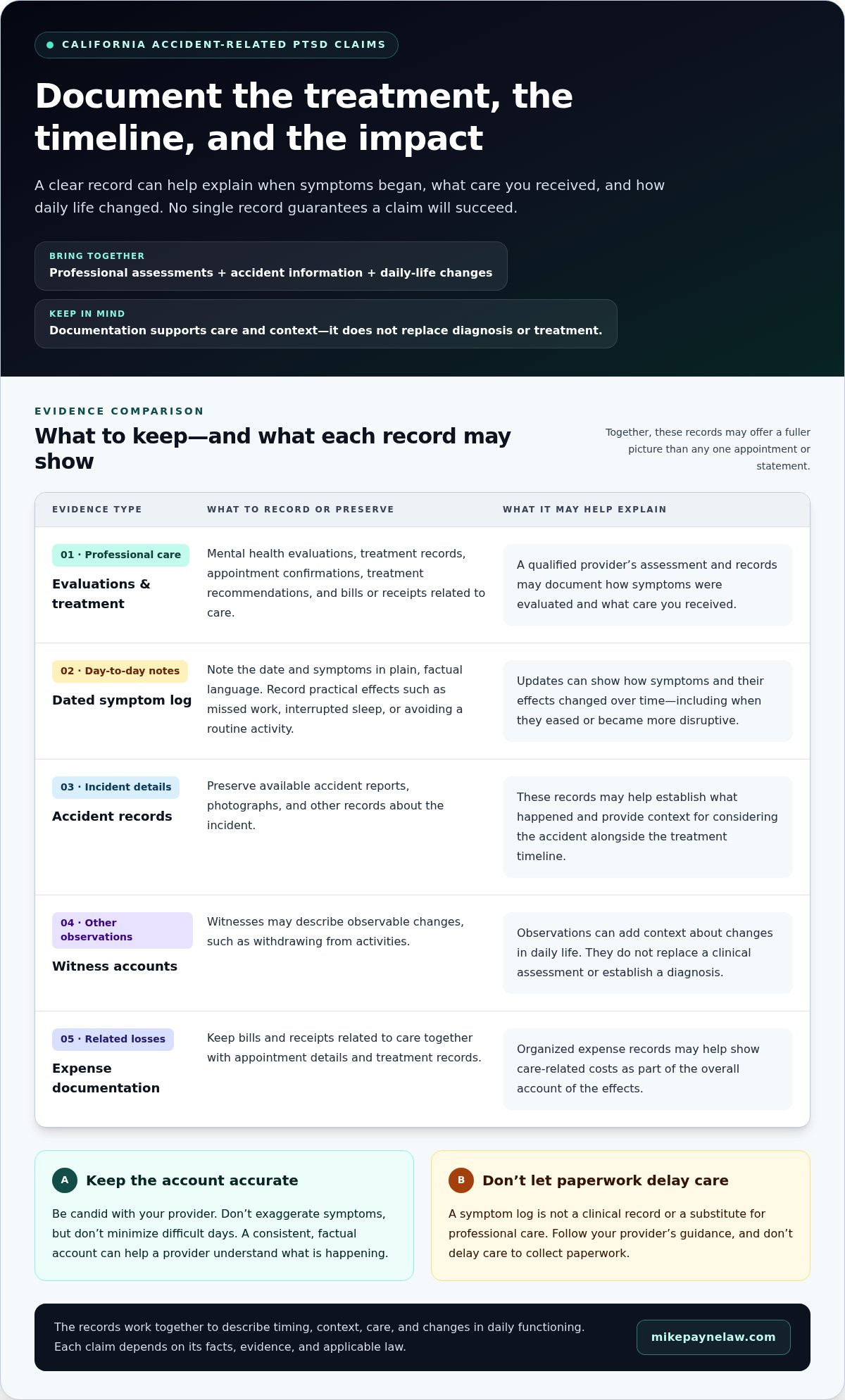
A clear record can help show when symptoms began, what care you received, and how the effects changed over time. It doesn’t replace diagnosis or treatment, and you shouldn’t delay care to collect paperwork. If you’re seeking compensation for PTSD after an accident, focus on an accurate account that brings together professional assessments, the accident timeline, and changes in daily functioning.
Core evidence may include mental health evaluations, treatment records, symptom notes, expense documentation, accident records, and witness observations. No single item guarantees a claim will succeed. Together, these records may provide a fuller picture than any one appointment or statement.
What treatment and symptom records can help tell the story?
Keep appointment confirmations, treatment recommendations, and bills or receipts related to care. Follow your provider’s guidance, and be candid about what you’re experiencing. A dated symptom log can fill in the spaces between appointments, but it isn’t a clinical record or a substitute for professional care.
- Note the date and describe symptoms in plain, factual language.
- Record practical effects, such as missed work, interrupted sleep, or avoiding a routine activity.
- Save related records together, including appointment details and care expenses.
- Update the log when symptoms change, including when they ease or become more disruptive.
Accuracy matters. Don’t exaggerate, but don’t minimize difficult days to appear capable or resilient. A consistent account can help a provider understand what’s happening and make it easier to compare your recollection with treatment records later.
How can evidence link PTSD to the accident?
The connection is often shown through timing and context. Accident reports, photographs, or other available incident records may help establish what happened. Treatment timelines and professional assessments may document when symptoms appeared and how a qualified provider evaluated them. Witnesses may describe observable changes, such as withdrawing from activities, but their accounts don’t replace a clinical assessment or establish a diagnosis.
Building that picture takes careful work. The Law Offices of Michael D. Payne can gather relevant accident and treatment evidence and, where appropriate, work with investigators and expert witnesses. For a collision, evidence about the event matters alongside records of its effects. The firm’s motor vehicle accident representation addresses accident claims involving vehicles.
Keep originals when possible, organize copies by date, and avoid editing or discarding records. You don’t need a perfect file to discuss the accident, the records you have, and possible next steps. A case consultation can help you identify questions to raise about your circumstances.
What Compensation May Relate to Accident-Related PTSD?
California injury claims may involve both financial losses and personal harm, but no category is automatic. If you’re seeking compensation for PTSD after an accident, the relevant questions include how the condition relates to the incident, what losses can be supported, and what California law permits in your case. A diagnosis or a list of expenses alone doesn’t determine the result.
Claim value depends on the available evidence, the individual impact of the injury, and the California law that applies to the case. Broad payout figures or another person’s outcome can’t reliably predict what a particular claim may involve. People involved in similar accidents may have different effects, treatment needs, work circumstances, and legal issues.
Which financial losses may be relevant to a claim?
Economic losses are financial costs that can be identified and supported with records. Accident-related mental health care may be considered, depending on the evidence and applicable law. Keep bills, receipts, insurance statements, and records of treatment recommendations. Documentation can show what was charged or paid, but it doesn’t establish by itself that every expense will be included or reimbursed.
Income-related losses may also be relevant if symptoms or treatment affect your ability to work. Helpful records might include pay statements, employer documentation, time-off records, or other materials showing how your work changed. If symptoms interfere with duties or hours, note when and how that happened. Whether a loss is legally recoverable requires case-specific analysis. An absence from work doesn’t automatically prove lost income, and a projected future loss may require supporting evidence.
How can psychological effects influence an injury claim?
Non-economic harm concerns personal effects that don’t appear as a bill. PTSD-related symptoms may affect sleep, relationships, concentration, confidence, or participation in ordinary activities. For example, a person might stop driving, withdraw from social plans, or struggle to complete familiar work tasks. These examples aren’t a diagnosis or a prediction of compensation. They illustrate why the effect on each person’s life matters.
The duration and documented impact of symptoms may inform how a claim is evaluated, alongside treatment assessments and other evidence. A dated record of changes in routine can help explain what financial documents cannot: how the condition affects day-to-day life. Be specific and truthful. Describe what changed, when it changed, and whether the effect continues, rather than relying on general statements about suffering.
California generally recognizes economic and non-economic damages in many personal injury cases, but the facts and legal rules matter. The type of accident, evidence of responsibility, available records, and other case-specific factors can affect what may be pursued. A careful review can separate documented losses from assumptions and consider personal harm without promising a particular result.
How to Pursue a California PTSD Claim After an Accident
Practical steps can make a complex claim more manageable. Focus first on your health, keep relevant records together, and get legal guidance before making decisions that could affect your options. Seeking compensation for PTSD after an accident involves more than submitting a diagnosis or insurance form. The process may require evaluating responsibility, supporting evidence, potential losses, and deadlines under California law.
What practical steps can you take while receiving care?
Don’t wait for an insurer or claim decision before seeking appropriate medical or mental health care. Follow your provider’s recommendations and raise questions or changes in symptoms at appointments. Care supports your well-being first. Records created during treatment may also help explain the course of your recovery, but they aren’t a substitute for care itself.
Keep a secure digital or paper folder for materials related to the accident and its effects. Add records as you receive them, and organize them by date so you can locate what you need without relying on memory alone.
- Preserve accident-related documents, such as reports, photographs, and insurer correspondence.
- Save treatment records, appointment information, recommendations, and expense documents.
- Keep work-related records that may show absences or changes in duties.
- Write down questions for your treating professionals and note changes you want to discuss.
Keep entries factual and update them as things happen. If your symptoms or ability to manage daily tasks change, note the date and the specific effect. Avoid guessing about causes or outcomes. Your treating professional can assess your health, while a lawyer can help evaluate how relevant records may fit a legal claim.
When should you get legal guidance about deadlines and insurers?
Seek legal review promptly. California filing deadlines can depend on the type of claim, the parties involved, and applicable exceptions. A deadline that applies to one accident may not apply to another. Don’t rely on a general online estimate to protect your rights; have the timing assessed for your circumstances under current California law.
Insurer communications also deserve care. Keep copies of letters, emails, and forms, and note when you receive them. Before giving a recorded statement, signing a release, or accepting a settlement, understand what the request or document means and whether it could affect your claim. A lawyer can help gather relevant evidence, communicate with insurers, and assess proposed settlement documents. For a vehicle collision, California car accident injury guidance can help frame the accident-related issues involved.
The Law Offices of Michael D. Payne represents accident victims in West Covina and Southern California, including Pomona, Ontario, Covina, Chino, Fontana, San Bernardino, Baldwin Park, and Azusa. A consultation is an opportunity to discuss the accident, available records, and possible next steps, without a guaranteed result. To talk through your situation, contact the firm about your accident claim.
How a Southern California Accident Lawyer Can Help With a PTSD Claim
Psychological injuries can be difficult to explain to an insurer, especially when their effects aren’t visible. A lawyer can help organize the facts, present the evidence, and address challenges to how the accident affected you. The Law Offices of Michael D. Payne represents accident victims in West Covina and Southern California, including people seeking compensation for PTSD after an accident.
What can an attorney do to prepare a psychological injury claim?
Preparing a claim means building a clear account of both the accident and its effects. The firm can gather relevant accident records, treatment documentation, and evidence of related losses, then organize that material for claims adjusters, judges, or juries as the case requires. The goal is to present the facts accurately and show how the evidence supports the claim, not to promise a particular outcome.
Some cases may benefit from input from appropriate professionals. Investigators can help gather information about the incident, while expert witnesses—such as specialists at injuryconsulting.com who assist with life care planning and evaluations—may help explain technical or clinical issues when relevant. These professionals don’t replace your treating provider or decide the legal result. Their role is to provide information that may help clarify disputed facts or explain evidence.
The Law Offices of Michael D. Payne has 30 years of Experience representing accident and injury victims. Its personal injury representation in California includes accident claims, with attention to the evidence and legal issues specific to each case.
What should you expect from an initial conversation?
You don’t need to arrive with a complete file or know exactly how to describe every symptom. Be ready to summarize what happened, what care you’ve received, how symptoms have affected your routine, and any contact you’ve had with an insurer. If available, bring key records such as accident documents, treatment information, and correspondence. Questions are welcome. The conversation can help identify what information may matter and what steps could come next.
The firm offers Free Accident Case Consultations to discuss your accident, records, and possible next steps. Its No Fee Guarantee means “we do not charge a fee unless we win.” This does not promise a particular result; the merits of any claim depend on its facts and applicable law.
The firm is available 24/7. Hablamos Español and Se Habla Español. Call (626) 974-8713 or speak with the Law Offices of Michael D. Payne about your concerns without having every answer in hand. To discuss your circumstances and explore your options, Request a free accident case consultation.
Take the Next Step at Your Pace
Deciding whether to pursue a claim can feel like another burden while you’re trying to recover. You don’t need to have every answer before asking questions. If you’re seeking compensation for PTSD after an accident, a conversation with an attorney can help you understand possible next steps based on your circumstances, without promising a particular result.
The Law Offices of Michael D. Payne brings 30 years of Experience to representing accident victims in West Covina and Southern California. The firm offers Free Accident Case Consultations and a No Fee Guarantee: “we do not charge a fee unless we win.” The firm is available 24/7. Hablamos Español and Se Habla Español.
Share what happened, what support you’ve received, and what questions are weighing on you. You can take the next step without knowing exactly where the process will lead. Request a free accident case consultation and discuss your options with the Law Offices of Michael D. Payne.
Frequently Asked Questions
Can I seek compensation for PTSD after an accident if I was not physically injured?
Psychological harm may be relevant to an accident claim even if you have no apparent physical injury. If you’re seeking compensation for PTSD after an accident, a qualified professional’s assessment and records may help explain what you’re experiencing and its possible connection to the event. Don’t dismiss symptoms because they’re invisible, or assume they establish a claim on their own. Get appropriate care and seek advice based on your circumstances.
How do you prove PTSD was caused by an accident?
Showing the connection may involve putting medical and accident information into a clear timeline. A professional assessment, treatment records, accident documents, and notes about changes at work or home may each provide context. For example, a provider’s notes may record when you first reported a symptom, while a work record may show a later change in duties. Witnesses can describe observed changes, but no single record automatically proves a claim.
Do I need a formal PTSD diagnosis to make an accident claim?
A diagnosis from a qualified mental health professional can help explain your condition, but what a claim requires depends on the facts and applicable law. Online checklists can’t diagnose PTSD or establish that an accident caused it. Describe your experiences honestly during care, including symptoms that feel difficult to explain. If you’re uncertain how a diagnosis or other records may be considered, a California injury lawyer can discuss the evidence in your situation.
What compensation can I seek for PTSD after an accident?
Depending on the evidence and applicable law, a claim may consider documented treatment expenses, income-related losses, and the personal effects of psychological harm. Keep records that show how costs or work changes relate to the accident, and avoid treating every expense as automatically recoverable. There’s no universal settlement amount that predicts an individual outcome. Responsibility, supporting documentation, personal impact, and the legal rules all affect case evaluation.
How long do I have to file a California PTSD accident claim?
There isn’t one deadline that applies to every accident claim. Timing can depend on the type of claim, the potentially responsible parties, and whether an exception applies. This is especially important if a government entity may be involved. People in West Covina, Pomona, Ontario, Covina, Chino, Fontana, San Bernardino, Baldwin Park, or Azusa should have current California rules reviewed promptly rather than rely on deadlines from another state or a general online estimate.
Should I speak with the insurance adjuster about my PTSD symptoms?
Be truthful, and consider getting guidance before giving a detailed statement or signing a release. You can ask what a document is for and request time to understand it before responding. Keep copies of messages and forms, and don’t guess about a diagnosis, medical cause, or how long symptoms may last. An adjuster’s questions aren’t a clinical assessment. A lawyer can help you understand communications and respond accurately in context.
Can PTSD symptoms appear after the accident rather than immediately?
Symptoms and emotional responses can change over time, and people may not react to a traumatic event in the same way. If new or worsening symptoms interfere with sleep, work, or routine activities, arrange an assessment with a qualified professional. Note when you first observe changes and bring those details to your appointment. A later onset doesn’t prove or disprove that the accident caused a condition; a clinician should assess your experience.