

A child’s injury claim depends on evidence showing how the injury happened, who may be responsible, and how it has affected the child. Protecting my child’s future after an injury starts with appropriate medical care and clear records of treatment, expenses, and the incident.
It’s natural to focus first on your child’s immediate recovery. But an injury can also affect future treatment, school, play, sports, and other parts of daily life. Protecting my child’s future after an injury also means considering how decisions made now may affect those needs later. Parents or guardians may have an important role in a claim, while some losses may belong to the child and others to the parent. This guide explains how liability may be established, what parents can do during the claims process, and why it matters to consider both current needs and possible long-term effects. It also explains when legal action may be worth considering, including situations involving inadequate supervision, unsafe property, or a preventable accident. The goal is to help you make informed decisions with your child’s well-being in mind.
Key Takeaways
- Liability depends on evidence connecting the incident, the responsible party’s conduct, and your child’s injuries.
- Separate claims may address the child’s losses and a parent’s expenses, so understand whose interests each part of a claim covers.
- Consider how treatment, therapy, and possible limits could affect your child’s school, play, sports, and daily life over time.
- Legal guidance can help assess responsibility, preserve relevant evidence, and evaluate settlement offers or further action.
1. How Do You Prove Liability for Child Injuries?
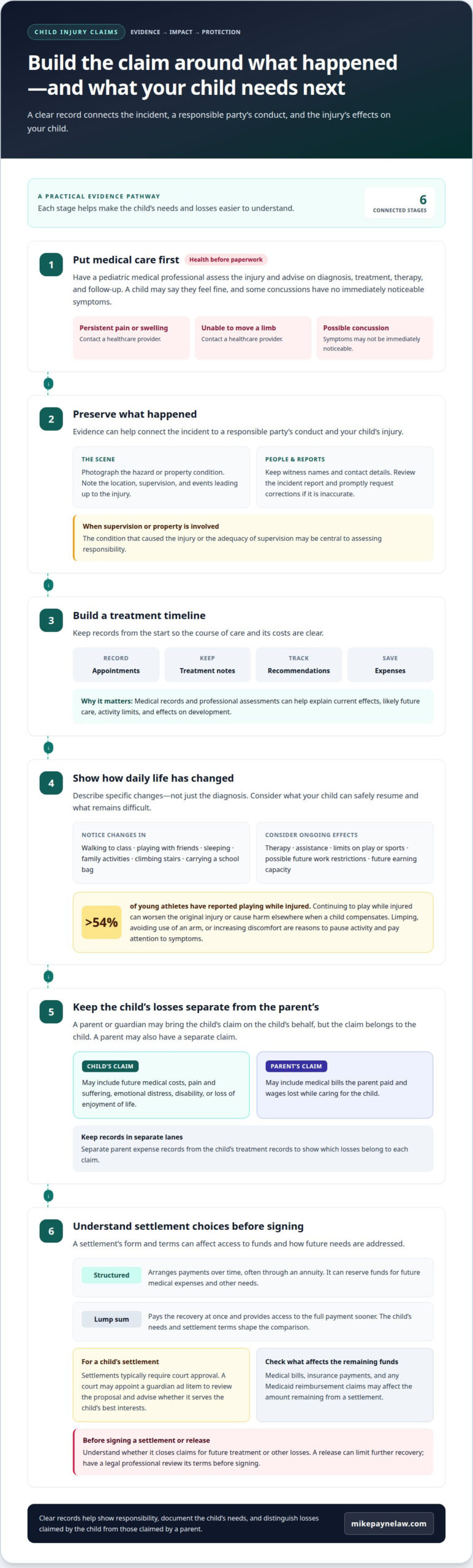
Liability evidence connects the incident, a responsible party’s conduct, and your child’s injury. A lawyer may investigate the location, supervision, and events leading up to the harm. Photographs can preserve the condition of a hazard, while witness names and contact details can help identify people who saw what happened. An incident report, medical records, and treatment notes can help establish a timeline. In an unsafe-property case, the condition that caused the injury may be central to determining responsibility.
Medical care comes first, even if your child says they feel fine. Some concussions have no immediately noticeable symptoms; persistent pain or swelling, or inability to move a limb, warrants contacting a healthcare provider. Consult pediatric medical professionals about diagnosis, treatment, therapy, and follow-up needs. Keep records of appointments, recommendations, and expenses from the start. These details can help show how the injury affects your child now and what ongoing medical or mental health care may be needed.
Future needs matter because a child may need treatment or therapy after a claim is resolved. A pediatric professional’s assessments can help explain likely care needs, activity limits, and the injury’s effect on development. If an injury affects the child’s ability to work later, a claim may also consider loss of future earning capacity. Evidence should connect these possible effects to the injury, rather than simply list concerns.
A structured settlement arranges payments over time, often through an annuity, while a lump sum pays the recovery at once. A structured approach can reserve funds for future medical expenses and other needs; a lump sum provides access to the full payment sooner. The child’s needs and the settlement’s terms shape the comparison.
Settlements for injured children typically require court approval. A court may appoint a guardian ad litem to review the proposal and advise whether it serves the child’s best interests. An attorney can organize medical bills, insurance payments, and any Medicaid reimbursement claims, which may affect the funds remaining from a settlement.
An attorney can gather records, preserve photographs, obtain witness details, and document medical care and expenses. Before signing an insurance settlement or release, understand whether it closes claims for future treatment or other losses. A release can limit further recovery, so have a legal professional review its terms before signing.
2. A child’s injury claim and the parent or guardian’s role
A parent or guardian may bring an injured child’s claim on the child’s behalf, but the claim belongs to the child. The attorney helps identify responsible parties and organize the child’s case, while the adult provides information about care, expenses, and the injury’s effects. A child’s claim may seek compensation for future medical costs, pain and suffering, emotional distress, disability, or loss of enjoyment of life.
A parent may have a separate claim for medical bills they paid and wages lost while caring for the child. These claims involve different losses, even when they arise from the same incident. Keep expense records separate from the child’s treatment records. This helps show which costs belong to the child’s claim and which belong to the parent’s.
Supervision can matter when an injury happens at school, daycare, or summer camp. Under the in loco parentis doctrine, these organizations may have a heightened duty to supervise and protect children entrusted to their care. For example, an attorney may examine whether a camp provided proper supervision during an activity and whether a failure contributed to the injury. Evidence of negligence helps clarify responsibility.
Parents can also support the legal process by reviewing an incident report and promptly requesting corrections if it contains inaccuracies. An attorney may use the corrected report alongside other evidence to assess liability, negotiate a settlement, or pursue formal proceedings. Legal action can involve separate claims for the child and parent, so clear records of expenses and losses matter.
Co-parenting may become more complex if one parent has a traumatic brain injury. If that parent experiences complications such as seizures, caregivers may need a crisis plan that teaches the child to call 911. Agreeing on clear emergency instructions can help both households respond consistently while the child’s injury claim proceeds.
If your child’s injury happened at work or involved a caregiver’s supervision, legal guidance can help clarify the next steps. You can discuss your child’s injury claim and which losses may belong to each family member.
3. Assessing the injury’s effects on quality of life and future activities
A child’s recovery affects more than medical appointments. Consider whether pain limits walking to class, playing with friends, sleeping, or joining family activities. Note changes in the child’s ability to manage ordinary routines, such as climbing stairs or carrying a school bag. These examples help describe how the injury has changed daily life. Also consider possible therapy, assistance, future work restrictions, and effects on play. The key question is not only what happened during the accident, but which activities the child can safely resume.
Sports and active play may need to change while a child heals. Continuing to play while injured can worsen the original injury or cause harm elsewhere when the child compensates. More than 54% of young athletes have reported playing while injured. A child who limps, avoids using an arm, or reports increasing discomfort needs a pause from activity and attention to symptoms. Remember that children may minimize pain because they want to stay on a team or keep up with friends.
Growth can add another factor. Children’s bones may grow faster than their muscles, causing tightness, and growth plates near bone ends are fragile. Sprains, strains, and growth plate injuries are common in children. Follow the treating professional’s guidance about returning to sports, physical education, and playground activities. A gradual return should reflect the child’s healing and abilities, not pressure from a practice schedule.
For safer activity, use suitable protective gear, footwear, and padding, and encourage warmups before exercise. Children should use proper techniques and equipment, take breaks to avoid fatigue, and rest tired muscles. Varied activities can support balanced muscle development and distribute strain. Encourage your child to report pain or discomfort early. These steps help reduce injury risks, but they don’t replace care for an injury that has already occurred. Tracking missed activities and changes in participation can also show how recovery affects the child’s quality of life.
Considering legal action against a responsible person or company
An attorney evaluates whether evidence supports a claim by examining what happened, who controlled the setting, and how the injury occurred. They identify potentially responsible people or companies, then assess whether negligence contributed to the harm. For example, a lawyer may investigate a caregiver’s supervision, a property hazard, or a driver’s actions. The key question is whether evidence connects the conduct to the child’s injuries and resulting losses.
The legal analysis can differ by incident. A property owner or caregiver may face a claim if inadequate care contributed to a child’s injury. In product cases, strict liability or breach of warranty may allow a claim without proving negligence when a defect or relevant standard violation can be shown. The attorney considers the product, the alleged defect, and how it caused the injury.
Long-term effects also shape the evaluation. A severe injury may require ongoing treatment, therapy, or assistance, and may affect a child’s development, activities, or future earning capacity. The attorney documents these losses and assesses available insurance. If an insurer’s offer does not account for the child’s needs, the attorney may negotiate or pursue damages in court.
Filing deadlines matter. In many U.S. jurisdictions, a child’s personal injury deadline is paused until age 18, after which a specific filing period applies. That pause usually doesn’t extend a parent’s separate claim for expenses such as medical bills. An attorney considers the applicable deadlines and files claim paperwork accordingly.
Before signing a waiver, settlement offer, or release, have an attorney review its terms. A release may affect the ability to seek further compensation, including for needs that become clear later. Legal action may involve settlement negotiations or formal proceedings; the evidence, losses, and available insurance help guide that assessment.
If you’re considering a claim after your child’s injury, discuss the legal options and evidence with an attorney.
Law Offices of Michael D. Payne: Workplace Injury Representation
Law Offices of Michael D. Payne can help families assess an injury claim when a child is hurt in a car accident, slip and fall, or workplace incident. Representation can include investigating how the injury happened, identifying potentially responsible parties, and documenting the child’s losses. That support may be useful when responsibility is disputed, future care needs are still being assessed, or an insurer has made a settlement offer. The firm also represents clients in motorcycle accident cases. The right next step depends on the circumstances of the injury and the evidence available. If you’re considering legal action for your child, contact Law Offices of Michael D. Payne to discuss the situation.
Keep Your Child’s Future at the Center
Your child’s needs may change as recovery continues. Let that guide your next steps rather than pressure to resolve everything quickly. A claim should account for your child as a growing person with evolving goals and priorities. If you’re focused on protecting my child’s future after an injury, keep your child’s well-being at the center of each decision.
If you’re considering legal action or want to understand how an injury claim may proceed, a conversation can help clarify the path ahead. You don’t have to make every decision at once. Start with the questions that matter most to your family.
Contact Law Offices of Michael D. Payne to discuss your child’s situation and possible next steps. Protecting my child’s future after an injury means moving forward with care and keeping recovery in focus.
Frequently Asked Questions
How Do You Prove Liability for Child Injuries?
Liability is assessed by connecting the circumstances of the incident to the harm the child suffered. The evidence should establish a clear timeline, including what happened before the injury and how others responded afterward. For example, if accounts differ about when a hazard appeared, photographs, witness statements, and incident records may help clarify the sequence. A lawyer evaluates how well those details support the claim.
How Does the Legal Process Work?
The process can involve presenting a claim to an insurer, negotiating a resolution, or pursuing formal legal proceedings. A useful next step is understanding what a proposed settlement covers and whether it addresses the child’s needs as well as any separate parental losses. The paperwork and decision-making can differ for those claims. Keep questions about the offer and its terms together to discuss with the attorney.
What Compensation Can Be Recovered?
Potential recovery depends on the losses connected to the injury and the evidence supporting them. For instance, if symptoms interfere with school participation or a child’s ability to pursue an activity, records describing that impact may help explain the claim. Future earning capacity may also be relevant if lasting effects limit the child’s ability to work. The child’s claim and a parent’s claim can address different losses.
What Is the Statute of Limitations?
For a child’s personal injury claim, many U.S. jurisdictions pause the filing deadline until the child reaches age 18, then apply a specific period. A parent’s separate claim, such as one for medical expenses, may have a different deadline and may not receive the same pause. Because the rules depend on jurisdiction and claim type, don’t assume the child’s deadline applies to every family claim.
What Special Protections Do Children Have?
A child’s claim belongs to the child, even when a parent or guardian brings it on the child’s behalf. This distinction matters during settlement decisions: the adult’s preferences don’t replace the need to protect the child’s interests. Court review helps assess whether a proposed resolution is appropriate. The process may also involve a guardian ad litem, who reviews the proposal and advises the court about the child’s best interests.
What Should Parents Do Immediately After a Child Is Injured?
Once urgent medical concerns are addressed, keep a simple record of how the injury changes the child’s routine. Note missed school, difficulty with usual tasks, or activities the child has paused, and share relevant restrictions with caregivers or coaches. If the injury happened at school, review the incident report for accuracy and promptly request corrections. These details can help keep care and communication consistent.