

A quick settlement can close your claim before you know the full cost of your injuries. To handle a low settlement offer for your injuries in Pomona, don’t accept or sign immediately. Compare the offer with your documented losses, request a written explanation of disputed items, and support any counteroffer with evidence. Your medical care and financial losses deserve a clear accounting.
It’s understandable to want the uncertainty behind you, especially when bills and recovery compete for your attention. But an offer may fall short if it overlooks continuing treatment, lost income, or the injury’s effect on daily life. Deciding too soon can leave you responsible for expenses the settlement does not cover.
This article explains how evidence can support your claim, how a lawyer can challenge an inadequate offer, how settlements are paid in Pomona, and when a counteroffer may make sense. It also covers the factors that shape a settlement’s value, helping you assess what the offer covers and what may be missing.
Key Takeaways
- Compare an offer with your documented medical costs, lost income, and the effects of your injuries before deciding whether it is fair.
- Medical records, bills, wage documents, repair estimates, and a pain journal can help connect the accident to your losses.
- Recorded statements and claim delays can affect negotiations, so understand how your words and the evidence may be used.
- A well-supported counteroffer can address disputed facts and damages; legal representation can help present the claim and negotiate.
How can a lawyer help in personal injury cases?
A personal injury lawyer can assess an offer, organize supporting evidence, and negotiate with the insurer. In a car accident claim, that means comparing proposed compensation with documented medical bills, lost wages, and other injury-related losses.
Legal Representation in Settlement Talks
A lawyer negotiates by presenting the facts, legal arguments, and documents that support your claim. Insurers assess claims based on the information and arguments they receive. A demand package can bring together medical records, bills, proof of lost wages, and evidence of pain and suffering. That gives the insurer a documented request to evaluate rather than an unsupported figure.
Evidence That Strengthens Negotiating Leverage
Evidence strengthens negotiations when it connects the accident to your injuries and financial losses. Medical records document treatment, while bills and wage records show economic harm. For example, records of care after a collision can establish the injury timeline, and employer documents can support a claim for missed work. Evidence of fault and documented injuries gives the insurer specific points to address.
Negotiation and Trial Preparation
Preparing for trial means organizing evidence and legal arguments while settlement negotiations continue. A personal injury lawyer can gather records, develop the liability case, and negotiate with the insurer. If negotiations fail, the lawyer can represent you in court. That preparation helps you compare each offer with the losses it covers, the evidence supporting your claim, and any issues that may need a court’s decision.
Pursuing a Fair Settlement
A fair settlement accounts for economic and non-economic losses connected to the injury. Medical bills and lost wages are economic losses; pain and suffering reflect non-economic harm. A lawyer can calculate documented losses, identify what the offer omits, and explain how the evidence supports a higher amount. Before accepting, compare the offer with the full claim, including treatment-related costs and the injury’s effect on daily life.
How Are Personal Injury Settlements Paid Out in Pomona, California?
In Pomona, settlement value depends on injury severity, recovery time, evidence of fault, and lasting effects. A settlement should account for medical expenses, lost wages, pain and suffering, and future injury-related costs.
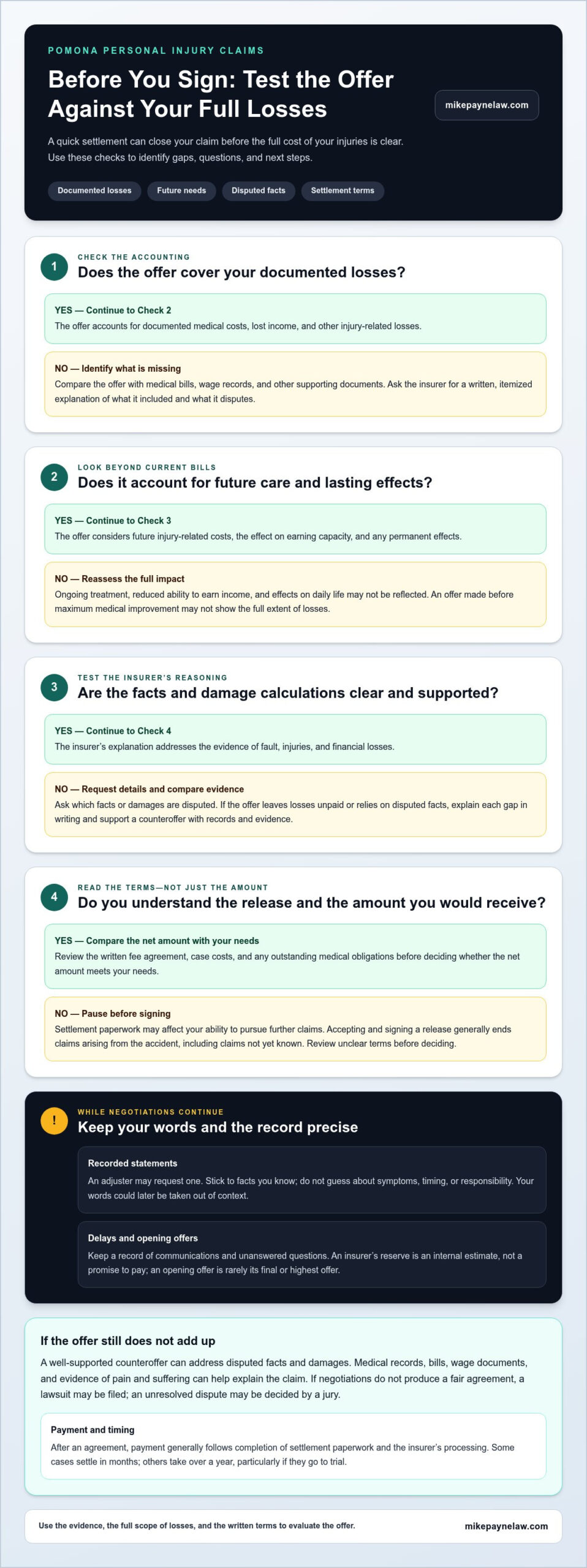
Serious injuries can affect a claim’s value when they require ongoing care or limit a person’s ability to earn income. An offer made before maximum medical improvement may not reflect the full extent of losses. Consider whether it accounts for future treatment, reduced earning capacity, or permanent effects. Settlement paperwork may affect your ability to pursue further claims related to the incident, so review it carefully before signing.
Warning signs include an offer that leaves documented losses unpaid, overlooks future medical needs, or pressures you to sign quickly. Ask for a written, itemized explanation of what the insurer included and what it disputes. The breakdown can show whether the disagreement concerns fault, injury severity, or the calculation of damages.
After you reach an agreement, payment generally follows completion of the settlement paperwork and the insurer’s processing. Before accepting, understand how the attorney’s contingency fee and case costs affect the amount you receive. The written fee agreement explains how the fee is calculated and how expenses are handled. Review those terms and any outstanding medical obligations before deciding whether the net amount meets your needs.
If negotiations don’t produce a fair agreement, an injured person can file a lawsuit. If the dispute remains unresolved, a jury may decide what the defendant owes. Some personal injury cases settle in months; others take over a year, particularly if they go to trial. Disputed fault, serious injuries, and evidence about future care can affect the process and its duration.
If settlement terms remain unclear, discussing the offer with an attorney can help you understand your options before signing.
When should you counter a settlement offer?
Counter when the insurer’s offer fails to account for your losses or relies on disputed facts. If you’re deciding how to handle a low settlement offer for my injuries in Pomona, compare the insurer’s reasoning with the evidence before responding.
Low Initial Offers and Rejection
An opening offer is the insurer’s first proposed amount. You may reject it if it leaves documented losses uncovered. Accepting and signing a release generally ends claims arising from the accident, including claims not yet known. Before countering, compare the offer with your medical expenses, missed work, and continuing care. Explain each gap in writing and support your requested amount with records.
Insurer Reserves and Opening Offers
An insurer’s reserve is an internal estimate of potential claim exposure, not a promise to pay that amount. Adjusters assess factors such as liability evidence, documented injuries, and financial losses. The reserve doesn’t establish what your personal injury case is worth or dictate the final offer. An opening offer is rarely the insurer’s final or highest offer, so assess its rationale against the actual evidence.
Insurer Tactics and Delays
After an accident, an adjuster may request a recorded statement. Your words could later be taken out of context to dispute your injuries or minimize fault. Stick to facts you know, and don’t guess about symptoms, timing, or responsibility. An insurer may also delay a claim, hoping frustration or financial pressure leads you to accept less. Keep a record of communications and note which questions remain unanswered.
Insurer Calculations and the Multiplier Method
The multiplier method estimates non-economic damages by multiplying economic losses, such as medical bills, by a factor. Personal injury settlement multipliers usually range from 1.5 to 5, with higher multipliers assigned to more severe injuries. This approach isn’t a fixed valuation formula. Injury severity, recovery time, liability evidence, and long-term effects all influence the insurer’s calculation. Knowing how to handle a low settlement offer for my injuries in Pomona includes challenging calculations that overlook serious harm or documented losses.
Evidence used to establish liability and injuries
A strong injury case connects the incident to another party’s responsibility and the resulting damages. Sort records by what they establish, then identify gaps before presenting your claim.
Evidence Establishing Liability
Evidence of fault shows how the incident happened and why another party may be responsible. It connects the facts of the event to the harm claimed. Preserve incident reports, photographs, and witness details when available. For a premises incident, record the location and condition involved; for a collision, keep relevant repair estimates. A clear timeline helps the insurer assess responsibility against conflicting accounts.
Evidence Documenting Injuries
Injury evidence documents your diagnosis, treatment, expenses, and the effects on daily life. Medical records and bills show the care received and expenses incurred. Wage documents can establish income lost during recovery, while a journal can track pain and limitations over time. Together, these records explain how the injury developed and why losses may extend beyond the first appointment. Keep copies, including records of later treatment.
Build a simple evidence file with a dated index. For each item, note what it establishes and which part of the claim it supports. This helps an injury lawyer present the case clearly, identify missing documentation, and respond to the insurer’s specific disputes. Organized evidence can distinguish a supported loss from an estimate that needs more proof.
- Match each medical bill to the related treatment record.
- Pair wage records with the dates missed from work.
- Keep repair estimates separate from medical damages.
- Update the pain journal when symptoms or daily limits change.
Before sending a demand, check that each claimed loss has supporting documentation. If you need help organizing evidence for an injury claim, discuss your records with an injury attorney.
Law Offices of Michael D. Payne: Car Accident Representation
Law Offices of Michael D. Payne represents people injured in car accidents who receive offers that don’t reflect their documented losses. The firm can review the insurer’s position, assess evidence of fault and damages, and negotiate for compensation that accounts for the injury’s effects. If negotiations don’t resolve the dispute, legal representation can help prepare the case for court.
Turn to a personal injury lawyer when an offer overlooks treatment, lost income, or ongoing effects, or when the insurer disputes responsibility. The firm also represents people injured in motorcycle and bicycle accidents, as well as slip-and-fall incidents. Each claim requires evidence suited to the specific accident and injury.
To discuss a settlement offer with Law Offices of Michael D. Payne, contact the firm.
Choose Your Next Move With Care
The decision you make now can shape the options available for your claim. Before responding, understand what the proposed settlement would resolve and whether you’re ready to close the matter. Knowing how to handle a low settlement offer for your injuries in Pomona means making a deliberate choice instead of letting pressure set the terms.
If you’re unsure how to move forward, legal guidance can help you assess the offer and consider your next step. Law Offices of Michael D. Payne represents people injured in car accidents, slip-and-fall incidents, and motorcycle accidents. Share the offer and your concerns with the firm to discuss whether representation fits your situation.
Contact Law Offices of Michael D. Payne to discuss your claim. You deserve the space to make an informed decision and move ahead with confidence.
Frequently Asked Questions
Should You Accept the Insurer’s First Offer?
Don’t accept simply because the insurer calls its first offer final or asks for a quick response. Request the offer and its terms in writing, then compare them with your current treatment and remaining expenses. For example, if follow-up appointments are scheduled, ask whether the offer accounts for them. Review the release before signing, because its wording defines which claims you give up.
What Can I Be Compensated for Through an Injury Claim In Pomona, CA?
An injury claim may seek compensation for losses connected to the incident, including medical care, missed work, future treatment, and pain and suffering. Depending on the facts, property damage and other out-of-pocket expenses may also matter. Keep receipts for incident-related purchases and repair estimates, and separate them from unrelated costs. This makes it easier to explain how each requested amount relates to the injury.
What Happens if You Accept a Lowball Settlement?
Accepting a low settlement and signing a release generally ends claims arising from the incident, even if some effects were unknown when you signed. If symptoms worsen or new treatment becomes necessary, the release may prevent you from seeking additional compensation. Before agreeing, read the release’s scope and keep copies of the signed document and final settlement paperwork.
What Is the Average Settlement for Pain and Suffering in California?
There’s no single average that predicts what a California claim should pay for pain and suffering. The amount depends on the injury’s seriousness, recovery, lasting effects, and evidence connecting those effects to the incident. Another person’s case is not a reliable benchmark for yours. Ask how the proposed amount accounts for your specific limitations, treatment history, and documented effects on daily activities.
What Should a Fair Settlement Include?
A fair settlement should address the injury-related losses supported by your claim and explain what the payment resolves. Look for clear treatment of past expenses, anticipated care, income losses, and non-economic harm. Also review whether the amount is gross or reflects deductions, and whether the release covers all claims from the incident. Ask for an itemized written breakdown if the calculation or release language is unclear.
What is the role of the insurance company?
The insurer handles the claim for its insured and evaluates the facts, fault, and supporting documents when deciding what it will pay under the policy. An adjuster may request records, review statements, and explain the insurer’s position. The insurer does not decide your needs for you. Keep claim communications and note which facts or losses the adjuster accepts or disputes.