

If you weren’t at fault, the driver responsible may ultimately be liable for your accident-related medical treatment. But bills can come due before an injury claim is resolved. Who pays for my medical treatment after a crash in Fontana may depend on Medical Payments coverage, health insurance, or the at-fault driver’s liability insurer.
Uncertainty about payment can add pressure while you recover. The at-fault insurer may investigate who was responsible and whether your injuries are connected to the crash before paying, so it may not cover immediate bills.
This article explains which coverage may help pay for treatment, what options may be available without health insurance, and how a medical lien or reimbursement claim can affect the amount left from a settlement. It also covers how fault and available policies can shape who pays, and when.
Key Takeaways
- Understand how fault can affect compensation and why an insurer may review injury-related treatment before paying.
- Learn how health insurance may help cover ongoing care and what options could apply when you lack coverage.
- See why a settlement may be reduced by medical liens, insurance reimbursement claims, and other outstanding obligations.
- Compare the potential roles of available insurance coverage and the at-fault driver’s insurer in paying accident-related medical bills.
How Do California Liability Laws Affect My Claim?
After a Fontana crash, the driver responsible may ultimately owe for your accident-related treatment. The payment route and timing depend on fault, available coverage, and whether the claim has settled.
At-Fault Party Responsibility for Treatment
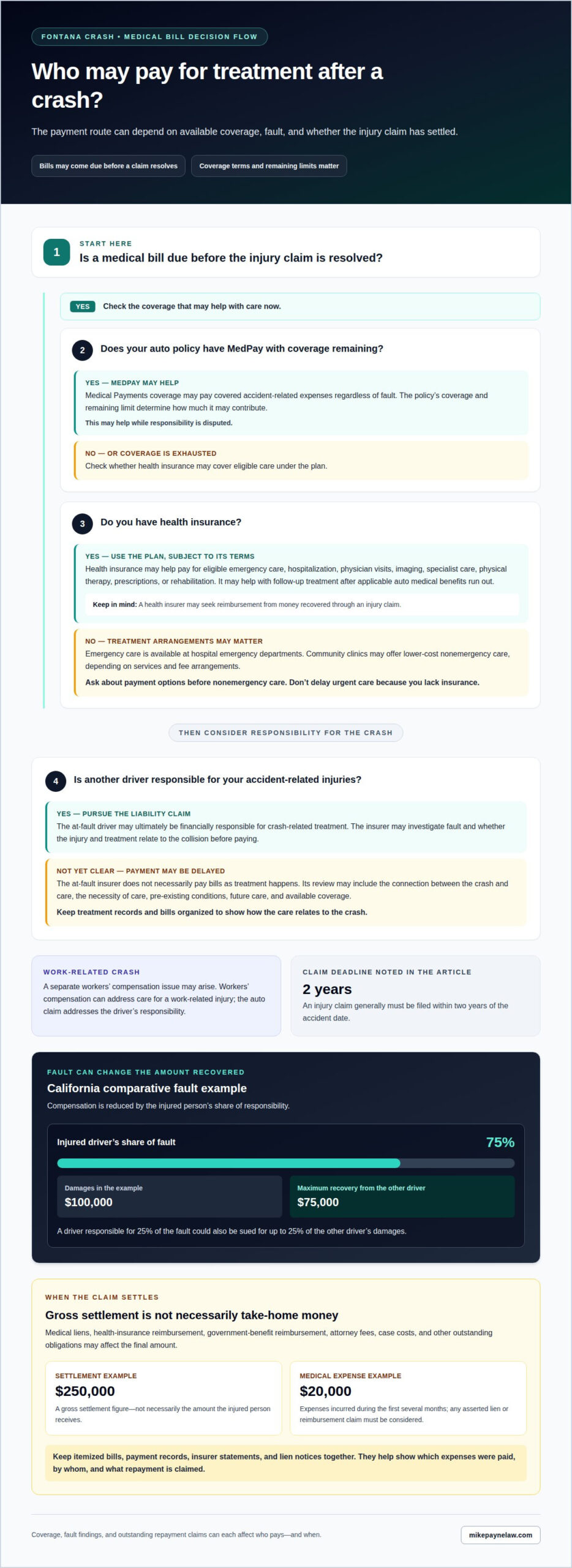
Liability means the at-fault driver may be financially responsible for crash-related injuries. You can pursue accident-related medical expenses through that driver’s liability claim, but the insurer may investigate fault and whether the treatment relates to the collision. According to the California Legislature, an injury claim generally must be filed within two years of the accident date. If the crash happened at work, a separate workers’ compensation issue may arise. Workers’ compensation can address care for a work-related injury, while the auto claim addresses the driver’s responsibility.
No-Fault Personal Injury Protection
Medical Payments coverage, often called MedPay, may help pay covered accident-related expenses regardless of fault. This can matter while responsibility is disputed, because covered expenses may be paid without waiting for the at-fault driver’s insurer to accept responsibility. The policy’s coverage and remaining limit determine how much MedPay may contribute.
Comparative Fault and Compensation
California’s comparative fault system reduces compensation by the injured person’s share of responsibility. For example, a driver who is 75 percent at fault in an accident causing $100,000 in damages could recover at most $75,000 from the other driver. A driver responsible for 25 percent of the fault could also be sued for up to 25 percent of the other driver’s damages. Fault findings can therefore affect both recovery and exposure.
Medical Bills Before Settlement
The at-fault driver’s insurer does not necessarily pay medical bills as treatment happens. Before paying, it may investigate fault, whether the injury and treatment relate to the crash, the necessity of care, pre-existing conditions, future care, and available coverage. This can leave a gap between receiving care and resolving the claim. MedPay may help with covered expenses in the meantime, while the liability claim addresses payment later. Keep treatment records and bills organized to show how the care relates to the crash.
What If I Don’t Have Health Insurance?
In California, health insurance may help pay for accident-related care, depending on the policy. Without health coverage, available auto benefits and treatment arrangements become especially important.
Health Insurance After PIP Benefits
Health insurance may help pay for ongoing care after a crash, depending on the policy. You can use health insurance for treatment, subject to your plan’s coverage and terms. A policy may help cover emergency care, hospitalization, physician visits, imaging, specialist care, physical therapy, prescriptions, or rehabilitation. For example, once applicable auto medical benefits run out, your health plan may cover eligible follow-up visits. Keep bills and records showing that the care relates to the collision.
Health Insurance Reimbursement Rights
Reimbursement rights allow a health insurer to seek repayment for accident-related care it paid for. In California, health insurers may seek reimbursement from money recovered through an injury claim. A settlement may therefore need to account for payments already made toward treatment. Keep insurer statements and treatment bills together. Reviewing them can help identify which accident-related expenses were paid and whether repayment is being claimed.
Health Insurance Versus Auto Insurance
Health insurance and auto coverage can play different roles in paying crash bills. MedPay may help with covered accident expenses regardless of fault, while health insurance may cover eligible care under the policy. If applicable PIP medical benefits are exhausted, health insurance may help pay for continuing treatment. The coverage type, services covered, and benefits remaining shape which source may pay a particular bill. Report the crash accurately when submitting claims.
Treatment Without Health Insurance
Without health insurance, available auto coverage may help pay eligible accident-related bills. Fontana crash victims can seek emergency care at hospital emergency departments; community clinics may offer lower-cost nonemergency care, depending on their services and fee arrangements. Ask about payment options before nonemergency treatment, and keep every bill and record. These documents can help connect treatment to the crash and support an injury claim. Don’t delay urgent care because you lack insurance.
Medical liens and injury claim settlements
A settlement doesn’t automatically become the injured person’s take-home amount. A $250,000 California car-accident settlement may need to account for medical liens, reimbursement claims, fees, expenses, and other outstanding obligations.
Medical Liens on Injury Claims
A medical lien is a claim for repayment from money recovered through an injury claim. It matters because bills paid during treatment can affect how much settlement money remains for you.
For example, an injured person may incur $20,000 in medical expenses during the first several months after a crash. If a provider or insurer asserts a lien or reimbursement claim, that amount must be considered when the settlement is distributed. Keep itemized bills, payment records, and lien notices together. Comparing them helps identify which expenses were paid, by whom, and what repayment is being claimed.
A settlement analysis should account for more than the stated medical balance. Attorney fees and case costs, medical liens, health-insurance reimbursement, government-benefit reimbursement, and other accident-related obligations may affect the final distribution. The $250,000 figure is the gross settlement in the example, not necessarily the amount the injured person receives. Reviewing each claim against the supporting records can clarify what remains after obligations are addressed.
Deferred Payment for Medical Care
Deferred payment means treatment costs may be addressed later through an injury claim rather than paid entirely upfront. A medical lien can tie payment for care to settlement proceeds, which may help someone obtain treatment while a claim is unresolved.
That arrangement changes the timing, not the need to account for the bill. Treatment expenses accumulated over time may still be claimed and considered when settlement funds are allocated. Keep records of each visit and charge, and distinguish amounts paid by health insurance from balances subject to a lien. This can prevent confusion when several parties seek repayment from one recovery.
Before accepting a settlement, compare its gross amount with documented liens, reimbursement demands, case costs, and other obligations. A $250,000 recovery can leave a different net amount after those items are addressed. The settlement figure alone therefore doesn’t show how much will reach you. Clear accounting of the claims and expenses is essential to understanding the funds available after resolution.
Who may pay medical bills after a California car accident
Several sources may contribute to crash-related medical bills in California. The applicable source depends on fault, the policies involved, and the type of care.
Potential Sources for Medical Bills
Potential payers include the at-fault driver’s liability insurer, your own auto coverage, and health insurance. Each may play a different role, so identifying all applicable policies helps clarify where treatment costs can be submitted.
The at-fault insurer may ultimately be responsible when its driver caused your injuries, but it can investigate before paying. Your own Medical Payments coverage may help with covered expenses regardless of fault. Depending on your policy, health insurance may cover eligible emergency care, hospitalization, physician visits, imaging, specialist care, physical therapy, prescriptions, or rehabilitation. A passenger’s situation may involve additional coverage: the car’s PIP coverage is primary, while the passenger’s own auto insurance may provide excess coverage.
Keep this distinction in mind: a bill paid during treatment and the amount ultimately owed by another party are not always the same. For example, your health plan may pay for a physician visit while the liability claim is under review. Records showing the provider, service, date, and payment source help connect each charge to the crash.
Uninsured and Underinsured Motorist Coverage
Yes. A California uninsured or underinsured motorist claim may include medical expenses, lost income, future treatment, loss of earning capacity, pain and suffering, and other qualifying losses. Available coverage and the circumstances determine which losses the claim may address.
If the at-fault driver has no insurance, you may seek compensation through your own uninsured motorist coverage. Underinsured motorist coverage may apply when the other driver’s coverage is insufficient for qualifying losses. The claim is made under your policy, so organize medical records, bills, and documentation of related losses. Understanding how these potential payers fit together can help you assess your California car accident claim.
Law Offices of Michael D. Payne: Car Accident Representation
Law Offices of Michael D. Payne represents people injured in car accidents and can help address disputes over fault, insurance coverage, medical expenses, and settlement claims. Consider legal representation if an insurer questions whether treatment relates to the crash, delays evaluating a claim, or disputes the amount of compensation. Reviewing medical records, bills, and available policies can help explain how these issues affect your injury claim.
As you focus on recovery, keep copies of treatment records, insurer communications, and any lien or reimbursement notices. These documents help show which expenses relate to the collision and what obligations may affect a settlement. The firm also represents people injured in motorcycle and bicycle accidents.
Contact Law Offices of Michael D. Payne to discuss your car accident claim.
Take the Next Step Toward Clarity
Understanding who pays for your medical treatment after a crash in Fontana starts with a clear picture of the claim, not just the bills. Gather your treatment records, insurer correspondence, and any repayment notices. Reviewing them together can clarify what still needs attention and what questions to raise about your recovery and claim.
You don’t have to untangle every part of the process alone. A conversation with a legal professional can help you understand how your records and insurance issues fit into your injury claim. When you’re ready, explain what happened and take the next step.
Contact Law Offices of Michael D. Payne to discuss your situation. You deserve a clear path forward while you focus on healing.
Frequently Asked Questions
Who Pays Medical Bills After a Car Accident in California?
Who pays for my medical treatment after a crash in Fontana depends on the available coverage and how the claim proceeds. Payment may come from auto coverage, health insurance, or the at-fault driver’s liability insurer. For example, a health plan may pay for an eligible appointment while the liability insurer reviews responsibility. Keep the explanation of benefits with the bill to track payments and remaining balances.
Can I Recover Future Medical Expenses?
Yes. A California injury claim may include reasonably necessary future medical care related to the crash. The claim should connect expected care to the injury rather than treating every possible future service as an established expense. Records describing ongoing symptoms and anticipated follow-up care can help explain why further treatment may be part of recovery.
How Does Treatment on a Lien Work?
Treatment on a lien means medical charges may be deferred and claimed against a later injury recovery. The provider’s bill does not disappear; it may need to be addressed from settlement funds. Keep lien paperwork with visit records and statements, then compare the claimed balance with the treatment received. This helps clarify the repayment request during settlement accounting.
What Happens While You Wait for the Claim to Resolve?
If you’re considering who pays for my medical treatment after a crash in Fontana, remember that care and claim review can follow different timelines. Bills may arrive while an insurer evaluates the claim and treatment records continue to build. Keep each statement, payment notice, and insurer communication together. If coverage pays a charge, save the payment details to help identify any outstanding balance.
What Is Medical Payments Coverage (MedPay)?
Medical Payments coverage, or MedPay, is auto insurance that may pay covered accident-related medical expenses regardless of fault. It can help with eligible bills while a fault dispute continues. The policy and remaining benefits determine which expenses it can cover, so match submitted bills to the treatment received.
What Types of Future Medical Care May Be Included?
Future care may include reasonably necessary treatment connected to crash injuries. Depending on the injury and policy, it may involve physician or specialist visits, diagnostic imaging, physical therapy, prescriptions, or rehabilitation. For example, continuing symptoms may call for follow-up visits and therapy. Medical records should connect expected treatment to the accident and explain its role in ongoing care.