

A quick insurance offer can feel like relief, but it may arrive before you know the full cost of your injuries. Understanding how insurance companies try to devalue your claim means watching for low early offers, repeated requests for documents, and claims that your injuries are minor, unrelated to the accident, or partly your fault. Insurers may also dispute future treatment or lost earning capacity. The pressure can be intense when bills are piling up, but you don’t have to decide before you understand what the offer covers.
It’s reasonable to expect an insurer to assess your claim fairly, and a settlement can resolve a dispute. But accepting too soon or responding without a clear record can limit your options. This article explains common delay, denial, and defense tactics, how to scrutinize an offer or document request, and what evidence may support your claim. You’ll also learn when a personal injury lawyer may help you challenge an unfair decision and protect your right to seek compensation.
Key Takeaways
- Assess whether a settlement accounts for the full impact of your injuries, not just immediate expenses.
- Keep organized records of insurer requests and the documents you provide so you can spot unnecessary delays.
- Look closely at arguments about fault, prior conditions, and the connection between the accident and your injuries.
- Consider legal advice before signing a settlement or release, especially when the insurer disputes your claim.
1. What Is a Reasonable Settlement Offer?
A reasonable settlement should reflect the evidence, the coverage involved, and losses linked to the accident. No single figure fits every injury claim. Review a quick offer carefully if treatment is ongoing or the records don’t yet show the injury’s full impact. Signing a release may prevent you from reopening the claim if your condition later worsens.
Adjusters consider responsibility, policy coverage, and documented losses when evaluating an offer. Medical records, bills, and wage information can show the injury’s impact. An offer may leave out future medical care, rehabilitation, therapy, reduced earning potential, pain and suffering, emotional distress, or lasting disability. Ask for a written breakdown so you can see which losses the settlement includes and which it excludes.
Timing matters. An insurer may offer a quick settlement while you’re facing medical bills or missed work, before doctors know whether you’ll need follow-up treatment. For example, an injured person struggling with bills and unable to work might receive a $10,000 offer before the full extent of their injuries is known. That figure alone doesn’t show whether the offer accounts for future care or lost income.
A low offer may arrive immediately or after delays. An adjuster might start far below the claim’s potential value, then make several low offers. Delays can add pressure to accept, especially as bills continue to arrive. Keep every offer and response in writing. Before deciding, compare the insurer’s explanation with your medical records, documented lost income, and expected treatment.
For a separate, state-specific example, according to the Oklahoma Legislature, Oklahoma policies setting a time limit for roof wind or hail damage not evident without inspection must allow claims after the first anniversary but no later than 24 months after the loss. This concerns those property policies, not injury settlements. For an injury claim, seek a consultation before signing a release if treatment or losses remain uncertain.
2. Excessive documentation requests
An adjuster may request medical records or police reports before evaluating your losses. These documents can support a claim, but repeated requests for the same file or demands unrelated to the accident can slow the review. Delays and repeated requests can postpone payment and pressure an injured person to accept a low offer. Consider whether each request relates to a stated coverage or evidence issue.
For example, an adjuster might request a treatment record, then ask for the same record again after you have sent it. Keep a simple log of the request date, document requested, submission date, and delivery confirmation. Save copies of medical records, bills, accident reports, wage documents, and all messages with the insurer. This timeline can help if the adjuster later says evidence is missing.
Respond in writing and ask the adjuster to identify the specific document needed and explain how it relates to the claim. If a police report is pending, say so and provide an update when it arrives. If a medical record is unavailable, identify the provider who holds it and explain what steps you’re taking to obtain it. Specific replies make it harder for a vague request to stall the file.
Protect your privacy while providing relevant evidence. A broad medical authorization may reach records beyond your accident injuries, so understand its scope before signing. Don’t send unrelated personal documents simply because they were requested. Ask why they matter to the claimed losses. Keep the original records, send copies, and retain proof of what you provided to the insurer.
If the insurer repeats requests, delays a decision, or uses incomplete documentation to minimize your injuries, a lawyer can assess the pattern and help organize the evidence. Discussing the claim with a personal injury lawyer can help you decide how to respond before signing a release or accepting an offer.
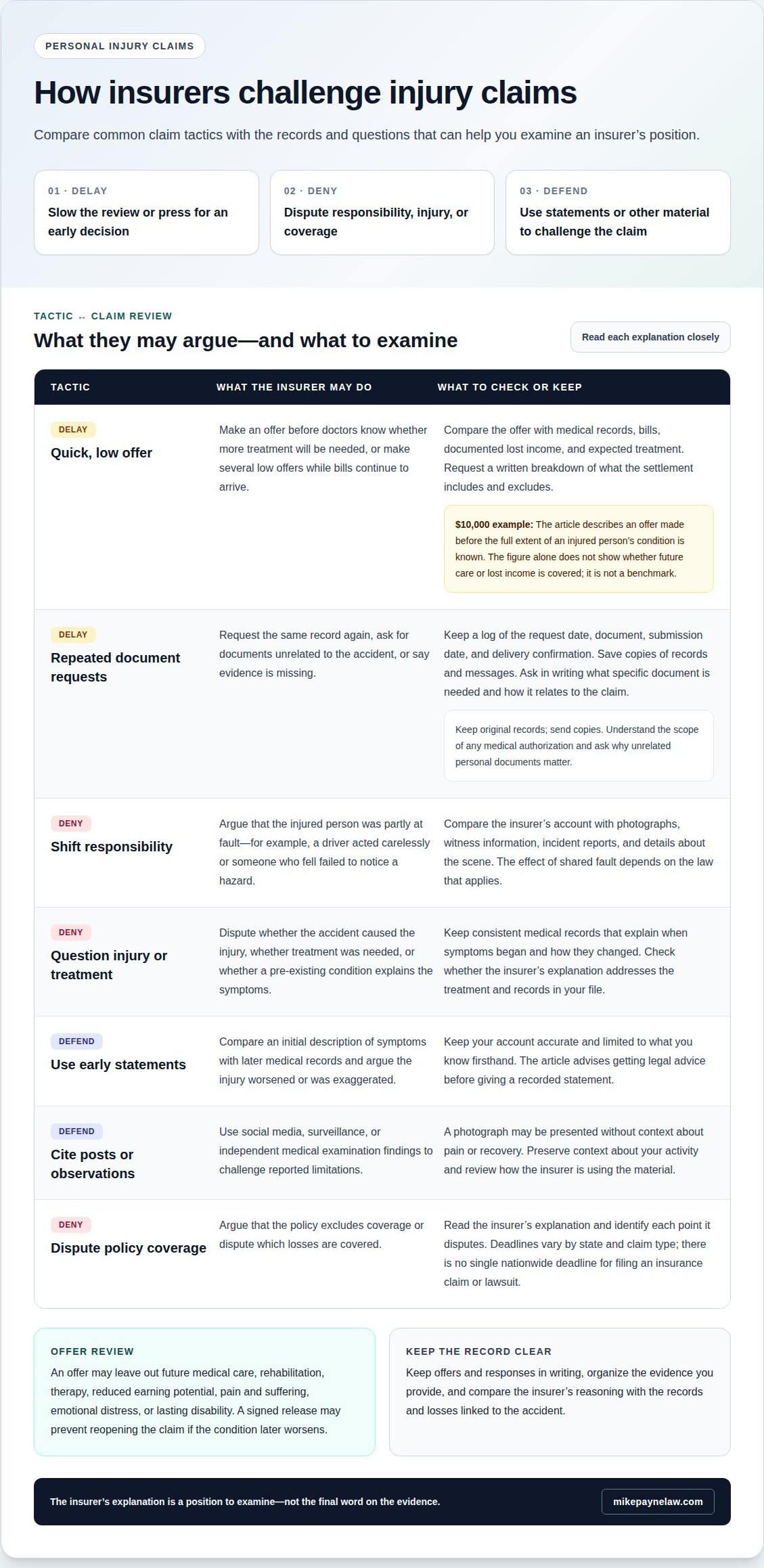
3. What Are The Common Tactics Insurance Companies Use to Fight and Devalue Injury Claims?
Insurers often use the three Ds: delay, deny, and defend. In a serious injury claim, an adjuster may dispute responsibility, question medical treatment, or argue that the policy excludes coverage. These tactics can reduce a settlement by challenging fault or the value of documented harm. Read the insurer’s explanation closely and identify each point it disputes.
Disputes over responsibility often shift blame to the injured person. An adjuster might argue that a driver acted carelessly or that someone who fell failed to notice a hazard. If the insurer says you share responsibility, compare its account with photographs, witness information, incident reports, and details about the scene. The effect of shared fault on recovery depends on the law that applies, so don’t assume the insurer’s conclusion is final.
There’s no single nationwide deadline for filing an insurance claim or lawsuit. Deadlines depend on the state and type of claim, so identify the applicable deadline promptly with legal help.
An insurer may also use early statements to challenge an injury claim. An adjuster might compare your initial description of symptoms with later medical records and argue that the injury worsened or was exaggerated. Get legal advice before giving a recorded statement. Keep your account accurate and limited to what you know firsthand.
Insurers may review social media for posts they can use to dispute claimed injuries. A photograph of an activity may be presented without context about pain or recovery. An insurer may also cite surveillance or independent medical examination findings to challenge reported limitations. Preserve context about your activity and discuss with a lawyer how the insurer is using these materials.
Medical disputes may concern causation, treatment, or a pre-existing condition. Consistent records can help explain when symptoms began and how they changed. Insurers may count immediate lost wages while overlooking reduced future earning capacity. In workplace injury claims, they may dispute medical findings, delay treatment approvals, or minimize wage replacement. Compare each reduction with the evidence and the insurer’s written reasons.
4. Consulting a lawyer about an unfair claim decision
Consult a personal injury lawyer when an insurer denies coverage, disputes medical findings, or pressures you to accept a quick settlement. A lawyer can compare the insurer’s written reasons with the policy, medical records, accident reports, and claim correspondence. This review may reveal missing evidence or an argument that doesn’t fit the documented facts.
Early legal advice can help preserve evidence and identify the deadline that applies to your claim. Deadlines vary by state and type of claim, so waiting may put your options at risk. Bring the lawyer the insurer’s letters, your records, and a timeline of calls and requests. These details can help show how the adjuster handled the claim.
Before giving a recorded statement, speak with a lawyer about the questions and how your answers may be used. Before signing a settlement release or medical authorization, get legal advice and understand what rights or records the document covers. A quick signature can resolve a claim before the full extent of your injuries and losses is clear.
A lawyer can investigate, gather evidence, and compile expert reports when the insurer’s account conflicts with yours. In disputes involving premises liability or physical damage, technical consulting firms like General Forensic Engineers, LLC can conduct forensic assessments to determine the root causes of structural failures and hazards. For example, medical evidence may help address a claim that your symptoms came from a pre-existing condition. Wage records can also help document lost income beyond your immediate time away from work.
If the insurer denies your claim, ask for its reasons in writing and keep the response with your records. A lawyer can assess whether the explanation fits the available evidence, challenge an undervaluation, and negotiate for compensation. If settlement discussions fail, an attorney can file suit. Whether to take that step depends on the evidence, the disputed issues, and the legal options available.
If an insurer’s decision leaves important injuries or losses unaddressed, discuss the denial, offer, and supporting documents with a personal injury lawyer. A focused review can clarify what evidence may strengthen your position and what response to consider next.
Law Offices of Michael D. Payne
Law Offices of Michael D. Payne represents people facing disputed injury claims and settlement offers that may not reflect their documented losses. If an insurer questions responsibility, challenges medical evidence, delays a decision, or pressures you to sign before the full impact is clear, legal support can help assess the dispute and determine how to respond. The firm handles car accident, slip and fall, motorcycle accident, and bicycle accident claims. It can review claim documents and evidence, address the insurer’s position, and pursue compensation through the appropriate legal process.
If you’re weighing an offer or challenging a claim decision, contact Law Offices of Michael D. Payne to discuss your situation.
Take the Next Step With Confidence
Recognizing how insurance companies try to devalue your claim can help you pause before making a decision that affects your recovery. You don’t have to accept an adjuster’s position as the final word. A thoughtful response starts with understanding what the insurer disputes, what evidence matters, and which choices could affect your ability to seek compensation.
Give yourself time to make an informed decision. If you’re unsure whether an offer reflects your situation, or you face a denial or ongoing dispute, legal guidance can help clarify your options. Law Offices of Michael D. Payne can discuss your injury claim and the insurer’s response with you, helping you consider a path forward with greater clarity.
Talk with Law Offices of Michael D. Payne about your claim. You deserve to move forward with clear information and a voice in what happens next.
Frequently Asked Questions
What Are The Common Tactics Insurance Companies Use to Fight and Devalue Injury Claims?
Common tactics include disputing responsibility, challenging whether treatment relates to the accident, and questioning claimed losses. An insurer may also rely on a narrow reading of coverage or use a statement out of context. Compare each specific argument with the evidence supporting your account, such as a witness’s description or records showing when your symptoms began.
How Much Is Your Claim Actually Worth?
Your claim’s value depends on the evidence of responsibility, your injuries, and their effects on work and daily life. A useful assessment considers documented expenses and losses, along with future effects supported by evidence. For example, a temporary work restriction differs from a lasting inability to perform the same duties. Review the claim as a whole, not as a single bill.
What Are the Four Classifications of Unfair Claims Settlement Practices?
For a practical review, group possible unfair conduct into four patterns: delay, denial, inadequate investigation, and undervaluation. These are useful ways to describe what happened, not a universal legal classification for every state. Note which pattern fits and preserve the insurer’s letters, dates, and stated reasons. Applicable rules depend on the jurisdiction and type of insurance claim.
What Is a Reasonable Settlement Offer?
Evaluate a reasonable offer against the available evidence and the losses it resolves, not just its headline amount. Read the release alongside the offer, because it may define which claims you’re giving up. Check whether the payment accounts for disputed expenses, outstanding bills, and known effects on work or daily activities. Ask the insurer for clarification in writing if its calculation is unclear.
What tactics do insurance companies use to devalue personal injury claims?
Knowing how insurance companies try to devalue your claim can help you spot arguments that need a careful response. An adjuster may emphasize a gap in treatment, use a brief social media post to question your limitations, or cite an earlier statement as inconsistent. Keep context with each record, including appointment dates, work restrictions, and what an activity actually involved.
How can insurers dispute medical treatment or argue an injury was pre-existing?
Insurers may point to earlier symptoms, prior diagnoses, or a gap in treatment to argue that an injury began before the accident. A clear medical timeline can help distinguish earlier conditions from new symptoms or a worsening after the event. Tell your treating providers about relevant medical history and when changes occurred so their records accurately address the connection and progression.