

What if the first settlement offer arrives before you know how your injuries may affect your recovery, work, or daily life? Fighting for maximum compensation in ontario ca starts with taking time to understand the offer and what it covers. A quick offer may not reflect the full losses your accident caused, and accepting it may limit your options.
It’s reasonable to want fair compensation and clear answers about what belongs in a claim. The strength of your case depends on more than damage to your car: evidence, medical records, fault, and documented financial and personal losses all matter. California also allows recovery when an injured person shares some responsibility, though compensation may be reduced by their share of fault.
This article explains what can affect a car accident claim’s value, how to preserve evidence and assess an insurer’s offer, and why deadlines matter. You’ll also learn when speaking with a local attorney may help you understand your options. Michael D. Payne brings over 25 years of experience, including prior work in insurance defense, to evaluating motor vehicle accident claims in Southern California.
Key Takeaways
- Maximum compensation means pursuing losses supported by evidence and legally recoverable, not expecting a guaranteed payout.
- Preserve photos, witness details, medical paperwork, and insurer correspondence to help connect the crash to your injuries and losses.
- Compare an insurer’s offer with documented expenses and what’s known about your recovery before deciding how to respond.
- Keep a dated record of symptoms, expenses, missed work, and claim communications to help protect your case.
- When fighting for maximum compensation in ontario ca, compare attorneys’ experience, communication, case strategy, and fee terms before choosing representation.
Fighting for Maximum Compensation in Ontario, CA: What It Really Means
An injury, a damaged vehicle, and calls from an insurance company can leave you managing several urgent problems at once. If you’re fighting for maximum compensation in ontario ca, the goal isn’t to demand an arbitrary amount or expect a guaranteed payment. It’s to identify and pursue losses that are legally recoverable and supported by the facts of your California accident claim.
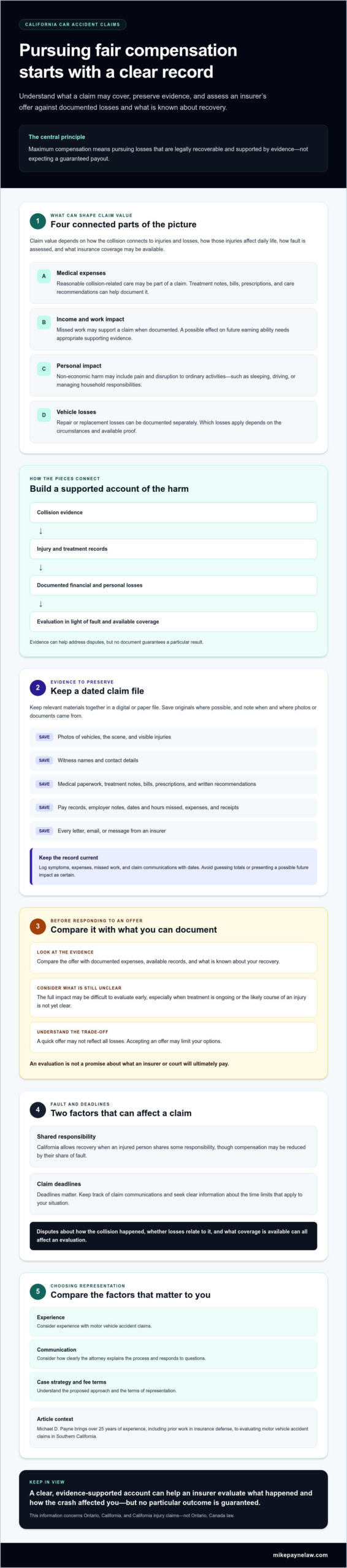
In legal terms, damages are monetary compensation for harm. For an injury claim, potential value depends on evidence connecting the collision to your injuries and losses, how those injuries affect your life, how fault is assessed, and what insurance coverage may be available. An evaluation is not a promise about what an insurer or court will ultimately pay.
What compensation may include after a California car accident
A claim may include reasonable medical expenses related to the collision, supported by records such as bills, treatment notes, and care recommendations. Keep documentation while treatment is ongoing. It helps show what care you received and how it relates to the crash.
Lost income may also be part of a claim if an injury kept you from working. If your ability to earn income in the future may be affected, that impact needs appropriate supporting evidence. Non-economic harm can include pain and disruption to ordinary activities, such as difficulty sleeping, driving, or managing household responsibilities. Vehicle repair or replacement losses can be documented separately. Which losses apply depends on the circumstances and available proof.
Why a claim’s value cannot be promised in advance
Recovery varies from person to person. One injured driver may improve quickly; another may need ongoing care or face lasting limits. The full impact can be unclear early on, so evaluating a claim before you understand the injury and its likely course can be difficult.
Disagreements about how the collision happened can affect how responsibility is assessed. Insurers may dispute whether particular treatment or losses relate to the crash, while available coverage can affect what may be recovered. Records, witness accounts, and other evidence can help address those disputes, but no document guarantees a particular result.
A claim can be evaluated, but its outcome can’t be guaranteed. Pursuing fair compensation means building a clear, supported account of the harm and considering the evidence, fault, and coverage, rather than relying on a promised figure. This article concerns Ontario, California, and California injury claims, not Ontario, Canada law.
How Evidence and Documented Losses Strengthen an Ontario Accident Claim
A persuasive claim connects the collision to the injury, treatment, and losses with a consistent record. Notes made soon after the event can preserve details that may be harder to recall later. They don’t decide fault or guarantee a result, but they give an insurer a clearer basis for evaluating what happened and how the crash affected you.
Start a dated file, digital or paper, and keep relevant materials together. Save photographs of the vehicles, the scene, and visible injuries; names and contact details for witnesses; medical paperwork; and every letter, email, or message from an insurer. The California Department of Insurance also explains practical steps to take after an accident. Keep originals where possible, and note when and where photos or documents came from.
Which records can help document injuries and financial losses?
Keep treatment records, bills, prescriptions, and written recommendations from medical providers. Together, these can show what care you received and how it relates to your reported symptoms. If you miss work, save pay records and employer notes, and log the dates and hours missed. Record expenses as they arise and keep receipts when available.
Don’t guess at totals or present a possible future impact as certain. If more care may be needed or an injury could affect your ability to work, those losses require appropriate supporting evidence. Ask your provider or another relevant professional about documentation rather than estimating your recovery or future earnings on your own.
How collision evidence can clarify fault
Scene photographs may capture vehicle positions, damage, road conditions, signs, or visibility that could change after the vehicles leave. Witness details can help preserve accounts from people who saw the collision. If a report is available, keep a copy with your other records. Evidence gathered promptly can help clarify disputed details, though each item must be considered in context.
Share information accurately and keep a copy of what you send to an insurer. Avoid altering photos or filling gaps in your memory with assumptions. If you’re unsure how a document could affect your claim, get advice before responding. The Law Offices of Michael D. Payne represents motor vehicle accident clients in Southern California, including Ontario, and serves communities including West Covina, Pomona, Covina, Chino, Fontana, San Bernardino, Baldwin Park, and Azusa. You can review its motor vehicle accident representation and contact the firm to discuss your evidence, documented losses, and available options.
Consistent records turn scattered details into a clearer account of the crash, your care, and its impact. For anyone fighting for maximum compensation in ontario ca, an organized account can help keep discussions grounded in what the evidence shows.
Is the Insurer’s First Offer Enough? Assessing a California Settlement
An insurer’s first offer isn’t automatically fair or inadequate. Its value depends on what the offer covers, what your records support, and whether the effects of your injuries are reasonably clear. Compare the proposal with documented losses and your known course of recovery before deciding how to respond. If treatment is ongoing or your ability to work remains uncertain, consider those unresolved questions carefully.
The California Department of Insurance guide offers information about insurance after a collision. For your own offer, ask the adjuster to explain which losses the proposed payment addresses, then review the written terms carefully.
| What to compare | Questions to clarify |
|---|---|
| Offer terms | What claims or losses does the written offer cover? Does it require signing a release? |
| Known expenses | Have documented medical expenses and wage losses been included or addressed? |
| Unresolved treatment | Is care ongoing, or are symptoms and recovery still uncertain? |
| Work impact | Are missed work or possible future work effects supported by records, or still being assessed? |
Questions to ask before responding to a settlement offer
Ask which medical expenses and wage losses the offer appears to account for, and whether the insurer needs additional documentation. Identify what remains unresolved. Don’t assume the offer includes every loss, or that it excludes one, without checking the terms.
Read any release closely before signing. Depending on its wording, accepting a settlement may end your ability to pursue further recovery for claims covered by that release. If the language is unclear or you’re unsure how it affects your options, consider having a lawyer review it first.
How fault and insurance coverage can affect recovery
California follows a pure comparative-fault approach: an injured person may still recover if partly responsible, but their recovery can be reduced by their share of fault. How fault is evaluated depends on the facts and evidence. Available insurance coverage also affects practical recovery options, even when documented losses are greater than the coverage available.
For readers fighting for maximum compensation in ontario ca, assessing an offer means looking beyond its headline amount to the release, unresolved losses, fault questions, and available coverage. The Law Offices of Michael D. Payne represents motor vehicle accident clients in Ontario and other Southern California communities. You can contact the firm to discuss your claim and clarify what questions to raise before responding.
Steps to Protect Your Car Accident Compensation Claim in Ontario, CA
After a crash, small details can become harder to recall as days pass. A simple routine can help protect your health and keep your claim organized while you recover. If you’re fighting for maximum compensation in ontario ca, focus on accurate records and careful decisions, not trying to predict the final value of your case.
- Get medical care and follow provider guidance. Attend recommended appointments and keep visit summaries, prescriptions, bills, and care instructions. Tell your provider about symptoms as accurately as you can.
- Start a dated claim file. Record expenses, symptoms, missed work, and claim-related contacts as they happen. Keep receipts, pay records, and copies of insurer letters, emails, and requests together.
- Track how recovery affects daily life. Note concrete changes, such as difficulty completing work tasks, driving, or handling usual household activities. Be honest and specific. Don’t exaggerate, but don’t minimize what you’re experiencing.
- Communicate carefully with insurers. Review questions before responding, answer truthfully, and distinguish what you know from what you’re still unsure about. Don’t speculate about fault, future recovery, or costs. Keep copies of what you send and receive.
- Check deadlines and get advice when needed. Don’t assume that opening an insurance claim protects your right to file a lawsuit.
What to do while treatment and recovery are ongoing
Follow your provider’s instructions and keep records of scheduled and completed care. If you can’t attend an appointment, retain any related communication and follow up with your provider about next steps. A brief, dated note about symptoms and their effect on work or ordinary activities can help you and your care team track changes. Organized records make it easier to review the timeline later without relying on memory alone.
How to communicate with insurers without weakening your position
Be measured, not evasive. Provide accurate information, ask for requests in writing when clarification would help, and save your replies. If you don’t know an answer, say so rather than guessing. Take extra care before signing a release or providing a detailed statement if you’re unsure how it could affect your claim. Consider getting case-specific legal advice first.
California generally allows two years from the accident date to file a personal injury lawsuit. A vehicle or other property-damage lawsuit generally has a three-year deadline. If a government entity may be involved, an administrative claim may be due within six months, a much shorter period. Exceptions can apply, so have a lawyer verify the deadline for your circumstances promptly. Don’t wait if a deadline is approaching or a release needs review. To discuss your records, communications, or timing with Payne, contact the firm about your car accident claim.
Choosing an Ontario, CA Car Accident Lawyer to Pursue Fair Compensation
The right lawyer should help you understand your options, not promise a particular result. When comparing attorneys for a car accident claim in Ontario, California, look for relevant experience, clear communication, a case strategy you can follow, and a straightforward explanation of fees and expenses. Ask who will handle your case, how you’ll receive updates, and how the lawyer plans to evaluate disputed fault, documented losses, and an insurer’s offer. Modern personal injury practices often depend on dedicated legal technology and scalable case infrastructure to keep clients updated and manage claims efficiently; to explore specialized systems built for plaintiff firms, visit Nexus Legal Group.
Michael D. Payne has over 25 years of experience and previously worked as an insurance defense lawyer. That background can inform how he evaluates claim evidence and considers an insurer’s review, but it doesn’t guarantee a settlement or a specific outcome. Payne represents motor vehicle accident clients in Southern California, including Ontario.
What to discuss during a car accident consultation
Bring a brief timeline of the collision and your recovery, medical records and bills you have, wage-loss documentation, and insurer communications. Note unresolved questions, such as whether more treatment may be needed or how your injuries affect work. A clear summary can make the conversation more focused, even if some records are still outstanding.
Use the discussion to assess whether the lawyer’s approach and communication style work for you. Ask:
- Who will manage the day-to-day work on my case, and how will I receive updates?
- What evidence or information would help assess my claim and next steps?
- How are the attorney’s fee, advanced litigation costs, and other case expenses handled?
The firm states that it works on a contingency-fee basis, advances litigation costs, and receives a pre-negotiated percentage after a successful recovery. Terms matter. Ask for a clear explanation and review the written agreement so you understand how fees, costs, and expenses apply to your case.
How Michael D. Payne’s background may help evaluate a claim
Prior insurance-defense work may offer useful perspective on how insurers examine evidence, question claimed losses, and assess liability. That experience can inform case evaluation and negotiation strategy, but it cannot determine what an insurer will offer or what a case may ultimately recover. A careful lawyer should explain the strengths, uncertainties, and possible challenges without presenting an outcome as certain.
If you’re fighting for maximum compensation in ontario ca, choose representation based on informed questions and clear answers, not a promise of “maximum” results. Bring your timeline, records, and concerns to discuss your situation and available options. Contact Payne to start that conversation.
Take the Next Step Toward a Clearer Claim
A strong car accident claim rests on a clear record of your injuries and losses, careful review of the insurer’s offer, and decisions made with the full picture in view. Keep your documentation organized, avoid guessing about what recovery may involve, and don’t let a release or deadline pass without understanding its impact.
Fighting for maximum compensation in ontario ca doesn’t mean anyone can promise a particular outcome. It means assessing the evidence and available options carefully. Michael D. Payne brings more than 25 years of personal injury representation experience and a former insurance-defense perspective that can inform claim evaluation. The firm describes its representation as contingency-fee based and advances litigation costs; review the written agreement to understand the specific terms.
If you’re ready to discuss your accident, records, or next steps, discuss your accident claim with Michael D. Payne. You deserve clear information as you decide how to move forward.
Frequently Asked Questions
Can a car accident lawyer help me pursue more compensation in Ontario, CA?
Yes. A lawyer may investigate the collision, organize evidence of medical care and lost income, evaluate available coverage, and handle insurer discussions. Representation can support a more informed claim, but it doesn’t guarantee a higher settlement or any recovery. When fighting for maximum compensation in ontario ca, compare an attorney’s experience, communication style, and case strategy. Payne serves Ontario and nearby communities including West Covina, Pomona, Covina, Chino, Fontana, San Bernardino, Baldwin Park, and Azusa.
What compensation can I seek after a car accident in California?
Depending on the facts and applicable law, a claim may include reasonable, documented medical expenses, lost income, and non-economic harm such as pain or disruption to daily activities. Not every category applies to every case. The evidence, the injury’s impact, fault, and available insurance coverage all matter. Keep records of treatment, bills, missed work, and symptoms, then seek legal review to understand which losses may be relevant to your circumstances.
Should I accept the insurance company’s first settlement offer?
Not without reviewing what the offer covers and how it compares with your documented losses, current treatment, and unresolved questions about recovery. An early offer isn’t automatically unfair or adequate. Read the settlement and release terms carefully, since signing may affect your ability to pursue further claims. Consider asking a lawyer to review the wording before you sign. Rejecting an offer doesn’t guarantee a better one, so weigh the decision against your circumstances.
How does fault affect compensation after a California car accident?
California follows pure comparative negligence principles: an injured person may recover even if partly responsible, but their compensation may be reduced by their share of fault. When responsibility is shared, the amount recoverable can be adjusted accordingly. Fault depends on the evidence, including accounts of the collision and available records. A lawyer can help assess how the facts of your Ontario, California, crash may affect your claim.
How long do I have to file a car accident injury claim in California?
For a personal injury lawsuit, California generally sets a two-year deadline from the accident date, but exceptions and different rules may apply. If a government entity is involved, an administrative claim may have a much shorter deadline, generally six months. These are general rules, not a deadline determination for your case. Get prompt legal advice to confirm the applicable time limit and preserve evidence and your options.
How do contingency fees work with a car accident lawyer?
Payne describes its representation as contingency-based, with a pre-negotiated percentage due after a successful recovery. The firm also states that it advances litigation costs. Fees and costs are separate issues, and how expenses are handled depends on the written agreement. Before signing, ask how the percentage is calculated, which costs may arise, and how those costs are treated if there’s no recovery.
What should I bring to a car accident lawyer consultation?
Bring what you have: a collision timeline, photographs, available reports, medical records and bills, wage documentation, and insurer communications. Missing records shouldn’t stop you from asking for an initial discussion; explain what’s still outstanding. Prepare questions about who will handle the case, how updates work, the lawyer’s approach, fees and costs, and possible next steps. These materials can help focus a discussion about your Ontario, California, accident claim.