

The first account of a crash can shape how an insurance claim is evaluated. If you’re unsure who was at fault, concerned about preserving evidence, or facing questions you don’t know how to answer, a car wreck attorney can help protect your interests while the facts are gathered.
It’s understandable to feel pressured after a collision. Insurance requests may sound routine, but you don’t have to sort through confusing paperwork or make decisions about a potential claim without understanding your options. Start by saving photos and witness details, and keep records of your injuries and related expenses.
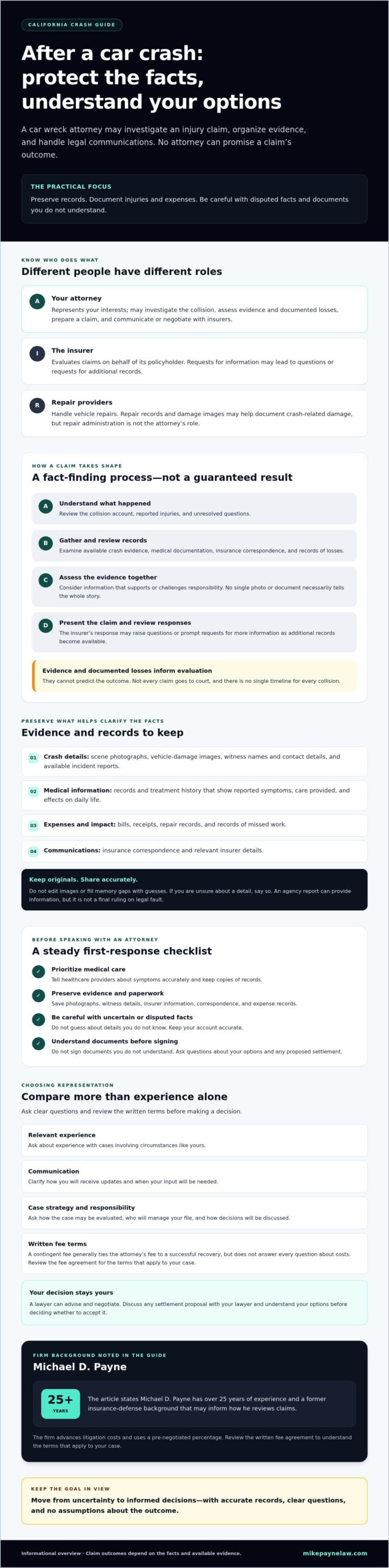
This guide explains what a car wreck attorney may do after a California crash and how to compare attorneys based on relevant experience, communication, and written fee terms. You’ll also find practical steps to take before and after speaking with an attorney, including ways to handle insurance conversations carefully. The goal is to help you move from uncertainty to informed action, without making promises about the outcome of a claim.
Key Takeaways
- A car wreck attorney can investigate an injury claim and handle legal communications. Insurers and repair providers have different roles.
- Records, crash evidence, and consistent medical documentation can help an attorney assess a claim.
- Compare attorneys by relevant experience, communication, case strategy, fee terms, and who will manage your case.
- Before speaking with an attorney, prioritize medical care, preserve records, organize insurer details, and avoid guessing about disputed facts or signing documents you don’t understand.
- Michael D. Payne has over 25 years of experience and a former insurance-defense background that may inform how he reviews claims.
What a car wreck attorney does after a California crash
A car wreck attorney advises and represents people pursuing injury claims after vehicle collisions. Legal advice can help you understand your options, but it isn’t a promise of compensation. The attorney’s role differs from an insurer’s: an insurer evaluates claims on behalf of its policyholder, while a lawyer represents the client’s interests. A lawyer also isn’t a vehicle repair administrator, although repair records may help document crash-related damage.
Depending on the facts, an attorney can investigate how the collision happened, assess evidence about liability, organize medical and other records, evaluate documented losses, and communicate with insurers. These steps can make a complicated process easier to navigate. For an overview of the firm’s motor vehicle accident representation, see its practice-area page.
Which crash situations may call for legal guidance?
Consider seeking legal advice if you’ve been injured, the other driver disputes fault, several vehicles were involved, or the crash caused significant financial losses. Legal questions may also come up when accounts conflict or you’re unsure what records could clarify what happened. A conversation with a lawyer can help you assess possible next steps, but it doesn’t establish that a claim will succeed.
If a collision involved an Uber vehicle, the firm also provides information about its Uber accident attorney services.
What a lawyer does, and what remains your decision
A lawyer may review crash reports, photographs, witness information, medical records, and insurance correspondence. They can help prepare and present a claim, communicate with insurers, and negotiate based on the available evidence. The specific steps depend on the case. Not every claim goes to court, and there’s no single timeline for every collision.
You remain central to decisions about your case. Ask who will handle your file, how you’ll receive updates, and when your input will be needed. Discuss any settlement proposal with your lawyer and make sure you understand the options before deciding whether to accept it. A lawyer can advise and negotiate, but a settlement decision should never be treated as automatic.
Ask how the lawyer is paid, too. A contingent fee arrangement generally ties the attorney’s fee to a successful recovery, but it doesn’t answer every question about costs. The Law Offices of Michael D. Payne advances litigation costs and uses a pre-negotiated percentage. Review the written fee agreement to understand the terms that apply to your case.
How a car wreck attorney builds and evaluates an injury claim
A claim develops through fact-finding and review. The lawyer first learns what happened, what injuries are reported, and what questions remain. They may then gather available records, examine how the collision occurred, identify evidence that supports or challenges responsibility, and present the claim to the insurer. The insurer’s response may raise questions or prompt requests for more information, so the case can develop as additional records become available.
Evidence quality and well-documented losses help shape how an injury claim is evaluated, but they can’t predict its outcome. A car wreck attorney considers how the available evidence fits together, rather than relying on a single photograph or document in isolation.
Evidence a lawyer may review after a crash
Depending on the circumstances, useful material may include collision-scene photographs, witness names and contact details, vehicle-damage images, repair records, and available incident reports. A California Highway Patrol or local agency report can provide information about the crash, but it is one source to review, not a final ruling on legal fault.
Keep original records and share them accurately with your lawyer. Don’t edit images or fill gaps in your memory with guesses. If you’re unsure about a detail, say so. The firm’s motor vehicle accident representation page provides more information about its work with collision claims.
How injuries and financial losses enter the evaluation
Medical records and treatment history can help show when symptoms were reported, what care was provided, and how an injury affected daily life. Consistent documentation may help connect reported injuries to the collision. Tell healthcare providers about your symptoms accurately, and keep copies of bills, receipts, and records of missed work. These documents can help establish losses tied to the incident.
Claims involving future care or lasting effects may require appropriate supporting evidence. A lawyer can review the available documentation and identify what may still be needed. Don’t assume an estimate alone establishes a future loss. For general context on legal fee structures, Cornell Law School’s Legal Information Institute explains rules for contingency fees. Fee arrangements are separate from the evidence supporting a claim, so read and discuss the written agreement before deciding whether to proceed.
If you’re unsure how to organize records or assess the next step, you can contact the firm about your situation.
How to compare car wreck attorneys before you hire one
Choosing counsel involves more than comparing years in practice or reading a list of past results. Look for experience relevant to your type of collision, clear communication, a strategy based on your facts, and fee terms you understand. A lawyer’s past work may inform how they approach a claim, but it can’t predict the result of your case.
Compare written fee terms, communication practices, and case-specific experience before you decide. Ask each attorney the same questions so you can compare their answers.
| What to compare | Questions to ask |
|---|---|
| Relevant experience | Have you handled cases with circumstances like mine? What issues might need closer review? |
| Direct communication | Who will be my primary contact, and how will I receive updates? |
| Case strategy | What information do you need to assess liability, injuries, and possible next steps? |
| Fee terms | How is the attorney’s fee calculated, and how are case costs handled? |
| Client responsibilities | What records or other information will I need to provide, and when? |
Questions to ask during an initial attorney conversation
Ask who will handle important work on your case, not just who you meet at the start. Find out how the firm shares developments and explains decisions that need your input. A helpful answer should outline a process you can understand, not promise a particular result. You can also ask what documents would help the lawyer evaluate your situation and what questions are still unresolved.
Ask how the attorney will consider available insurance information as part of the claim review. The California Department of Insurance explains California’s minimum liability coverage, which can provide background for your questions. What coverage may apply depends on the circumstances and policies involved.
Understand contingency fees and litigation costs
The Law Offices of Michael D. Payne handles car accident representation on a contingency fee basis, using a pre-negotiated percentage, and advances litigation costs. Ask how the fee is calculated, how costs are handled under different outcomes, and where each term appears in the agreement. Don’t assume all agreements are alike or that “contingency” answers every cost question. The written agreement controls.
Experience can take different forms. Michael D. Payne has over 25 years of experience and previously worked as an insurance-defense lawyer. That background may inform how he reviews a claim, but it doesn’t guarantee an advantage or outcome. Choose the car wreck attorney who can explain how their experience applies to your facts and clearly describe communication, strategy, fees, and your role in the process.
What to do before speaking with a car wreck attorney
You don’t need a perfect file before seeking legal guidance. Start with the basics, keep information accurate, and ask for help promptly if you’re unsure what to do next. Deadlines and procedures depend on the claim and its circumstances, so ask counsel which rules may apply instead of relying on a general estimate.
- Prioritize urgent care. Get medical attention for immediate concerns and follow your healthcare provider’s advice. Keep records of visits and instructions.
- Preserve what you have. Save photographs, incident details, witness contact information, medical records, repair documents, and messages or letters about the collision. Keep originals where possible.
- Organize insurer details. Note the names of insurance companies and representatives, claim numbers, and dates of calls or correspondence. Keep copies of anything you receive or send.
- Arrange a legal consultation. Bring your records and questions so an attorney can review the circumstances and explain possible next steps.
Don’t guess about disputed details. If you don’t remember something, say so. Don’t sign a document you don’t understand. Ask what it means and consider getting legal advice before agreeing to it. Payne serves Southern California communities, including West Covina, Pomona, Ontario, Covina, Chino, Fontana, San Bernardino, Baldwin Park, and Azusa.
Organize information for a useful case review
A short, factual timeline can make an initial conversation more productive. Note what you remember about the collision, when symptoms began, what treatment you received, and any impact on work. Separate what you know from what you’re uncertain about. Add questions you want answered, and keep copies of documents together so you can find them easily.
Photos, incident records, witness contacts, medical documents, and insurer correspondence can each add context. Share them honestly, even if a detail seems unhelpful or unclear. Your attorney can assess what matters and identify gaps without relying on guesses.
Recognize when a crash involves a different claim path
A rideshare collision may raise additional questions about who was involved and what insurance could apply. The details matter, so don’t assume the claim follows the same path as a crash involving only private drivers. If you were involved in an Uber-related collision, review the firm’s Uber accident attorney information for context.
For help organizing your questions and discussing a potential car accident claim, contact the firm.
Why Southern California drivers may choose Michael D. Payne
Choosing a lawyer is a personal decision. For drivers seeking a car wreck attorney in Southern California, relevant experience, clear communication, and a practical understanding of the claim process can all matter. Michael D. Payne has over 25 years of experience and previously worked as an insurance-defense lawyer. That background may inform how he reviews an insurer’s questions and evaluates available evidence, but it can’t guarantee an advantage or predict how an individual claim will turn out.
Personalized representation with a local service area
Payne is a personal injury practice serving Southern California, including West Covina, Pomona, Ontario, Covina, Chino, Fontana, San Bernardino, Baldwin Park, and Azusa. When choosing a local attorney, ask how the firm will keep you informed and who will be your point of contact.
A case review can help identify questions about fault, injuries, documentation, or potential next steps. It can’t establish that a claim will succeed or guarantee a particular recovery. An assessment depends on the facts and records available, and may change as more information comes to light.
Start with a conversation about your situation
Share what you know about the collision, the injuries or losses involved, and any communication you’ve received from insurers. Ask what information the attorney needs to evaluate your situation, who will handle the case, and how updates are provided. Be candid about details you’re unsure of. A clear conversation should help you understand what can be assessed now and what remains unresolved.
Before deciding whether to hire the firm, ask about the written contingency agreement. The firm uses a pre-negotiated percentage and advances litigation costs. Review how the agreement explains the fee and cost handling, including what terms apply in different circumstances. The written agreement controls, so raise any questions before signing.
If you’re considering car accident representation, take the next step at your pace. Contact Payne to discuss your situation, fees, and possible next steps.
Take the next step with confidence
The right car wreck attorney can make a confusing claim process clearer by reviewing evidence, explaining options, and communicating with insurers. Before choosing counsel, compare case-specific experience, communication practices, and written fee terms. Preserve your records, share facts accurately, and ask how the lawyer will keep you informed.
Michael D. Payne brings over 25 years of experience and a former insurance-defense background to claim review. The firm handles car accident representation on a contingency basis, advances litigation costs, and uses a pre-negotiated percentage. The written agreement controls, so review its fee and cost terms carefully. No attorney can promise a particular result, but a conversation can help you understand what may come next.
Discuss your car accident with Michael D. Payne and ask the questions that matter to you. You deserve clear information as you consider your options and focus on moving forward.
Frequently Asked Questions
When should I contact a car wreck attorney after an accident?
Contact an attorney promptly if you’re injured, fault is disputed, several vehicles were involved, or you’re unsure how to respond to an insurer. Early advice may help you preserve relevant records and understand your options, but you don’t need every document ready before reaching out. Payne serves drivers in West Covina, Pomona, Ontario, Covina, Chino, Fontana, San Bernardino, Baldwin Park, and Azusa.
What does a car wreck attorney do for an injury claim?
A car wreck attorney advises and represents you in pursuing an injury claim. Depending on the facts, the lawyer may investigate the collision, gather and review records, assess liability and documented losses, prepare the claim, and communicate or negotiate with insurers. If a dispute can’t be resolved through negotiation, court may be considered, but not every case goes to trial. The evidence and circumstances guide the work.
How much does it cost to hire a car wreck attorney?
Payne handles car accident representation on a contingency fee basis, with a pre-negotiated percentage and litigation costs advanced by the firm. The written agreement controls the fee and how costs are handled, so read it carefully and ask what happens under different outcomes. Don’t assume every agreement is identical or that advancing costs means you can never be responsible for them.
Can I still make a claim if I was partly at fault for the crash?
Possibly. California follows a pure comparative negligence rule, so partial fault doesn’t automatically prevent recovery. Any compensation may be reduced according to your share of responsibility. For example, if evidence indicates that more than one person contributed to a collision, the allocation of fault can affect the claim’s evaluation. Don’t decide you have no options based on an insurer’s initial assessment. Ask a lawyer to review the facts.
What should I bring to a car wreck attorney consultation?
Bring what you have, not a perfect case file. Useful items may include crash photographs, incident or police records, witness contact details, medical records, repair documents, and letters or messages from insurers. A simple timeline of the collision, symptoms, treatment, and missed work can help organize your account. Mark uncertain details clearly, and bring questions about communication, fees, and next steps.
Will a car wreck attorney handle insurance company calls for me?
An attorney may communicate with insurers on your behalf after you hire them, but confirm exactly what the representation includes and when it begins. Before then, ask a representative to explain any request you don’t understand, and avoid guessing about disputed facts. Keep copies of letters, emails, and claim details. A lawyer can help you understand how to handle insurer communications in light of your circumstances.
How long do I have to file a car accident lawsuit in California?
Generally, a California personal injury lawsuit after a car accident must be filed within two years of the accident. Exceptions may apply, and claims involving a government entity can have a much shorter claim-filing deadline. Don’t rely on the general period without checking how it applies to your situation. Ask a California attorney promptly to verify the deadline and any exceptions that may affect your claim.