

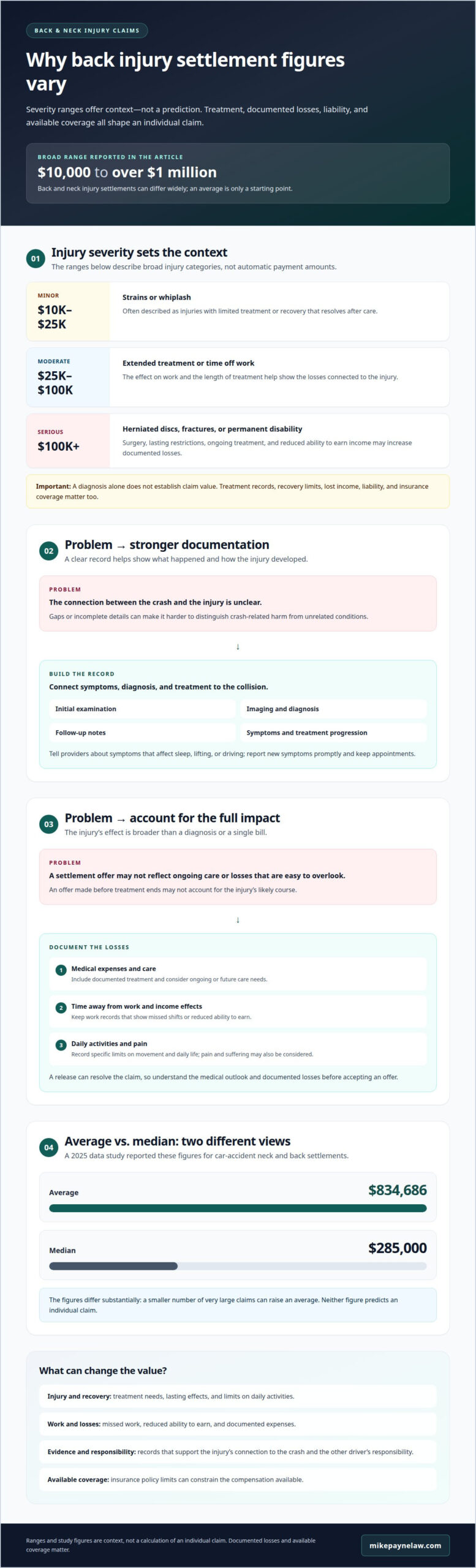
Back-injury settlements after car accidents can vary widely: U.S. settlements for back and neck injuries from driving accidents range from around $10,000 to over $1 million. That makes the average settlement for a back injury from a car accident a starting point, not a prediction of what any one claim is worth.
It’s reasonable to want a clear number while medical bills, missed work, and recovery compete for your attention. The amount can turn on the injury’s severity, the treatment and records that connect it to the crash, its effect on your ability to work, and the insurance coverage available.
Back and neck injury settlements can differ widely. Consistent treatment and strong evidence help document the claim, while policy limits can constrain the compensation available. Understanding these factors can help you evaluate a settlement offer in light of your specific losses.
Key Takeaways
- Learn why medical records that connect your back or neck injury to the crash can strengthen a claim.
- See how injury severity, recovery, and effects on work can shape a settlement’s value.
- Understand which treatment expenses and lasting impacts may factor into compensation.
- Find out why insurance limits and other available coverage can affect how much compensation may be recovered.
Evidence and medical treatment for injury claims
Medical records should connect the back or neck injury to the crash. The initial examination, imaging, diagnosis, and follow-up notes can show when symptoms began and how they developed. Tell each provider about your symptoms, including pain that affects sleep, lifting, or driving. Consistent records help distinguish crash-related injuries from unrelated conditions and give insurers evidence to assess severity, liability, and treatment needs.
Before accepting an insurance settlement offer, understand your medical outlook and account for ongoing care. An offer made before treatment ends may not reflect the full extent of physical therapy, pain management, or future treatment. Because signing a release can resolve the claim, have an attorney assess whether the offer accounts for documented losses and the injury’s likely course.
An attorney builds the claim from medical records, crash reports, photographs, witness accounts, and proof of missed work. The attorney can present that evidence to insurers, challenge disputes about liability, and negotiate for compensation that reflects both current losses and supported future needs. For a collision claim, motor vehicle accident representation can help organize evidence and respond to an insurer’s valuation.
Filing deadlines depend on the state and the circumstances, so an attorney identifies the applicable limit using the crash date and parties involved. In California, a separate DMV report, called an SR-1, is due within 10 days when someone is injured or killed, or property damage exceeds $1,000. Lower-back claims often resolve within 12 to 18 months. Cases involving permanent injury and lifelong treatment can take longer than 18 months, sometimes several years.
Protect the record as your claim develops: attend appointments, follow your treatment plan, save bills and work records, and keep copies of insurer communications. For example, physical therapy records and notes about missed shifts can help show how recovery affected daily life and income. Report new symptoms promptly, and avoid guessing about recovery dates when discussing your claim. Clear, consistent evidence gives your attorney a stronger basis for negotiations.
What Is The Average Lower Back Pain Car Accident Settlement?
Settlement value depends on the documented injury, its effect on daily life, and available insurance coverage. Injury categories can provide context, but they do not calculate the value of an individual claim.
Factors Affecting Settlement Value
Settlement value reflects the losses connected to the crash and the evidence supporting them. Medical expenses, time away from work, limits on daily activities, and pain and suffering all matter. The other driver’s responsibility and available insurance also affect a claim. That is why two people with similar diagnoses may receive different compensation.
For example, a back strain that resolves after limited treatment differs from herniated discs that restrict movement and work. A pre-existing condition does not automatically eliminate a claim, but records should show how the crash affected it. Clear documentation helps distinguish new harm from earlier symptoms.
Factors That Increase Settlement Value
More extensive treatment and lasting effects can support a higher claim when medical records link them to the collision. Surgery, extended therapy, permanent restrictions, and reduced ability to earn income may increase documented losses. Strong evidence of liability matters too: a clear account of how the other driver caused the crash can support the claim.
Focus on specific consequences. A herniated disc that requires surgery and prevents someone from returning to the same work has different financial effects from a strain that resolves with therapy. A claim may also include non-economic damages, such as pain and suffering. An attorney can assess how these factors fit the evidence and clarify the issues to weigh.
Typical Amounts by Injury Severity
Minor, moderate, and severe injuries fall into broad settlement ranges, based on the injury’s impact and treatment. Minor injuries such as strains or whiplash are estimated at $10,000-$25,000. Moderate injuries that need extended treatment or time off work are estimated at $25,000-$100,000. Serious injuries involving herniated discs, fractures, or permanent disability are estimated at $100,000 or more.
These categories describe different outcomes, not automatic payment amounts. A serious diagnosis alone does not establish claim value. Documented treatment, recovery limits, lost income, liability, and insurance coverage all shape the compensation that may be pursued.
What is the Average Back and Neck Injury Settlement Amount?
Back and neck injury claims vary because medical needs, lost income, and lasting effects differ. A 2025 data study reported an average car-accident neck and back settlement of $834,686, compared with a median of $285,000.
Injury Severity and Treatment Costs
Severity and treatment costs help show how deeply an injury affects health, work, and daily activities. The 2025 figures differ substantially between average and median, illustrating how a smaller number of very large claims can raise an average. Neither figure predicts an individual personal injury claim.
For example, a documented herniated disc requiring surgery involves different care needs from an injury treated without surgery. A serious injury that limits someone’s ability to work or requires ongoing treatment can significantly change the losses considered in a settlement or lawsuit.
Medical Documentation and Causation
Medical records help connect the diagnosed injury and its effects to the crash. Treatment notes describing symptoms, examination findings, and a provider’s diagnosis give the injury claim a clearer evidentiary basis.
Imaging findings alone, for example, may not show when symptoms began or how they affect function. Appointment records can trace the progression from initial pain to diagnosis and recommended treatment. This timeline can help address disputes about whether the crash caused the injury or worsened an earlier condition.
Medical Expenses and Future Care
Documented medical expenses may include emergency care, imaging, physical therapy, surgery, medication, and pain management. Future care is assessed based on treatment needs supported by medical records and provider recommendations.
A settlement evaluation should distinguish bills already incurred from projected care. For example, continuing therapy or recommended follow-up treatment may affect claimed losses when supported by medical records. A serious injury requiring lasting assistance has different future-care needs from one that resolves after a completed course of treatment.
Lost Wages and Settlement Calculations
A claim may include medical expenses, income lost during recovery, reduced future earning ability, and non-economic damages such as pain and suffering. Each category depends on evidence: bills support treatment expenses, while work records can document missed shifts or reduced pay.
These figures illustrate economic losses, not a complete settlement formula. Pain, daily limitations, and future care are evaluated separately through evidence showing how the injury affects the person’s life.
Insurance policy limits and available coverage
Insurance coverage affects how much compensation may be available for a back injury claim. Even a well-supported case can face practical limits if the at-fault driver’s policy does not cover all losses and no additional coverage applies.
In California, the at-fault driver’s bodily injury liability coverage is a key source to examine. Policy limits set the maximum available under that policy, not the value of a herniated disc or spinal injury. A soft-tissue injury and a serious injury requiring extended care can result in very different losses, even under the same policy limits.
Liability coverage applies to claims arising from the insured driver’s negligence, subject to the policy’s terms and limits. If documented damages exceed the available limit, that policy may not cover the entire claim. An attorney can assess whether another responsible party or insurance policy may also be relevant.
Uninsured or underinsured motorist coverage may provide another potential source of recovery, depending on the policy and circumstances. For example, if damages are $200,000 and the at-fault driver has $25,000 in coverage, additional damages may potentially be payable under the injured person’s UIM policy, up to its limits. The policy’s terms and the claim facts determine how that coverage applies.
Identifying applicable policies helps clarify the practical limits of recovery in a California claim. Discuss available insurance coverage with an attorney before comparing a settlement offer with your documented losses.
Law Offices of Michael D. Payne: Workplace Injury Representation
The Law Offices of Michael D. Payne represents people injured in car accidents, including those dealing with back or neck injuries and disputes over liability, medical evidence, or insurance coverage. If a crash caused your injury, the firm’s Car Accident Representation can help address your claim and pursue compensation supported by the evidence. The firm also handles Workplace Injury Representation when an injury occurred on the job rather than in a car crash.
Having legal support can be useful when an insurer disputes how the injury happened, questions the treatment, or proposes a settlement before the full impact is clear. The right next step depends on how and where the injury occurred. For a car accident injury, contact Law Offices of Michael D. Payne to discuss your situation.
Take the Next Step Toward a Stronger Claim
The average settlement for a back injury from a car accident can provide context, but it cannot account for the details of your claim. Your next step is to protect your recovery and make sure the claim reflects the crash’s real effects. Don’t let pressure to settle rush your decision. An attorney can review the evidence, explain the issues affecting your claim, and help you understand what a proposed resolution covers.
Law Offices of Michael D. Payne handles car accident representation for people facing injury claims after a collision. The firm also represents people injured in slip-and-fall and motorcycle accidents, which involve different circumstances and evidence. If you’re weighing an offer or need help with your next move, contact Law Offices of Michael D. Payne to discuss your situation. You deserve clear guidance as you decide how to move forward.
Frequently Asked Questions
Can I recover compensation if I had pre-existing lower back pain?
Possibly, if the crash aggravated your back condition and evidence supports that connection. Prior pain alone does not show what changed after the collision, so records of symptoms and limitations before and after can help clarify the difference. For example, the claim may distinguish earlier intermittent discomfort from new restrictions or treatment needs. The documented effects of the injury matter, not its history alone.
How Much Compensation for a Back Injury in a California Car Accident Case?
California back and neck injury settlements often range from $30,000 to $100,000, with higher amounts possible in serious cases involving surgery or permanent disability. Minor injuries that resolve with limited physical therapy are estimated at $10,000 to $40,000. These figures are broad context, not a formula: treatment, lasting effects, documented losses, liability, and available insurance all shape an individual claim.
How Much of My Settlement Will I Actually Keep?
Your net recovery depends on deductions from the gross settlement, including the legal fee and any applicable case costs or medical balances. The firm’s No Fee Guarantee is: “we do not charge a fee unless we win.” Ask for a written breakdown of proposed deductions before accepting an offer so you can see how the settlement would be distributed and what would remain for you.
What Counts as a Lower Back or Neck Injury After a Crash?
Crash-related injuries can include muscle strains or sprains, herniated discs, fractures, and spinal cord damage. Neck injuries may also involve soft tissue or cervical spine structures. Pain alone does not identify a specific injury; a medical assessment determines the diagnosis. For example, persistent pain with restricted movement may prompt an examination, while imaging can help assess suspected disc or bone damage.
What Impacts the Value of Back Injury Car Accident Cases?
Claim value depends on the documented injury’s effects, treatment needs, income losses, liability evidence, and insurance coverage. A case involving lasting work restrictions presents different losses from one where symptoms resolve and work resumes. The strength of the evidence matters too: medical records, bills, and employment documents help support the claimed impact. These factors together, rather than one diagnosis alone, shape negotiations.
What is the average settlement for a back injury from a car accident in the United States?
There is no single national average that predicts an individual claim. Reported U.S. settlements for back and neck injuries from driving accidents range from around $10,000 to over $1 million, reflecting cases with very different injuries and losses. Treat that range as broad context, not a valuation tool. A claim’s evidence, treatment, lasting effects, liability, and coverage determine its specific considerations.