

A California pain-and-suffering claim is supported by evidence showing how an injury affected your body, emotions, and daily life. There is no single required formula for calculating damages. To understand how to prove pain and suffering in California, build a clear record of the harm and its effects.
It is understandable to wonder how to value pain that does not come with a bill. Medical records, treatment notes, testimony, photographs, and specific examples of activities you can no longer do can help make the impact clear. This article explains what California considers pain and suffering, how claims may be evaluated, and when emotional distress may be recoverable without physical injury. It also describes evidence that can help show the full effect of an injury.
Key Takeaways
- Build a credible record of how the injury affects daily life, using consistent treatment records and specific observations from people who know you.
- Understand why multiplier and per diem methods are negotiating tools, not formulas California juries must follow.
- Emotional distress without physical injury may be recoverable in limited circumstances, depending on the legal theory and supporting facts.
- California treats pain, emotional distress, and loss of enjoyment of life as noneconomic harm, which can include both past and future suffering.
What Raises the Value of a Pain and Suffering Claim?
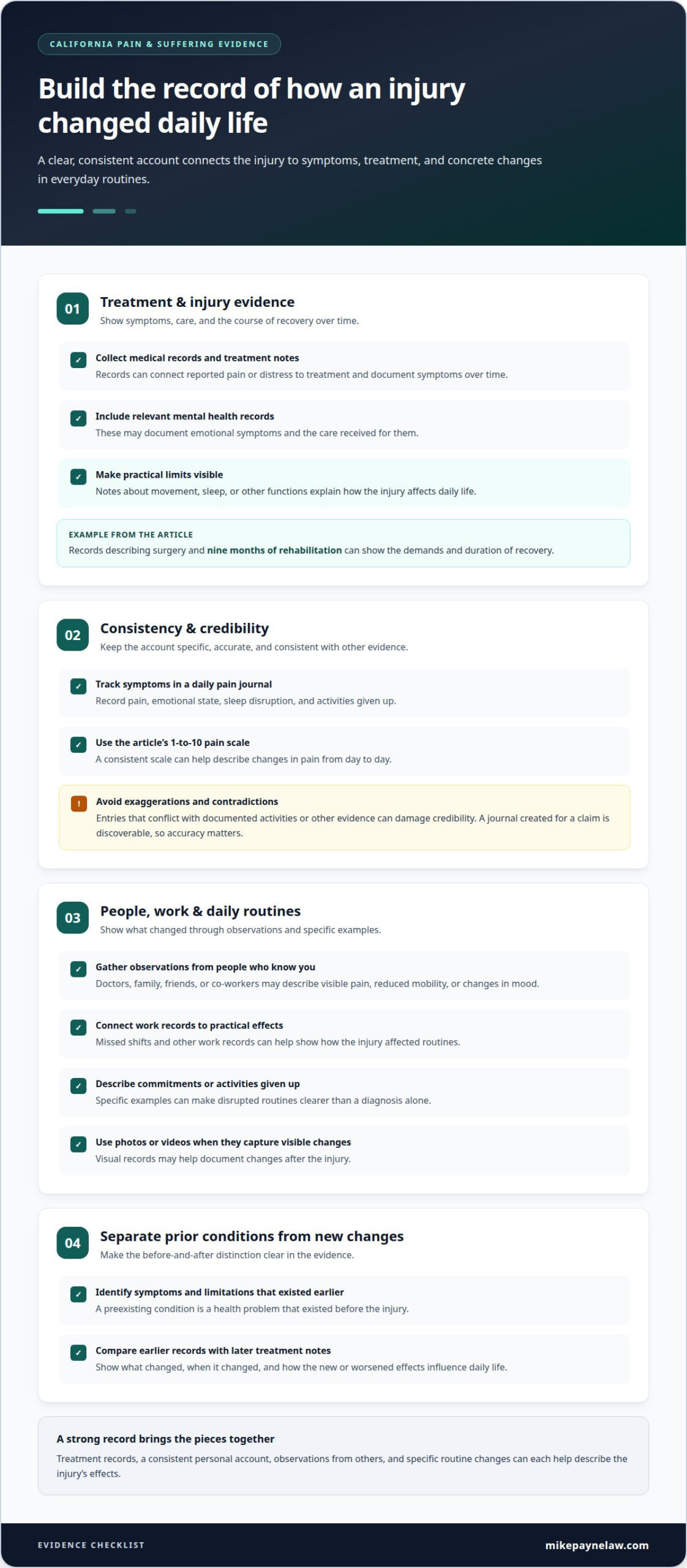
Proving pain and suffering in California starts with evidence linking the injury to concrete changes in daily life. Treatment records, personal accounts, and observations from people who know you can help show the extent and duration of the harm.
Injury and Treatment Evidence
Medical and treatment evidence may include medical records, treatment notes, and relevant mental health records documenting symptoms and care. These records can connect reported pain or distress to treatment over time. For example, records describing surgery and nine months of rehabilitation can show the demands and duration of recovery. Notes about limits on movement, sleep, or other functions explain the injury’s practical effects.
Credibility and Consistency
Credibility depends on evidence that presents a consistent, specific account of symptoms and their effects. A daily pain journal can track symptoms, emotional state, sleep disruption, and activities given up, using a 1-to-10 scale for pain. What mistakes can weaken a California pain and suffering claim? Exaggerations, contradictory entries, or claimed limits that conflict with documented activities can damage credibility. A journal created for a claim is discoverable, so accuracy matters.
Witnesses, Work, and Daily Routines
Witness accounts can describe changes others observed after the injury. Doctors, family members, friends, or co-workers may testify about visible pain, reduced mobility, or changes in mood. Work records and specific examples can show practical effects, such as missed shifts or abandoned commitments. Photos or videos may capture visible changes. Together, these details show how the injury disrupted routines in ways a diagnosis alone may not convey.
Preexisting Conditions
A preexisting condition is a health problem that existed before the injury. When proving pain and suffering in California with a prior condition, evidence should distinguish earlier symptoms and limitations from new or worsened effects after the incident. Earlier records and later treatment notes can clarify what changed, when it changed, and how it affects daily life.
How is Pain and Suffering Calculated in California?
Most California personal-injury cases have no general statewide cap on pain-and-suffering damages. Medical-malpractice claims subject to the newer schedule have 2026 noneconomic-damages caps of $470,000 for non-death injuries and $650,000 for wrongful-death claims. California uses pure comparative negligence: an injured person may recover even when 99% at fault, but compensation is reduced by their share of responsibility.
Multiplier-Based Valuation
The multiplier method estimates pain-and-suffering damages by multiplying economic damages by a number reflecting injury severity, recovery length, and lasting effects. A commonly used estimate ranges from 1.5 to 5, or sometimes higher. For example, multiplying $100,000 in economic damages by 4 produces a $400,000 estimate. This is a negotiation convention, not a California legal formula, so the multiplier needs support from the claim’s specific evidence.
Per Diem Calculations
The per diem method assigns a daily dollar value to suffering, then multiplies it by the number of days it lasts. For example, valuing pain at $200 per day for 365 days produces $73,000. The method can help explain how prolonged symptoms affect a person over time. Its force depends on evidence supporting both the daily value and the period of pain or emotional distress.
Neither method controls a California jury’s decision. Juries are not required to use a multiplier or per diem calculation, though attorneys may use them to explain a settlement position. A lawyer can compare an estimate with the documented injury, treatment, recovery period, and continuing limitations. For medical malpractice, the applicable statutory cap also matters. Itemize economic losses, such as medical bills and lost wages, separately from noneconomic damages so the calculation keeps distinct losses clear.
Can I recover for emotional distress without a physical injury?
Yes. California law allows some emotional-distress claims without physical injury, but recovery is limited. The claim generally needs a recognized legal theory or extreme circumstances, not distress alone. For example, property damage by itself generally does not support emotional-distress damages. A supported nuisance or personal-injury theory may lead to a different result.
The key question is whether the facts fit a valid claim and support the emotional harm. Treatment records, therapy notes, and testimony may help show distress, anxiety, and their effects on daily life, but they do not replace the need for a legal basis. A personal injury attorney can assess the incident, the applicable theory, and evidence connecting the conduct to the claimed harm.
Deadlines can affect recovery even when the emotional effects are clear. According to the California Legislature, many personal-injury claims must be filed within two years of the injury. Claims against a California government agency generally require a government tort claim within six months. Those deadlines concern different procedures, so identifying whether a public entity is involved matters early.
Some injury cases involve emotional harm alongside physical injury; others depend on a narrower legal theory. Economic losses, such as lost wages, are separate from emotional-distress damages. If distress follows property damage, the property loss alone generally does not establish a personal-injury claim. The facts and legal theory determine whether emotional recovery is available.
Legal representation can help identify the basis for a claim, organize relevant records, and address filing deadlines. An attorney may assess whether the facts support a nuisance theory or another recognized route, then connect the evidence to the harm claimed. In California injury law, the absence of physical injury does not automatically end the analysis, but the legal basis and evidence must support recovery.
California’s legal definition of pain and suffering
California treats pain and suffering as noneconomic damages, not as medical bills or lost wages. California Civil Jury Instructions No. 3905A explains that category for juries. It includes physical pain, mental suffering, emotional distress, and loss of enjoyment of life. These harms may be difficult to price, but they remain part of a personal injury claim when supported by evidence.
California Civil Code section 1431.2 identifies pain, suffering, mental suffering, and emotional distress as noneconomic damages in fault-allocation cases. The distinction matters: medical bills and lost wages are economic damages, while difficulty sleeping or giving up a valued activity may illustrate noneconomic harm. A settlement demand should keep those categories clear rather than treating every loss as one figure.
The legal concept also reaches beyond immediate physical pain. California pain-and-suffering damages may cover past and future suffering. In Capelouto v. Kaiser Foundation Hospitals (1972), 7 Cal. 3d 889, 892-893, the court discussed examples of mental suffering. The practical takeaway is that a jury evaluates the injury’s effects, not merely its name. Evidence should explain how negligence caused the harm and how that harm changed the person’s life.
For example, after an accident, a person may have ongoing discomfort and lose the ability to take part in a regular family activity. That loss of enjoyment can be part of pain-and-suffering damages when evidence connects it to the injury. Juries consider the claimed effects and supporting evidence; economic damages remain separate. The legal definition provides the framework, while the facts show the human impact.
Get help assessing your pain-and-suffering claim when the connection between an accident, negligence, and lasting harm needs to be clearly presented.
Law Offices of Michael D. Payne
The Law Offices of Michael D. Payne represents injured people in personal injury claims, including claims involving pain and suffering. If an insurer disputes the cause or impact of an injury, the firm can organize relevant records, assess how the evidence supports the claim, and present the effects on daily life. The firm represents people injured in car, motorcycle, and bicycle accidents, as well as slip-and-fall incidents.
Consider legal help when you need support evaluating evidence, addressing questions about responsibility, or negotiating with an insurer. The focus is on presenting the full picture of your injury and its consequences, not reducing your experience to a medical bill. Contact Law Offices of Michael D. Payne to discuss your situation.
Make Your Next Move With Confidence
The next step is to consider whether the claim reflects what the injury has taken from your life, not just what appears on paper. If you are unsure how to prove pain and suffering in California, a focused review can clarify what the evidence shows and where the claim may need stronger support. You deserve to have the real impact taken seriously.
The Law Offices of Michael D. Payne represents people with car accident, slip-and-fall, and motorcycle injury claims. If questions about responsibility, documented harm, or an insurer’s position make it difficult to move forward, legal guidance can help you understand your options and choose a path suited to your circumstances.
Take the next step when you’re ready. Contact Law Offices of Michael D. Payne to discuss your situation and move forward with greater clarity.
Frequently Asked Questions
Do I need an expert witness to prove my pain?
Not necessarily. In a California personal injury case, you can testify about your pain, including its frequency and intensity. A qualified expert may offer an opinion based on specialized knowledge under Evidence Code 801, which can help explain medical issues or expected effects. Whether expert testimony adds value depends on what needs clarification, such as a disputed diagnosis or the cause of ongoing symptoms.
Can You Sue for Pain and Suffering Without a Physical Injury?
Sometimes, but emotional distress alone does not establish a claim. California recognizes limited routes to recovery without physical injury, and the facts must fit the legal theory being asserted. For example, distress connected only to property damage generally does not support emotional-distress damages. The key is whether the conduct and resulting harm meet a recognized basis for recovery, not simply how upsetting the event felt.
What Evidence Helps Prove Pain and Suffering?
Evidence is strongest when it links a specific effect to the injury and shows how that effect changed over time. For example, a provider’s note describing difficulty concentrating may support an account of interrupted work or study. Testimony from someone who regularly saw you can add context. The goal is not to collect every record, but to establish a clear, credible link between the injury and its consequences.
How Are the Amount of Damages for Pain and Suffering Determined?
There is no single required calculation for a California jury. Evaluators consider the nature of the harm, how long it lasted, and its effect on daily activities. A short-term limitation may be assessed differently from a lasting loss that changes family or social life. An award addresses noneconomic harm, so medical bills alone do not establish its amount; they relate to a separate category of loss.
How Does the Multiplier Method Work?
The multiplier method uses economic damages as a starting point, then applies a factor to estimate noneconomic damages. For example, $20,000 in economic damages multiplied by 2 produces a $40,000 estimate. The chosen factor should reflect injury severity, recovery length, and lasting impact. It’s a negotiation convention, not a mandatory California rule, so the arithmetic alone doesn’t prove what compensation is appropriate.
What evidence proves pain and suffering in a California personal injury case?
Useful evidence may include your testimony, treatment records, provider descriptions, and observations from people familiar with your life. For example, a co-worker may describe a change in your duties after an injury, while clinical records document reported symptoms. Each item serves a different purpose. Together, they can help show what happened, what changed, and how the effects relate to the claimed injury.