

An emotional trauma from a car accident claim needs evidence linking the distress to the crash and showing its effects on daily life. For people injured in West Covina, Pomona, Ontario, Covina, Chino, Fontana, San Bernardino, Baldwin Park, or Azusa, navigating these legal issues often requires guidance from the Law Offices of Michael D. Payne, where the applicable law depends on where the collision occurred.
A crash can affect more than your body. Anxiety, disrupted sleep, or difficulty getting back behind the wheel can make everyday routines harder. Treatment records and clear documentation can help show what changed.
This article explains how emotional distress claims are evaluated, what evidence may support one, and how trauma and PTSD after a crash can be documented. You’ll learn why professional care matters and how symptoms’ severity, duration, and effect on daily life can shape a claim.
Key Takeaways
- Understand which records and expert testimony can help show how a crash affected your emotional health.
- Learn why a pre-existing mental health condition doesn’t automatically prevent you from bringing a claim.
- See how treatment records, symptom notes, and observations from people close to you can help document changes in daily life.
- Recognize possible signs of post-accident trauma and PTSD, including symptoms that may appear after the crash.
What Types of Evidence Support an Emotional Distress Claim?
In South Carolina, emotional distress can be a noneconomic injury, but evidence must connect it to the crash. Medical records and expert testimony can help explain that connection.
Evidence and Expert Testimony
Evidence and expert testimony can show the nature, severity, and cause of psychological harm. Treatment records document symptoms over time, while a psychologist or psychiatrist can explain how the crash contributed to them. A formal diagnosis can identify a recognized mental health condition. Together, this evidence can distinguish severe, lasting distress from temporary fear or anger after a collision.
What emotional distress damages can car accident victims claim? According to the South Carolina Legislature, noneconomic damages include mental anguish, emotional distress, loss of society and companionship, and loss of consortium. These damages address personal harm rather than a specific bill.
Depression and Accident Consequences
Depression linked to accident injuries is a mental health consequence that can affect daily activities, relationships, and work. Chronic physical pain may also take a toll on mental health and contribute to depression. Treatment records can show when symptoms began, how they changed, and whether they followed crash-related injuries.
For example, someone whose injuries disrupt everyday routines may experience depression alongside physical pain. A clinician’s records can document emotional symptoms and their reported effects on daily life. This evidence helps explain the full impact, rather than presenting the injury as physical alone.
Trauma Related to Catastrophic Injuries
Emotional trauma related to catastrophic injuries is psychological harm connected to a life-altering crash injury. Severe physical injuries may intensify stress, disrupt independence, and change family roles. A mental health professional can describe these effects and explain how they relate to the collision and its consequences.
Can emotional trauma be compensated in a personal injury claim? Yes, emotional distress may be compensable as a noneconomic injury when evidence connects it to the crash and shows its effect on quality of life.
Can you claim emotional distress without physical injuries after a car accident? South Carolina’s definition of noneconomic damages includes emotional distress, but a claim still needs evidence that the distress is genuine, crash-related, and significantly affects quality of life. Treatment notes, a diagnosis, and testimony describing changes in daily functioning can help explain the psychological harm and its connection to the collision.
How Does South Carolina Law Treat Emotional Distress Claims?
Emotional distress claims depend on the law governing where the crash occurred. For collisions in Southern California, the relevant state rules and evidence must be considered together.
Types and Risk Factors of Mental Trauma
Mental trauma after a car accident can include anxiety, depression, or post-traumatic stress disorder. These conditions matter because they can disrupt sleep, relationships, work, and driving. Emotional symptoms may appear days or weeks after physical pain subsides, so a clear timeline can help explain when changes began.
Serious injuries, chronic pain, and distressing crash circumstances may contribute to psychological harm. For example, someone recovering from a concussion may also struggle with concentration or anxiety. A mental health professional can assess symptoms and describe their effect on daily functioning.
Pre-Existing Mental Health Conditions
A pre-existing mental health condition is a diagnosis or psychological difficulty that began before the collision. Its existence does not automatically prevent someone from pursuing an emotional distress claim. Evidence must connect the claimed distress, or a worsening of earlier symptoms, to the crash.
For example, someone with prior anxiety may experience more severe symptoms after a collision. Records from before and after the accident can help distinguish the earlier condition from later changes. This context can matter when insurers assess causation and the extent of claimed damages.
Expert Testimony from Mental Health Professionals
Expert testimony is a qualified professional’s explanation of a person’s mental condition, symptoms, and possible connection to an accident. A psychologist or psychiatrist can describe how symptoms affect daily functioning and whether they are consistent with a diagnosed condition.
This testimony can clarify complex questions, including whether a crash worsened an existing condition. A lawyer may present the professional’s analysis alongside treatment history to explain the basis of the claim.
Mental Health Effects After a Crash
After a collision, emotional effects can include anxiety, depression, disrupted sleep, or fear of driving. These symptoms may interfere with work, family responsibilities, and everyday routines. A doctor or licensed mental health professional can assess them and recommend care.
Every U.S. state has a statute of limitations setting a deadline to file a personal injury lawsuit. The applicable deadline depends on the state governing the claim. For collisions in Southern California, motor vehicle accident claims require attention to the rules tied to the crash location.
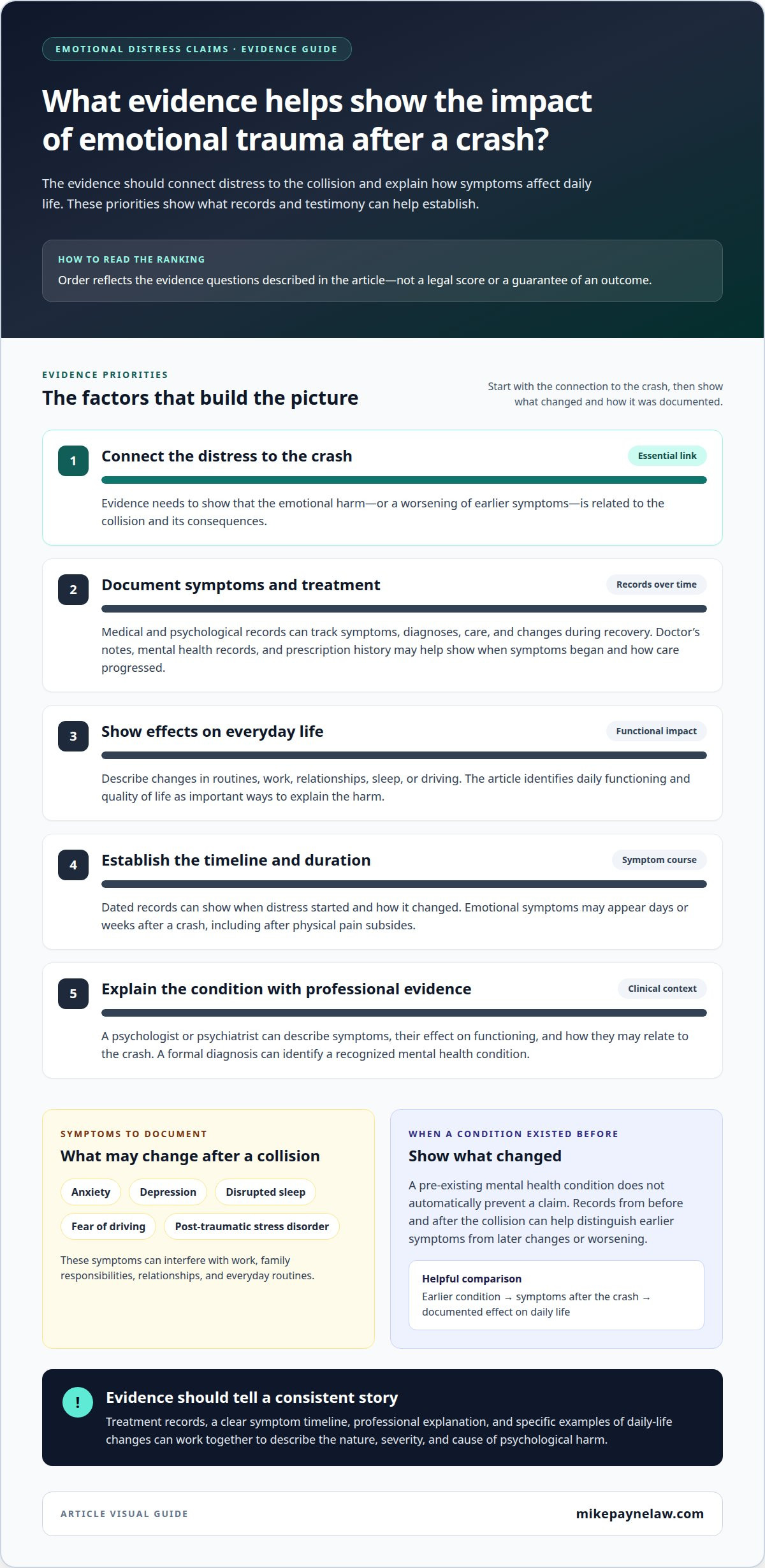
Evidence and documentation for emotional trauma claims
Strong documentation connects crash-related symptoms with treatment and changes in daily life. A clear timeline can show how distress develops during recovery.
Medical and Psychological Treatment Records
Medical and psychological treatment records document symptoms, diagnoses, care, and changes over time. Dated records can connect emotional suffering with the crash and its physical injuries.
A doctor’s notes, mental health records, and prescription history may show when symptoms began and how care progressed. For example, records describing anxiety after a collision can provide context for later treatment. Seek help if symptoms persist for more than a month or interfere with daily functioning. Care supports well-being while creating a clinical record.
Documenting Symptoms and Their Effects With Legal Support
A lawyer can organize evidence showing how symptoms affect work, family life, and everyday routines. This matters because a diagnosis alone may not explain the practical effects of emotional distress.
A lawyer can build a timeline from available records, comparing the period before the crash with the months that follow. A personal journal can describe sleep problems, fear of driving, or missed activities. Friends’ or family members’ statements may give examples of behavioral changes. Photographs can also illustrate lifestyle changes, such as no longer taking part in familiar activities.
Specific details make the impact easier to understand. “Couldn’t drive to work after the crash” gives more context than a general note about anxiety.
Documenting Recovery With Legal Support
Recovery documentation tracks whether symptoms improve, continue, or change during treatment. This helps show the course of distress, not just one appointment or a difficult day.
A lawyer can organize later clinical notes alongside earlier records to show changes in symptoms, treatment, and daily functioning. For example, records may show that someone returned to driving but still avoids highways. A journal can capture setbacks between appointments, while updated treatment notes explain care over time. This developing record presents both progress and ongoing effects accurately.
Emotional trauma and PTSD after a car accident
Post-traumatic stress disorder can follow a crash, even after immediate physical injuries receive care. About 32.3 percent of car accident survivors experience PTSD. Symptoms can include difficulty sleeping, increased anxiety, poor concentration, and avoiding driving. They may emerge days or weeks after physical pain subsides, making the emotional effects harder to recognize at first.
PTSD symptoms must last more than a month and cause significant distress or impairment to meet the diagnostic description provided for this condition. Someone might replay the collision, feel panicked near traffic, or avoid riding in cars. These changes can disrupt work, family routines, and independence. A mental health professional can assess symptoms and determine whether they fit a recognized disorder.
Serious crashes can have lasting effects. One reported figure indicates that 25.7 percent of people involved in severe car accidents experience PTSD six months after the crash. Persistent anxiety also develops after some collisions. For example, a survivor who stops driving to work may face practical consequences alongside emotional distress. These effects deserve attention as part of the injury’s documented impact.
Early professional care supports health and creates a record of symptoms, diagnosis, and treatment. A therapist can develop a treatment plan for post-crash trauma. For a claim, the key is showing how the crash relates to the psychological condition and how that condition affects daily life. An attorney can assess how the evidence supports that connection. To discuss documenting emotional distress after a car accident, contact the firm.
Law Offices of Michael D. Payne
Law Offices of Michael D. Payne helps people assess how emotional injuries fit into a car accident claim. When symptoms affect daily life or an insurer questions their connection to the crash, legal guidance can clarify the evidence and issues involved.
A lawyer can evaluate available records, gather evidence, communicate with the at-fault party’s insurer, and advocate in court when needed. The focus is on presenting physical and psychological effects together, including treatment, changes in routine, and how the distress relates to the collision. This can help you understand the claim and make informed decisions about pursuing compensation.
If you’d like to discuss your circumstances, contact Law Offices of Michael D. Payne.
Take the Next Step Toward a Stronger Recovery
Emotional harm can change how you move through everyday life, and asking for help is a meaningful step forward. An emotional trauma from a car accident claim can bring that harm into the legal conversation, rather than letting it disappear behind visible injuries. Your experience deserves to be heard and considered with care.
The next step is understanding how your circumstances, treatment, and evidence fit together. A focused legal review can clarify which questions matter, what additional documentation may be useful, and how to approach discussions with an insurer. You don’t have to sort through every issue alone while trying to recover.
Discuss your next steps with Law Offices of Michael D. Payne. Move forward at a pace that supports your well-being, with a clearer understanding of your options.
Frequently Asked Questions
What Is Emotional Distress in the Context of a Car Accident?
Emotional distress is psychological harm connected to a crash and its effects. It can involve a clinically recognized condition or serious emotional suffering that interferes with ordinary activities. For example, someone may struggle to return to work or feel unable to travel in a car after a collision. In South Carolina, emotional distress is treated as a type of noneconomic harm.
How Is Compensation for Emotional Distress Calculated?
South Carolina has no set formula for calculating emotional distress compensation. The evaluation can consider symptom severity and duration, treatment costs, crash circumstances, and effects on work and daily life. For example, ongoing symptoms that require treatment and disrupt regular responsibilities present different evidence from brief distress with little effect on routine. These factors help assess the claimed harm, rather than produce an automatic figure.
How much can I recover for emotional trauma?
There is no fixed recovery amount for emotional trauma in a South Carolina personal injury claim. Noneconomic damages for personal injury aren’t capped, except in medical malpractice claims. A claim’s value reflects evidence about the psychological harm, its duration, treatment, and effect on daily functioning. A diagnosis or symptom alone doesn’t establish a particular amount of compensation.
Can I recover damages for PTSD after a car accident in Fayetteville?
A PTSD diagnosis and treatment records may support a claim for psychological harm after a crash in Fayetteville. The applicable law depends on where the crash happened, so South Carolina rules in this article don’t determine the outcome of a claim arising elsewhere. Documentation can explain the diagnosis, its relationship to the collision, and its effects on work, relationships, or daily activities.
How Do You Prove an “Invisible” Injury Like Emotional Distress?
Build the claim with evidence linking symptoms to the collision and showing their practical effects. For example, treatment notes can document when symptoms were reported, while work records may show missed shifts or changed duties. A statement from someone who observed a change in your behavior can add context. Consistent details across records help explain an injury that isn’t visible on an X-ray.
What Is the Role of Insurance Companies in Emotional Distress Claims?
Insurance companies review claims and may negotiate with an injured person or their representative. In an emotional distress claim, discussions can focus on whether the crash caused the condition and how it affected the claimant. Organized medical records and clear documentation give the insurer information to assess. A lawyer can present the evidence, handle insurer communications, and advocate for the claimed damages.