

Feeling fine after a crash doesn’t always mean you’re uninjured. Delayed injury symptoms after a car crash can appear hours, days, or even weeks later, so get a medical checkup as soon as possible, even if you initially feel okay. New or worsening pain deserves prompt attention.
It can be unsettling when stiffness, headaches, or other problems emerge after you’ve left the scene. Take these changes seriously instead of brushing them off or assuming they’ll pass. Symptoms may develop as inflammation increases or an injury becomes more noticeable. Note when they start, where you feel them, and which activities become harder. This record can help you explain the changes during a medical evaluation.
This article explains why symptoms may take time to appear, which injuries and warning signs to watch for, and what to do when something changes. You’ll learn when symptoms require immediate medical attention, why documenting them matters, and how timely care can create a clear record of your condition after the collision.
Key Takeaways
- Get emergency medical help for severe abdominal pain, shortness of breath, fainting, or other signs of possible internal injury.
- Take new headaches, dizziness, memory problems, or vision changes seriously; concussion symptoms can develop after the crash, even without loss of consciousness.
- Watch for neck stiffness, reduced movement, and shoulder discomfort, which can signal whiplash that becomes noticeable later.
- Pay attention to symptoms that emerge or worsen over time, including back pain, bruising, and emotional distress, and report changes to a medical provider.
Why Do Some Car Accident Injuries Show up Later?
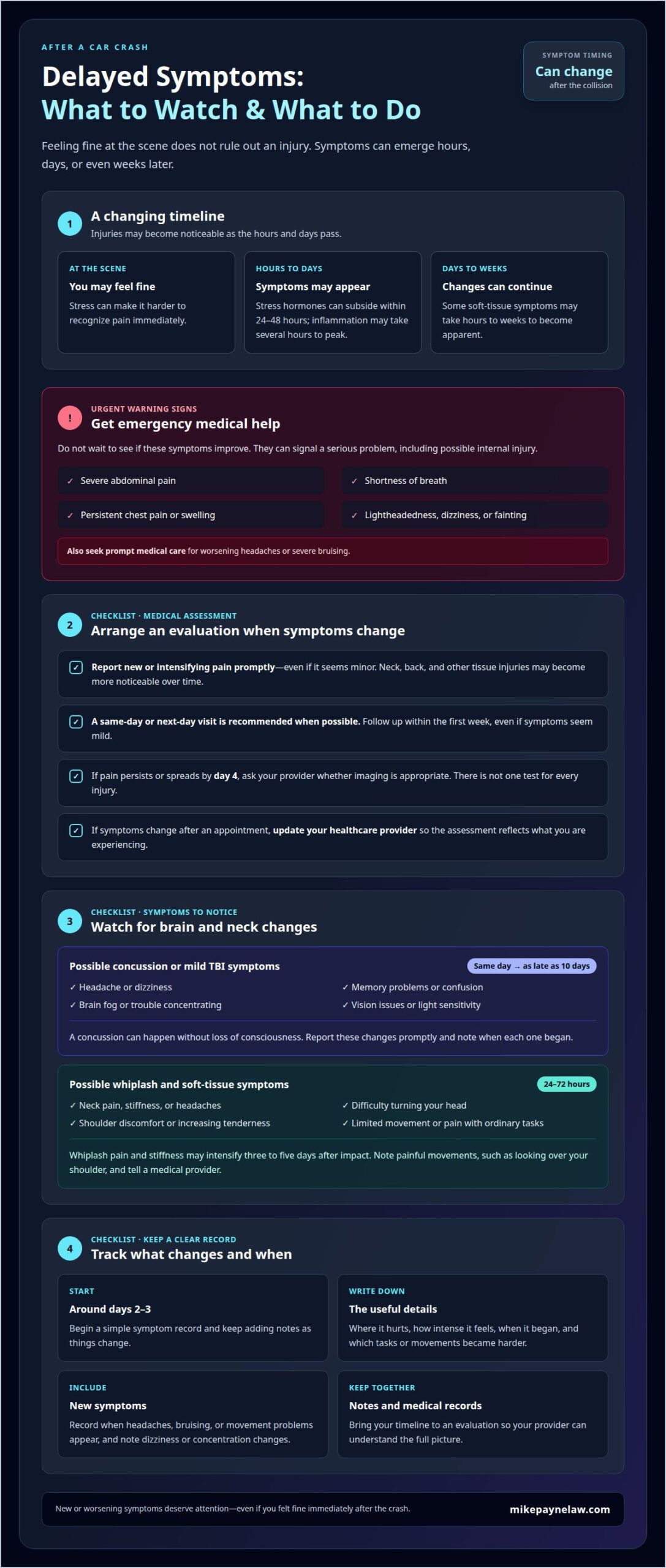
Delayed injury symptoms after a car crash can appear hours, days, or even weeks after the accident. A person may feel able to leave the scene, then wake the next morning with stiffness, headache, or sharp discomfort. Stress hormones can subside within 24 to 48 hours after a car accident, while inflammation may take several hours to peak. That can make neck, back, and other tissue injuries more noticeable over time. Feeling fine immediately doesn’t rule out an injury.
What medical tests diagnose injuries with delayed symptoms after a crash? There isn’t one test for every injury. A medical professional considers your symptoms, when they began, and the results of an examination to determine whether further testing, including imaging, is appropriate.
Some symptoms require immediate medical attention. Severe abdominal pain, persistent chest pain, swelling, shortness of breath, lightheadedness, dizziness, or fainting can signal a serious problem. Internal bleeding after blunt force trauma can be fatal if left untreated. Seek emergency help for these warning signs rather than waiting to see if they improve. Worsening headaches and severe bruising also need prompt medical care.
For new or intensifying pain, arrange a medical evaluation promptly, even if the discomfort seems minor. A same-day or next-day visit is recommended when possible; ask about imaging if pain persists or spreads by day 4. Follow up within the first week, even when symptoms appear mild. If symptoms change after an appointment, update your healthcare provider so the assessment reflects what you’re experiencing.
Keep a simple symptom record starting on days 2 to 3 after the accident: note where it hurts, how intense it feels, and which tasks have become harder. Record when headaches, bruising, or movement problems appear, and bring those notes to your evaluation. Keep medical records and treatment details together. This timeline helps your provider assess changes and plan your recovery based on the full picture, not just how you felt at the crash scene.
What Should You Do If You Have Delayed Symptoms after a Car Accident?
After a car accident, promptly report new symptoms to a medical provider and follow their assessment. A concussion or traumatic brain injury may become noticeable hours or days later, even without loss of consciousness.
Delayed Concussion and Mild TBI Symptoms
A concussion is a brain injury that can cause symptoms after the initial impact, while a mild traumatic brain injury can affect thinking, balance, or vision. Dizziness, memory problems, headaches, brain fog, light sensitivity, and trouble concentrating may develop days later. Don’t dismiss these changes because you felt normal at the scene. Arrange an evaluation as soon as possible, then document when each symptom began and how it affects daily tasks.
Headaches and Post-Concussion Symptoms
A new or intensifying headache after a crash can be a concussion warning sign, especially alongside dizziness, vision problems, or confusion. Concussion symptoms can begin on the same day or as late as 10 days after a car accident. Many people recover within a few weeks, but post-concussion syndrome describes symptoms that persist beyond the expected recovery period. Lingering problems can last months or years, so tell your provider when symptoms continue or change.
What are the warning signs of a concussion after a car crash? Watch for headaches, dizziness, memory problems, vision issues, brain fog, light sensitivity, and difficulty concentrating. A concussion can occur without loss of consciousness, so report these symptoms promptly rather than treating passing out as a test.
Can delayed symptoms affect car accident injury claims or filing deadlines in the U.S.? They can make timely medical records and symptom documentation important when connecting an injury to a crash. Filing deadlines depend on the applicable state law and circumstances. Since waiting can put a claim at risk, speak with a lawyer promptly about the deadline that applies to your situation.
Keep a dated record of headaches, dizziness, and concentration problems, and update your medical provider as symptoms develop. If they affect your recovery, discussing your car accident claim with an attorney can help you understand the next steps.
Whiplash symptoms
Whiplash occurs when a collision suddenly jerks the head forward and backward, straining neck muscles and ligaments. Symptoms may take 24 to 72 hours to appear, so track new pain or stiffness after a crash.
Neck and Shoulder Pain
Whiplash-related neck strain can cause pain, stiffness, headaches, and difficulty turning your head. Shoulder discomfort may also develop when the neck’s muscles and other soft tissues are affected. For example, you may notice limited movement when checking a blind spot or looking over your shoulder. Note which movements hurt and tell a medical provider, since these changes can interfere with ordinary tasks. Have neck or back pain after a crash evaluated.
Delayed Neck Pain
Delayed neck pain is discomfort or stiffness that appears after the collision rather than at the scene. Adrenaline and endorphins may mask pain for hours or days, and whiplash symptoms can become noticeable the day after a crash or later. Pain and stiffness may intensify three to five days after impact. Don’t treat a symptom-free first day as proof that your neck escaped injury. If pain appears or worsens, arrange a medical evaluation and explain when it began.
Soft-Tissue Symptoms
Soft-tissue symptoms involve strain or damage to muscles, ligaments, and other tissues, and may take hours to weeks to become apparent. A rear-end or side-impact collision can strain these tissues even when pain is delayed. Watch for increasing tenderness, limited neck movement, or shoulder discomfort. The injury’s severity may not become clear until a day or more after the crash. Record changes in pain and movement, then share that timeline during a medical evaluation, where targeted rehabilitation from clinics like RED Physiotherapy can help restore joint mobility and relieve ongoing stiffness.
Common injuries with delayed symptoms
Injuries may become clearer as inflammation develops, bruising spreads, or movement makes pain more noticeable. Adrenaline and stress may affect how you feel immediately after a collision, but feeling okay at first doesn’t rule out symptoms later. Pay attention to changes, not just how your body felt at the scene.
Back pain may begin within 24 hours to one week after a car accident. A herniated disc can also cause symptoms over days or weeks, including pain that spreads or worsens with movement. Sprains and muscle tears may grow more painful as swelling and inflammation develop. Record where pain starts, whether it travels, and which actions make it worse, then share those details during a medical evaluation.
Bruising may take hours or days to appear, while internal organ trauma may not cause immediate symptoms. Abdominal pain may begin within hours to several days after a crash. Severe abdominal pain, chest symptoms, shortness of breath, lightheadedness, or fainting require immediate medical attention. Internal bleeding can become life-threatening if left untreated, so don’t wait for visible bruising before seeking urgent care.
Delayed effects can extend beyond physical injuries. Emotional trauma, including anxiety, depression, or PTSD, may develop over weeks to months. Chronic pain may become evident a month or more after the collision. Tell a healthcare provider when these changes began and how they affect sleep, work, or daily routines. Medical records documenting symptoms and treatment over time can help show how an injury developed.
Keep a dated record of new symptoms, medical visits, and changes in daily movement. A lawyer can help explain how injury documentation relates to a personal injury claim. If an injury is disrupting your recovery, contact an attorney about your accident injury claim.
Law Offices of Michael D. Payne: Workplace Injury Representation
Law Offices of Michael D. Payne provides Car Accident Representation when delayed symptoms raise questions about an injury claim. Medical care comes first. Clear records of symptoms, diagnoses, and treatment can help document how your condition changed after the collision. Keep relevant medical records and crash details together, including when new pain or other symptoms began.
If an insurer questions whether an injury is connected to the accident, legal guidance can help you understand the claim process and what documentation may matter. The firm also represents people with workplace injuries, but this section focuses on car accident injuries and related claims.
Contact Law Offices of Michael D. Payne to discuss your situation.
Protect Your Next Steps
Keep your recovery at the center of every decision. Share new concerns with your medical provider and organize your records as care continues. If delayed injury symptoms after a car crash affect your work, daily responsibilities, or treatment plans, don’t let uncertainty push you into a rushed decision. Take time to understand what your records show and which options may apply to your circumstances.
Law Offices of Michael D. Payne represents people pursuing car accident, slip and fall, and motorcycle accident claims. Legal guidance can help you understand how an injury claim relates to your situation, what information may matter, and how to approach claim discussions. A clear account of what happened and how your condition has changed can help you consider your next steps.
Contact Law Offices of Michael D. Payne to discuss your situation and move forward with greater clarity. You deserve support as you focus on what comes next.
Frequently Asked Questions
Should I Talk About My Injuries with an Insurance Adjuster?
Be careful about discussing injury details before speaking with an attorney. If the other driver’s adjuster calls, you can provide identifying information and politely end the call. Avoid giving a recorded statement before getting legal advice. Keep notes about the call, including the adjuster’s name and what they requested, and continue telling your medical provider about symptoms or changes in your condition. Dealing with claim inquiries and adjusters often reminds drivers of the importance of having proper vehicle cover in place; for motorists looking to reassess their policy options, independent brokers like Britton Insurance offer practical guidance on navigating motor insurance and finding value.
What If My Injuries Return After a Settlement?
Signing a settlement release usually prevents you from seeking additional money for the same claim later. Exceptions may involve fraud, mistake, or newly discovered evidence, and a lawyer can review the release and circumstances surrounding it. If another responsible party wasn’t included in the settlement, a separate claim may be possible. Don’t assume a claim can be reopened without reviewing the specific documents and facts.
What Should You Expect Physically and Mentally After Being in an Auto Accident?
Recovery can affect both physical comfort and emotional well-being. Note whether pain, sleep problems, mood changes, or difficulty concentrating affect your work or ordinary routines. These details help your healthcare provider understand the collision’s broader effects, not just a single symptom. Share changes as they happen, especially if a new problem interferes with daily activities or makes existing symptoms harder to manage.
What Injuries Can Cause Delayed Symptoms After a Car Crash?
Whiplash, sprains, muscle tears, and herniated discs may become painful after a collision. Internal organ trauma may also develop without obvious symptoms at first, while bruising can take time to show. Emotional effects, including anxiety or depression, may emerge later, too. Injuries and symptoms vary, so describe each new change to a medical provider instead of assuming it has the same cause as another symptom.
How Long After a Car Accident Can Injury Symptoms Appear?
Symptoms may begin within hours, appear over the following days, or emerge weeks after a collision. Some delayed symptoms arise within 24 to 72 hours, but later onset is also possible. The timing alone doesn’t establish what caused a symptom. Record when it began and how it changes, then share that timeline during medical care so the provider can assess it alongside your crash history.
Can Whiplash Symptoms Start Days After a Collision?
Yes. Whiplash symptoms may take 24 to 72 hours to appear, and neck pain or stiffness can become noticeable days after a collision. For example, turning your head while driving may become uncomfortable after initially feeling normal. Note when symptoms begin and which movements are affected, then arrange a medical evaluation. Delayed onset doesn’t mean you should ignore new neck pain or reduced movement.