

Your settlement isn’t necessarily all yours to keep. Understanding subrogation in a personal injury case means knowing that an insurer or other payer that covered accident-related medical care may seek repayment from compensation recovered from the responsible party. That reimbursement claim can reduce the amount you ultimately receive.
If an insurer paid for treatment while your claim was pending, a repayment demand can feel like another setback. The amount and basis of the claim depend on the type of coverage and the applicable insurance terms.
This article explains subrogation, how reimbursement claims and medical liens can affect settlement proceeds, and when a claim may be reduced or waived. It also explains why these claims need attention before settlement funds are distributed, so you can better understand what may remain after repayment.
Key Takeaways
- Learn how reimbursement claims can arise when insurance pays for injury-related care before a settlement.
- Understand why an insurer’s repayment claim differs from an unpaid medical bill and why that distinction matters.
- See how liens and other settlement obligations can affect the funds you ultimately receive.
- Find out what factors may support negotiating or challenging a reimbursement demand.
What if my health insurance demands reimbursement from my settlement?
An insurer may seek repayment for accident-related medical expenses it covered before the responsible party pays a settlement. The claim’s terms and timing can affect what remains for you.
Accident-Related Medical Bill Reimbursement
A health insurance reimbursement claim seeks repayment from a settlement for accident-related medical bills the insurer paid. Policy terms help determine whether repayment is claimed and how the demand is calculated. For example, if your health insurer covered treatment while your personal injury case was pending, it may assert a claim before settlement. An attorney can compare the policy and payment records with the demand.
Insurance Types and Recovery Claims
Health, auto, workers’ compensation, and property insurance may each lead to recovery claims, depending on the coverage and loss. Auto MedPay or uninsured and underinsured motorist coverage may pay injury expenses, after which an auto insurer may seek recovery from a responsible driver. Workers’ compensation insurers may seek repayment after a third party causes a work injury. A property insurer may pursue the party responsible for damage.
Recovery From Responsible Third Parties
Subrogation allows an insurer that paid for a loss to pursue the third party responsible. After an accident, your insurer may first pay covered medical costs, then seek reimbursement tied to a settlement or judgment against the responsible party. If multiple policies apply, more than one insurer may claim repayment. Coverage terms and the order of claims can affect your net settlement.
Subrogation Deadlines
There is no single deadline for every insurance reimbursement claim. Timing depends on the applicable policy and law, and an insurer may assert a claim before your personal injury case is resolved. Give your attorney insurance documents and reimbursement notices promptly so the claim can be reviewed before settlement and distribution. Account for pending claims as part of the settlement rather than leaving repayment unresolved.
What Is Subrogation in Personal Injury Claims?
Understanding subrogation in a personal injury case starts with distinguishing an insurer’s repayment claim from a provider’s unpaid bill. This helps clarify which expenses may affect settlement funds and which remain owed directly to a medical provider.
Subrogation and Unpaid Medical Bills
Subrogation is an insurer’s effort to recover payments it made for losses caused by another party. An unpaid medical bill is still owed to a doctor or hospital for care. The distinction matters because an insurer’s demand and a provider’s balance are separate claims, even when both relate to the same accident.
After an injury, health insurance or auto medical coverage may pay treatment expenses while a personal injury claim is pending. A provider may also leave a bill unpaid or assert a medical lien. Contractual discounts can make the amount an insurer paid different from the provider’s original bill. Understanding subrogation in a personal injury case means keeping those figures separate when assessing a demand and possible settlement deductions.
Available insurance payments and eventual settlement proceeds may help address medical expenses. But repaying an insurer does not automatically settle a provider’s unpaid balance. Payment records, adjusted bills, and outstanding invoices help show what has been paid and what still needs attention.
Medicare, VA, and Workers’ Compensation Claims
Medicare, the VA, and workers’ compensation programs may seek repayment for benefits connected to an injury. Medicare has reimbursement rights for covered accident-related medical payments under the Medicare Secondary Payer Act. These claims need attention alongside other injury expenses because they may affect the funds remaining after resolution.
Future care can also matter. Medicare may consider future injury-related medical costs, and a Medicare Set-Aside may be needed when settlement funds include compensation for care Medicare might otherwise cover. Workers’ compensation insurers may seek repayment when a third party is responsible for an employee’s injury. Benefit records and settlement terms help identify the payments involved and the expenses covered by a reimbursement demand.
How liens affect settlement proceeds
A lien or reimbursement claim can reduce the money left after a settlement or verdict. The net amount depends on case expenses and which claims must be resolved.
Claims in Settlements and Verdicts
A subrogation claim seeks repayment from compensation recovered from the responsible party. It can affect a settlement or verdict when an insurer paid accident-related expenses on the injured person’s behalf. The at-fault driver’s insurer may also check for pending claims before releasing settlement funds.
Legal representation can affect how a reimbursement demand is handled. An attorney reviews the claim, settlement terms, and available coverage, then addresses outstanding medical bills and subrogation claims before distributing funds. Do not ignore a lien: unresolved claims can expose you to repayment demands or lawsuits.
Effects on Net Settlement Proceeds
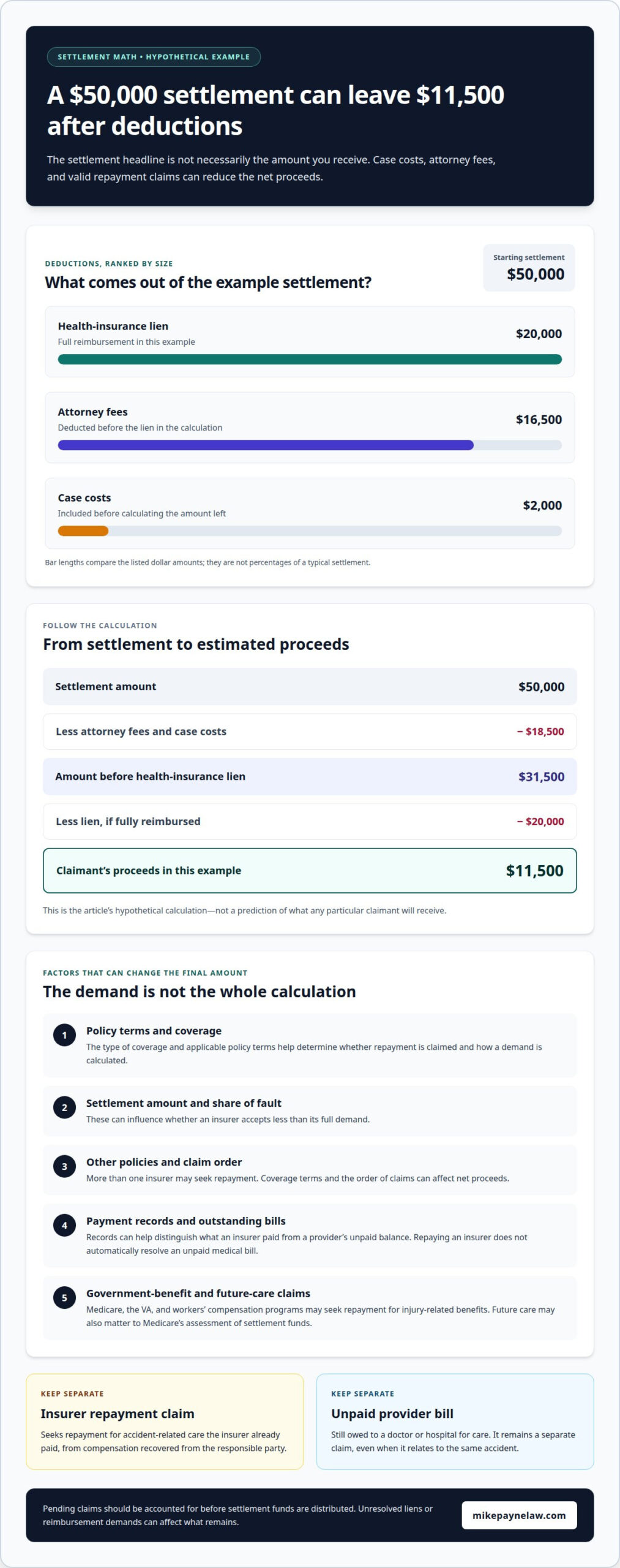
The net settlement is what remains after case costs, attorney fees, and valid repayment claims are accounted for. Consider a hypothetical $50,000 settlement with $16,500 in attorney fees and $2,000 in case costs. That leaves $31,500 before a health-insurance lien is repaid.
If the insurer’s lien is $20,000 and receives full reimbursement, the claimant receives $11,500. The example shows why the settlement headline alone does not reveal the client’s final proceeds. Multiple policies can also create multiple repayment demands, and their coordination may affect the final calculation.
Before distribution, the attorney accounts for each pending claim and its supporting payment records. The settlement amount, share of fault, and policy terms can influence whether an insurer accepts less than its full demand. Medicare claims may need to be resolved before the remaining award is disbursed. Careful accounting helps ensure you do not treat disputed or obligated funds as money already available.
Can Subrogation Claims Be Reduced or Waived?
An insurance company may accept less than the full amount it paid, but reduction or waiver depends on the claim and applicable rules. A focused review can identify issues to raise before an injury settlement is distributed.
Negotiating Reimbursement Demands
Negotiating a reimbursement demand means reviewing its basis and seeking an adjustment to the amount claimed. Match the insurer’s payment list to accident-related expenses and the coverage involved. An audit may uncover payments unrelated to the injury, duplicate entries, or amounts that need clarification.
To identify and negotiate claims, gather insurance policies, benefit statements, medical payment records, and settlement terms. Compare each listed payment with the accident expenses. An attorney can use that review to challenge unsupported items and present the settlement details to the insurer, grounding the discussion in facts rather than simply asking for a lower payoff.
Reducing Subrogation Payoffs
A reduced payoff is an agreed reimbursement below the amount an insurer paid. After negotiation, an insurer may accept less, leaving more of the injury settlement for you. The settlement amount, proportion of fault, and specific policy terms can affect whether the insurer agrees to a reduction.
Some jurisdictions recognize a made-whole doctrine, which can affect when an insurer may recover if the injured person has not been fully compensated. Its application varies. Self-funded employer health plans governed by the Employee Retirement Income Security Act may have stronger federal reimbursement rights that override some state protections. The plan type therefore matters during review.
A waiver is not automatic. A practical negotiation brings together the verified payment history, settlement terms, and relevant coverage language. This documentation helps the insurer assess the claim and any proposed reduction. An attorney can also address whether the plan’s terms or applicable law support challenging the demand.
Discuss a subrogation demand with an attorney before settlement funds are distributed.
Law Offices of Michael D. Payne: Workplace Injury Representation
Law Offices of Michael D. Payne represents people with workplace injury claims and can review how reimbursement demands may affect a potential recovery. When a third party is involved, sorting out insurance payments, liens, and settlement terms can be an important part of protecting your interests.
The firm also handles car accident, slip and fall, and motorcycle accident cases. An attorney can assess the injury claim and related reimbursement issues together, addressing insurance demands as part of the broader case rather than in isolation.
If an insurer is seeking repayment from your settlement, contact Law Offices of Michael D. Payne to discuss your situation.
Take the Next Step Toward a Clearer Recovery
A clear understanding of subrogation in a personal injury case can help you make informed decisions before signing settlement documents. Bring the insurer’s reimbursement demand, policy information, and settlement paperwork together for a focused review. This gives your attorney the opportunity to identify questions about the claim and explain how it may affect your recovery.
Law Offices of Michael D. Payne represents people injured in car accidents, slip and falls, and motorcycle accidents. If you’re weighing a settlement or facing a repayment demand, seek guidance before moving forward. You deserve a clear view of the issues and a dedicated advocate as you decide what comes next.
Contact Law Offices of Michael D. Payne to discuss your injury claim and take your next step with confidence.
Frequently Asked Questions
What is Subrogation?
Subrogation allows an insurer to seek recovery from a party responsible for a loss it covered. For example, after a crash, an auto insurer that paid for covered damage may pursue the responsible driver. In an injury claim, this can create a repayment issue alongside medical bills. Coverage terms and the circumstances of the loss shape the claim.
How does ERISA affect things?
ERISA is a federal law that governs many employer-sponsored health plans. A plan’s reimbursement rights can differ from those of an individual policy, and federal rules may limit the effect of some state protections. The plan’s funding and written terms matter. For an injury claim in Southern California, identifying the plan type helps clarify which rules may apply.
What Is the “Made Whole” Doctrine in Florida?
Florida’s made-whole doctrine generally concerns whether an insurer can recover before an injured person has been fully compensated for their losses. The amount recovered, the person’s total losses, and the policy language can matter to that analysis. The doctrine does not automatically erase every reimbursement demand, so consider the claim and coverage terms together.
What about workers’ comp liens?
A workers’ compensation insurer may seek repayment when an injured employee recovers from a third party responsible for the workplace injury. For example, if a separate company’s conduct caused the accident, a settlement with that company may raise a workers’ compensation reimbursement claim. The governing law and benefit records affect the lien. Resolving it as part of the third-party claim helps clarify the worker’s net recovery.
What does subrogation mean in a personal injury case?
In a personal injury case, subrogation means an insurer or benefit program seeks recovery tied to payments made for the injury. It may affect how settlement funds are allocated, but it is distinct from an unpaid provider bill. A health plan’s demand concerns benefits it paid, while a doctor’s outstanding invoice reflects care still owed to that provider.
Which insurers and benefit programs can claim subrogation after an injury settlement?
Potential claimants include health insurers, auto insurers, workers’ compensation carriers, Medicare, Medicaid, and the VA, depending on the benefits involved. An auto insurer may seek recovery after paying covered losses caused by another driver. Property insurers may pursue recovery for property damage, a claim that concerns the damage rather than medical treatment. More than one payer may assert a claim in a case.