

A low offer isn’t the end of the conversation. Effective progressive insurance claim negotiation tactics start with a clear counteroffer supported by records of your injuries, treatment, expenses, lost wages, and other losses. Before accepting a settlement or signing a release, make sure you understand what it covers.
It’s reasonable to want a fair evaluation, especially when an offer doesn’t reflect the harm you’ve experienced. This guide explains how to build a stronger counteroffer, respond calmly to an offer you believe is unfair, request a different adjuster, and keep useful written records of every conversation. You’ll also learn why timing matters when your medical needs are still developing. The goal is to help you negotiate based on evidence, not pressure, and understand when legal support may help.
Key Takeaways
- Don’t rush to accept an offer or give unnecessary statements before you understand how they could affect your claim.
- Build a stronger counteroffer by organizing evidence of the crash, your injuries, treatment, expenses, and vehicle damage.
- If communication with the adjuster is not productive, learn how to request a supervisor or a different adjuster.
- Keep a written record of calls, messages, documents sent, and responses to make your negotiations easier to track.
1. What Are Your Options if Progressive Doesn’t Offer You a Fair Settlement?
A low settlement offer is a starting point for discussion, not a reason to accept immediately. Respond calmly, ask Progressive to explain how it assessed liability and your losses, and identify specific items its evaluation missed. Then submit a written counteroffer tied to documented expenses and harm. A firm, evidence-based response is more useful than an angry call.
Protect your claim before negotiating further. Don’t volunteer unnecessary details about your injuries, schedule, or the crash; an adjuster may use your words to dispute the severity of your injuries or argue that you contributed to the collision. If asked for a recorded statement, clarify its purpose and consider getting legal advice before proceeding. Keep discussions respectful, but don’t guess or minimize your symptoms.
Don’t settle while your treatment or future medical needs remain unclear. Progressive may offer compensation quickly, but accepting a settlement and signing a release generally prevents you from seeking additional compensation later if your condition worsens. Review medical expenses, lost income, vehicle damage, and other losses before deciding. If negotiations stall, you can ask for a supervisor’s review or discuss filing a lawsuit with an attorney.
To dispute Progressive’s repair estimate, compare its itemized work and parts with repair records, photographs, and a written estimate from a repair facility. Send the specific discrepancies in writing and ask Progressive to explain or review them.
A totaled car’s actual cash value is based on its value before the crash. Ask for the valuation details, then challenge factual errors with records of the car’s condition, mileage, equipment, and relevant vehicle comparisons.
Consider hiring a personal injury lawyer when injuries, disputed liability, or stalled negotiations make it difficult to support a fair demand. A public adjuster may help with property-damage valuation, while an attorney can address injury compensation and liability. Choose support that fits the dispute.
2. How Can I Get a Higher Settlement from My Progressive Insurance Claim?
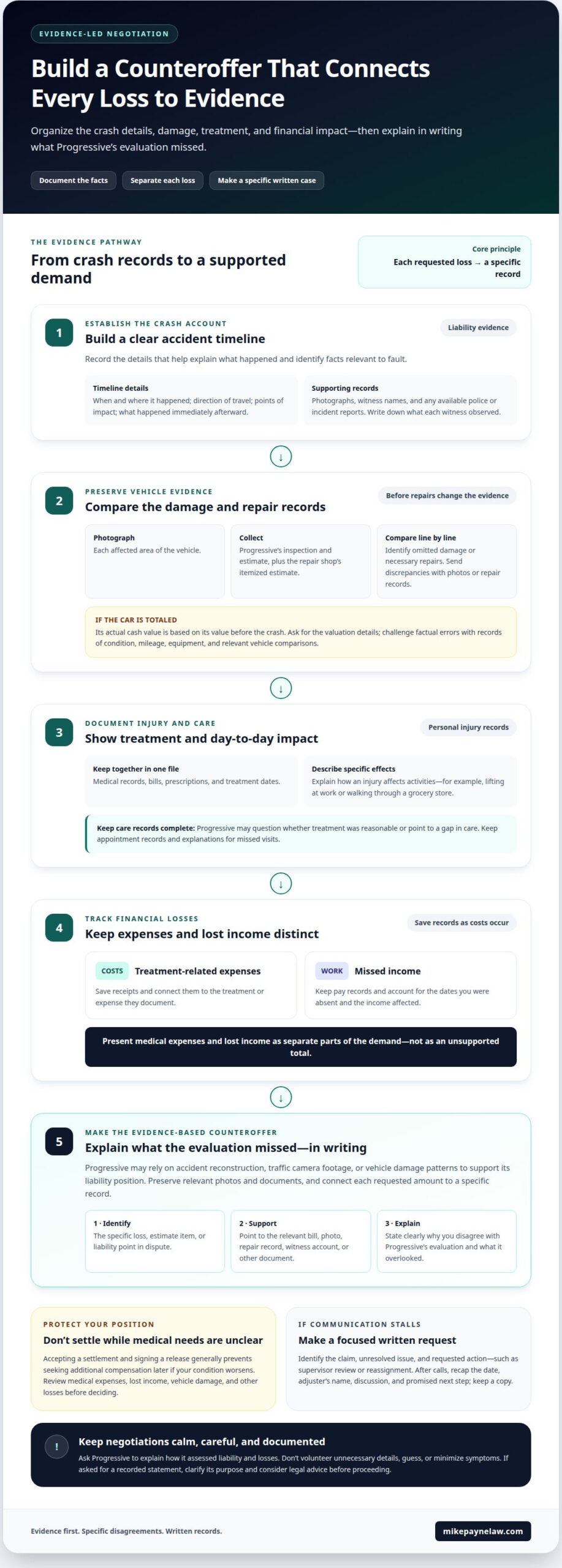
Effective progressive insurance claim negotiation tactics connect each requested loss to evidence and a clear explanation. Start with an accident timeline: when and where it happened, the direction of travel, points of impact, and what happened immediately afterward. Add photographs, witness names, and any available police or incident reports. This record helps organize your account and identify details relevant to liability.
Preserve vehicle evidence before repairs change the damage. Photograph each affected area, keep Progressive’s inspection and estimate, and collect the repair shop’s itemized estimate. Compare the documents line by line. If an estimate leaves out a damaged part or necessary repair, identify it and submit supporting photographs or repair records with your review request.
For personal injury damages, organize medical records, bills, prescriptions, and treatment dates in one file. Note how an injury affects specific activities, such as lifting at work or walking through a grocery store. Progressive may question whether treatment was reasonable or point to a gap in care, so keep appointment records and explanations for missed visits.
Track expenses as they occur. Save receipts for treatment-related costs and keep pay records showing missed work, along with a clear account of the dates you were absent and the income affected. These records help present medical expenses and lost income as separate parts of your demand, rather than as an unsupported total.
Fault also needs evidence. Progressive may use accident reconstruction, traffic camera footage, or vehicle damage patterns to support its liability position. Preserve relevant photos and documents, and write down what each witness observed. The strongest progressive insurance claim negotiation tactics connect each requested amount to a specific record and explain any disagreement with Progressive’s evaluation in writing. For help organizing evidence after a crash, car accident representation can address injury claims and liability disputes.
3. Requesting a different adjuster or supervisor
If Progressive’s adjuster hasn’t addressed a specific concern, make a focused request. Send a written message identifying the claim, the unresolved issue, and the action you want, such as a supervisor review or reassignment. For example, explain that the estimate omits documented damage or that a liability decision overlooks a witness account. Keep the request professional and retain a copy.
Progressive uses in-house claims adjusters and may also use third-party investigation firms. Ask who is handling your claim and who makes the decision you’re disputing. If a supervisor responds, summarize the issue again and point to the relevant document, estimate, or medical record. Specific details give the insurer a concrete question to address.
A friendly adjuster can make a difficult conversation easier, but courtesy doesn’t mean the evaluation is complete. Be cooperative and precise. If asked for a recorded statement, clarify what topics it will cover and who will receive it. Give accurate facts, distinguish what you remember from what you don’t, and don’t guess about speed, timing, or injuries.
After each call, send a short written recap with the date, the adjuster’s name, what was discussed, and any promised next step. If Progressive’s position still overlooks important evidence, ask the supervisor to explain the reasoning in writing. That record can help you assess whether negotiations are moving toward a fair settlement or whether further action warrants discussion.
A personal injury attorney may help when serious injuries, disputed liability, or pressure to resolve the claim make negotiations difficult. An attorney can review the evidence, communicate with the adjuster, and explain your options before a lawsuit is filed. If the claim involves a workplace accident, get advice about how the injury claim and insurance communications relate before agreeing to a resolution.
4. Keeping written records of insurer communications
Create one claim file for every Progressive communication. Log the date, time, adjuster’s name, phone number, and claim reference. After a call, write a brief summary of what each person said and any promised next step. Send a polite email confirming important details, such as a requested document or a disagreement about the claim. Keep copies of emails, letters, and attachments together.
Save each version of your records rather than replacing earlier files. For example, label a repair estimate with its date and keep the related photographs beside it. Store medical bills, treatment records, wage documents, and receipts in separate folders. A simple index can show which item supports each claimed expense. This makes it easier to answer Progressive’s questions accurately and spot omissions in its evaluation.
Progressive may request prior medical records, employment records, or tax returns when evaluating a claim. Before sending documents, record exactly what the adjuster requested and clarify the date range and purpose. Keep a copy of everything provided, note the delivery date and method, and save any response. Avoid sending an incomplete file without explaining what remains outstanding.
For a medical record request, note the provider, treatment dates, and records requested. For employment documents, identify the employer and relevant wage information. A personal injury claim may involve sensitive details, so an organized record helps you and your attorney track what the insurer has received. It also helps prevent confusion if Progressive requests the same item again.
Written records can matter if negotiations stop and a lawsuit becomes part of the discussion. Preserve messages that explain Progressive’s position, your responses, and documents supporting disputed damages. If you’re unsure how to handle a request or your file includes extensive medical and financial records, consult a personal injury lawyer about the next step.
Law Offices of Michael D. Payne
Law Offices of Michael D. Payne helps injured people assess insurer communications, organize claim evidence, and respond when a settlement offer doesn’t account for documented losses. If Progressive disputes liability, questions your treatment, or presses you to resolve a claim before your medical needs are clear, legal guidance can help you understand your options and prepare a supported response.
The firm represents people injured in car, motorcycle, bicycle, and slip-and-fall accidents. Its role is to address the injury claim and negotiation issues, not to promise a particular settlement. If you’re weighing a low offer or unsure how to handle the next communication, contact Law Offices of Michael D. Payne to discuss your situation.
Take Your Next Step With Confidence
The next move in a Progressive claim should be deliberate, not rushed. Use your records to make decisions based on the injury’s actual impact and the evidence supporting your position. If the insurer’s response leaves important questions unanswered, seek legal guidance before deciding how to proceed. Strong progressive insurance claim negotiation tactics aren’t about confrontation for its own sake; they’re about making your position clear and keeping the discussion grounded in facts.
Law Offices of Michael D. Payne can help you assess your claim and understand your options for moving forward. You don’t have to make a difficult decision alone or accept an outcome before you understand its implications. Contact Law Offices of Michael D. Payne to discuss your situation and take a considered next step.
Frequently Asked Questions
How Can I Get a Higher Settlement from My Progressive Insurance Claim?
Present a written demand that connects each requested loss to a clear explanation and supporting document. For example, explain how a specific injury affects a regular work task, then identify records that support the limitation. Check that your demand addresses the insurer’s stated concerns, not just the total amount you’re requesting. A focused response gives Progressive concrete issues to reconsider during negotiations.
How Can You Increase Your Chances of a Fair Settlement?
Make your position easy to evaluate. Use a brief cover letter that identifies disputed items and points to the documents supporting each one. If Progressive questions your treatment, address the specific concern with relevant medical information rather than making broad claims. Keep your requested resolution consistent with the evidence, and correct errors promptly when you find them.
How Should You Approach Progressive?
Be courteous, prepared, and precise. Before a conversation, write down the issue you need resolved and the outcome you’re requesting. If the adjuster raises a new question, ask for it in writing so you can respond accurately. Avoid agreeing to terms during a call if you need time to understand their effect. A calm, focused approach keeps the discussion on the claim.
What Are Your Options if Progressive Doesn’t Offer You a Fair Settlement?
You can explain in writing why the offer falls short, request a supervisor’s review, or discuss legal options with an attorney. If Progressive’s response leaves an issue unresolved, identify it and the evidence supporting your position. An attorney can assess whether continued negotiation or filing a lawsuit makes sense given the circumstances of your claim.
What evidence should I gather before negotiating a Progressive claim settlement?
Gather materials that clarify what happened and how the incident affected you. Along with bills and repair documents, preserve claim correspondence, witness contact details, photographs of the scene from different viewpoints, and notes about changes in your daily activities. Keep original files when possible. Label documents by date and topic so you can find the relevant evidence during a discussion.
Can I negotiate Progressive’s first settlement offer, and what should I say?
Yes. You can respond with a counteroffer and a concise explanation of what the first offer overlooks. For example: “I’m not ready to accept this amount. Please review the attached information about the losses it does not address.” Then name the specific issue and evidence. Keep the tone professional, request a written response, and avoid accepting or signing terms before understanding their effect.