

You generally don’t have to give a recorded statement to the other driver’s insurer. Knowing what not to say to an insurance adjuster after an accident means avoiding guesses about fault, speed, distance, or injuries that haven’t been evaluated. Your obligations to your own insurer may differ under your policy.
It’s understandable to want to explain what happened and answer every question. Keep your response brief and factual, avoid saying “I’m fine” before you’ve been evaluated, and tell the adjuster when you don’t know an answer.
This guide explains how crash victims in Southern California can respond, what to do when an adjuster requests a recorded statement, and why it can be risky to accept a quick settlement before you understand your injuries and losses. You’ll also find practical language for setting boundaries while the investigation continues.
Key Takeaways
- Keep your account of the crash factual; if you don’t know a detail, don’t guess.
- Describe your health carefully while medical evaluations are ongoing, and update the adjuster as you learn more.
- Before responding to a recorded-statement request, identify which insurer is asking and what coverage the request concerns.
- Take time to understand the potential costs of your injuries before considering an early settlement offer.
1. Avoiding admissions of fault and speculation
After a crash, share basic facts with the adjuster, such as the date, time, location, and vehicles involved. Keep your statement brief and factual. Don’t say “I caused it,” assign blame, or guess about speed, distance, or what another driver saw. If you don’t know an answer, say so rather than filling gaps with speculation.
For example, describe where your vehicle was and what damage you noticed. Don’t estimate how fast either car was traveling if you didn’t measure it. An insurance company may compare your account with other evidence, and an inaccurate guess can create an apparent inconsistency. Stick to what you personally observed, and don’t accept responsibility before the facts are investigated.
Do insurance adjuster rules and deadlines vary by state? Yes. State laws and insurance requirements can differ, so a deadline or process that applies in one state may not apply in another. Identify which state’s rules govern your claim before relying on a deadline or procedure.
Fault rules also differ by state. In some places, a person’s share of responsibility can affect whether they recover compensation or how much they may receive. That’s another reason to avoid volunteering a conclusion about who caused a collision before the evidence is reviewed.
What should you avoid saying to an insurance adjuster after a car accident? Avoid admitting fault, minimizing damage, or offering uncertain estimates. Describe only facts you know, and correct yourself promptly if you realize you gave an inaccurate detail.
Should you accept the first settlement offer from an insurance company? Don’t accept it before you understand your injuries and potential long-term medical costs. An early offer may not account for treatment needs that emerge later, so review what the settlement covers before agreeing.
2. Making statements about injuries before medical evaluation
Don’t tell an adjuster “I’m fine” or “I’m not hurt” before a medical evaluation. Whiplash, concussions, and soft-tissue injuries can take days or even weeks to show symptoms. A quick answer may later conflict with your medical records or the timeline of your treatment.
Instead, describe your current situation accurately: “I’m seeking medical evaluation, and I’ll provide updates when I know more.” If a doctor is already assessing you, say that your doctors are still evaluating the injury. You can keep the conversation brief without refusing every question. For example, confirm whether you’re receiving or seeking treatment, then avoid guessing about a diagnosis or recovery.
What should you say instead when speaking with an insurance adjuster after an accident? Give a truthful update about what you know now, and make clear when an evaluation is ongoing. You don’t need to predict how symptoms will develop or determine the full extent of an injury during an initial call.
Prior injuries or accidents can raise questions about which symptoms are new. Don’t claim every problem began with the crash if that isn’t accurate, and don’t assume an old condition explains your current pain. Describe what changed after the accident, when you noticed it, and what medical care you’ve sought. Medical records help establish that timeline; careless wording can create confusion in injury claims.
If the adjuster presses for detailed medical history or asks you to interpret records, pause before answering. You can say you’d like to review the request before discussing those details. That protects your ability to give accurate information without making a rushed statement about your health or settlement. Understanding your car accident injury claim can help you address questions carefully while treatment continues.
3. Do I Have to Give a Recorded Statement?
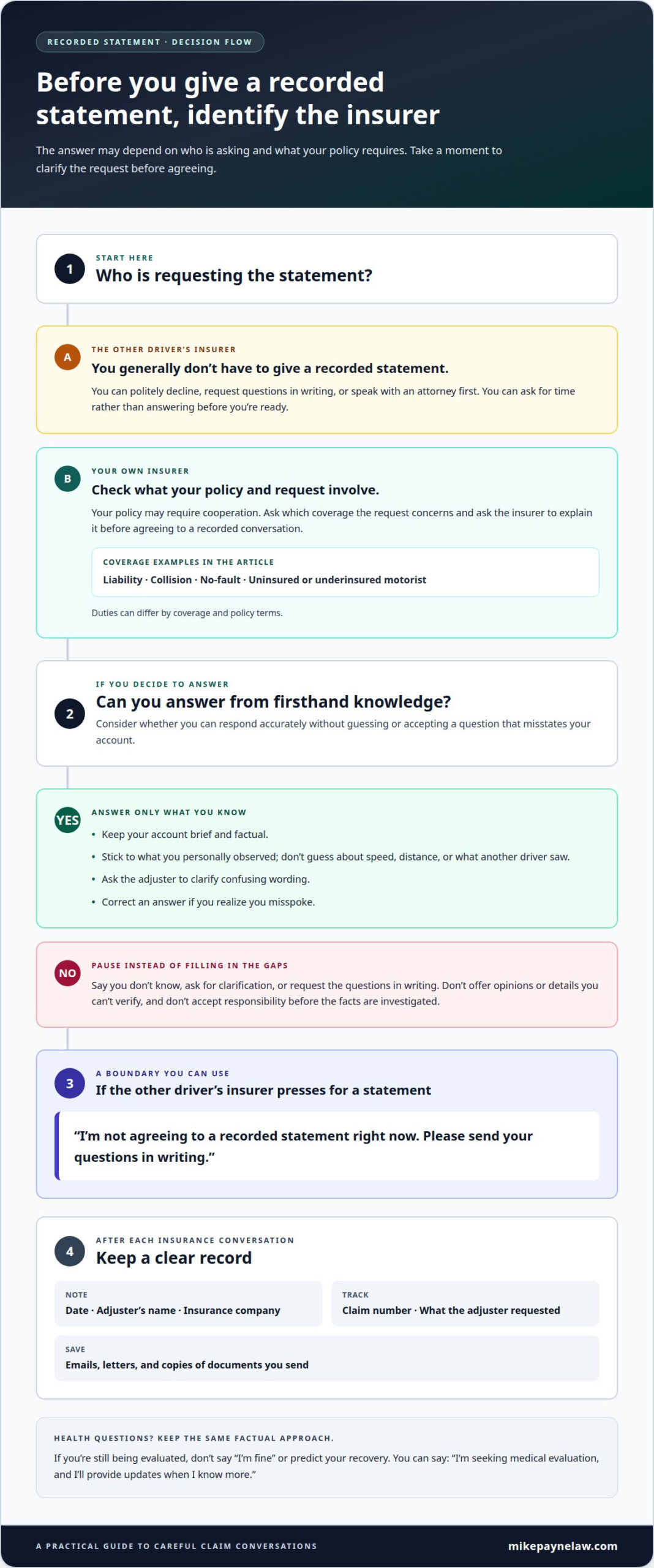
You generally don’t have to give a recorded statement to the other driver’s insurance company. An adjuster may ask you to explain how the crash happened, but you can politely decline, request questions in writing, or speak with an attorney first. Knowing what not to say to an insurance adjuster after an accident also means resisting pressure to answer before you’re ready.
Your own insurer is different. Your policy may require cooperation, so ask which coverage the request concerns, such as liability, collision, no-fault, or uninsured or underinsured motorist coverage. Duties can differ by coverage and policy terms. If you’re unsure what the request means, ask the insurer to explain it before agreeing to a recorded conversation.
If you decide to give a statement, answer only what you know firsthand. Don’t guess about what happened or accept a question that misstates your account. Ask the adjuster to clarify confusing wording, and correct an answer if you realize you misspoke. An attorney can help you understand how a statement may affect your injury claim.
Keep a record of each insurance conversation. Note the date, adjuster’s name, insurance company, claim number, and what the adjuster requested. Save emails, letters, and copies of documents you send. These records can help you track the claim and compare later statements with your notes and available evidence.
If the other driver’s insurer presses for a statement, you can say, “I’m not agreeing to a recorded statement right now. Please send your questions in writing.” The practical rule for what not to say to an insurance adjuster after an accident is simple: don’t offer opinions or details you can’t verify. You can request time to speak with an attorney before deciding.
4. Talking to Adjusters: South Carolina Accident Guide
In South Carolina, stay courteous without treating a friendly adjuster like an advocate. The insurance company represents its policyholder’s interests, so keep your answers accurate and focused. Confirm the crash date, location, vehicles involved, and whether you’re receiving medical care. If the adjuster asks who was liable, say the investigation is ongoing rather than assigning fault before the evidence is reviewed.
Set a boundary when a conversation moves beyond what you’re comfortable discussing. You can say, “I’ll provide relevant information when it’s available, but I’m not ready to discuss more details today.” If the adjuster presses, ask to pause the conversation until your lawyer can join. This gives you room to communicate clearly while treatment, vehicle damage assessments, and the accident investigation continue.
Be cautious with an early settlement offer, even if bills or transportation costs are already affecting your recovery. A quick payment may not account for ongoing treatment or the full impact of an injury. Before accepting, understand what the settlement resolves and whether you’re being asked to sign a release. Don’t agree during a call simply because the adjuster says the offer is available now.
Keep a record of each South Carolina claim conversation. Write down the adjuster’s name, the date, what was requested, and any deadline mentioned. Save emails and settlement documents together, then compare each offer with your medical expenses, missed work, and other documented losses. If questions about liability or compensation become difficult to manage, an injury lawyer can assess the claim and communicate with the insurer. Get help with your car accident claim before agreeing to terms you don’t understand.
Law Offices of Michael D. Payne: Car Accident Representation
Law Offices of Michael D. Payne provides Car Accident Representation for people facing insurer questions, disputed liability, or settlement pressure after a crash. A lawyer can review the available evidence, explain how your statements may affect the claim, and represent your interests in discussions with the insurance company. Consider legal help if you’re unsure how to respond, your injuries are still being evaluated, or an offer doesn’t account for your documented losses. The firm also represents people injured in motorcycle and bicycle accidents, as well as slip-and-fall cases. If you’d like to discuss your accident and your options, contact Law Offices of Michael D. Payne.
Take the Next Step With a Clear Plan
The next conversation with an insurer can shape how your claim moves forward. Before responding, consider what decisions you need to make and whether you understand the terms being discussed. Knowing what not to say to an insurance adjuster after an accident is one part of protecting your position; advice tailored to your circumstances can help you choose your next steps with greater confidence.
You don’t have to handle difficult claim questions alone. If you’re uncertain about an insurer’s request or an agreement presented for your signature, talk with a lawyer before deciding how to proceed. Clear guidance can help you approach the process with focus instead of pressure.
For help discussing your situation, contact Law Offices of Michael D. Payne. Take the next step when you’re ready, and move forward with support.
Frequently Asked Questions
Do I Have to Give a Recorded Statement?
You generally don’t have to give a recorded statement to the other driver’s insurer. If your own insurer requests one, check which coverage the request concerns and review your policy’s cooperation terms. For example, a question about collision coverage may involve different policy provisions than a question about liability. If you’re unsure, ask for the request in writing before deciding how to respond.
Should I discuss my injuries right away?
Share a careful update, but don’t give a firm diagnosis before medical evaluation. You might say, “I’ve scheduled an appointment and will update you after I’ve spoken with my provider.” Keep notes about when symptoms begin and how they change. For example, record new neck pain that appears after the initial call, then give the insurer an accurate update rather than relying on your first impression.
Can my claim be denied if I say the wrong thing?
An inaccurate statement doesn’t automatically mean your claim will be denied, but inconsistencies may complicate how the insurer evaluates it. If you realize you misstated a detail, correct it promptly in writing and explain what you now understand. For example, clarify that you confused the intersection with a nearby street. Keep a copy of your correction with other claim correspondence.
Should I Talk to the Insurance Company After an Accident?
Yes, communicate as needed, especially with your own insurer. Most policies require timely reporting, so notify your insurer promptly and keep a record of the claim. Ask for the adjuster’s name and claim number, then save emails or letters about requested documents. You can cooperate without speculating or agreeing to terms you haven’t had time to review.
Should I speak with the other party’s insurance company?
You can communicate with the other driver’s insurer, but limit the exchange to information you know and are comfortable sharing. You aren’t required to provide detailed opinions or agree to a recorded interview. For example, ask the adjuster to send questions in writing if you need time to consider them. Keep your own claim notes separate from the insurer’s statements.
What Accident Facts Should I Share, and What Should I Avoid Guessing About?
Share observable details, such as the crash location, direction of travel, vehicles involved, and damage you can see. Avoid estimating speed, distance, or timing if you don’t know. For example, say, “I was traveling north on Main Street,” rather than guessing how fast the other driver was going. If you have photos or witness contact details, tell the adjuster they’re available.