

In California, a personal injury claim generally must be filed within two years of the injury. A workers’ compensation claim follows a separate timeline: according to the California Department of Industrial Relations, Division of Workers’ Compensation, an employee should report a workplace injury within 30 days, and has up to one year from the injury date to file a claim. For anyone seeking a Fontana workplace injury lawyer, knowing which deadline applies is an essential first step.
An injury can leave you dealing with medical care, missed work, and uncertainty about what comes next. It’s reasonable to want clear answers about who pays for treatment and how wage replacement works. This guide explains potential workers’ compensation benefits, how temporary disability payments are calculated, when you may choose your doctor, and what to do after an injury at work.
You’ll also learn how attorney costs are handled and how workplace injury claims differ from personal injury claims. The right path depends on what caused the injury and how it affects your ability to work, so understanding the rules can help you take informed, timely steps.
Key Takeaways
- Workers’ compensation and personal injury claims follow different rules. Learn which path may apply and which filing deadline to protect.
- Temporary disability payments can replace part of your wages when a work injury keeps you from working; the amount depends on your earnings and disability status.
- Report an injury promptly, request medical care, and preserve witness details, photographs, messages, and claim documents.
- Your choice of treating doctor can depend on whether you predesignated a physician and how much time has passed on the claim.
- If someone outside your employer caused the injury, a separate personal injury claim may also be possible.
How much does it cost to hire a personal injury attorney in Fontana?
Before choosing legal representation, understand the proposed fee arrangement and what work it covers. Workers’ compensation and personal injury claims can involve different legal issues, so don’t assume they follow the same process. The Law Offices of Michael D. Payne offers a No Fee Guarantee: we do not charge a fee unless we win. A consultation can help clarify which issues apply to your situation.
Eligibility starts with the work connection. California workers’ compensation may cover physical injuries, mental injuries, and occupational illnesses that occur at work. California employers with at least one employee must obtain and maintain workers’ compensation insurance. The claim system is generally no-fault, so an employee does not have to prove employer negligence to seek covered benefits.
Deadlines matter. According to the California Department of Industrial Relations, Division of Workers’ Compensation, an injured worker generally has up to one year from the injury date to file a workers’ compensation claim. Employees should report workplace injuries within thirty days. Report sooner when possible, especially if you need treatment or time away from work.
Start with a clear record. Tell a supervisor what happened, when it happened, and which body parts or health conditions were affected. Request medical care and complete the employer’s claim paperwork. Keep copies of forms, medical records, and messages. For example, a warehouse worker reporting a lifting injury can record the task, symptoms, and any witnesses.
Insurers review claims and may dispute whether an injury is work-related, whether treatment is necessary, or whether the medical evidence supports disability. California workers’ compensation insurers have 90 days to accept or deny a claim; no response after that period counts as automatic acceptance. A denial or delay doesn’t always end the process. Medical records, work history, reporting details, and the employer’s position can shape procedural options.
Workers’ compensation differs from a personal injury claim. Workers’ compensation focuses on benefits for a work-related injury, while a personal injury claim generally requires showing that another party was at fault. If a negligent third party caused the injury, both routes may be relevant. A third-party settlement is separate from workers’ compensation benefits, so the claims need careful review.
Legal representation can help organize records, address insurer disputes, and assess whether another responsible party is involved. A Fontana workplace injury lawyer may review the injury timeline, medical evidence, wage records, and claim correspondence. In San Bernardino County, clear documentation can help distinguish a workplace claim from a separate negligence case.
A free consultation is an initial case discussion, not a promise of a particular settlement or result. Use the conversation to understand the claim process, the proposed fee arrangement, and the work involved. Ask how the lawyer will assess reporting records, disputed medical treatment, and evidence of a possible third-party claim.
Workers’ compensation benefits and wage replacement
California workers’ compensation may cover treatment, partial wage replacement, and disability benefits after a work injury. Which benefits apply depends on medical needs, time away from work, and any lasting impairment.
Workers’ Compensation Benefits
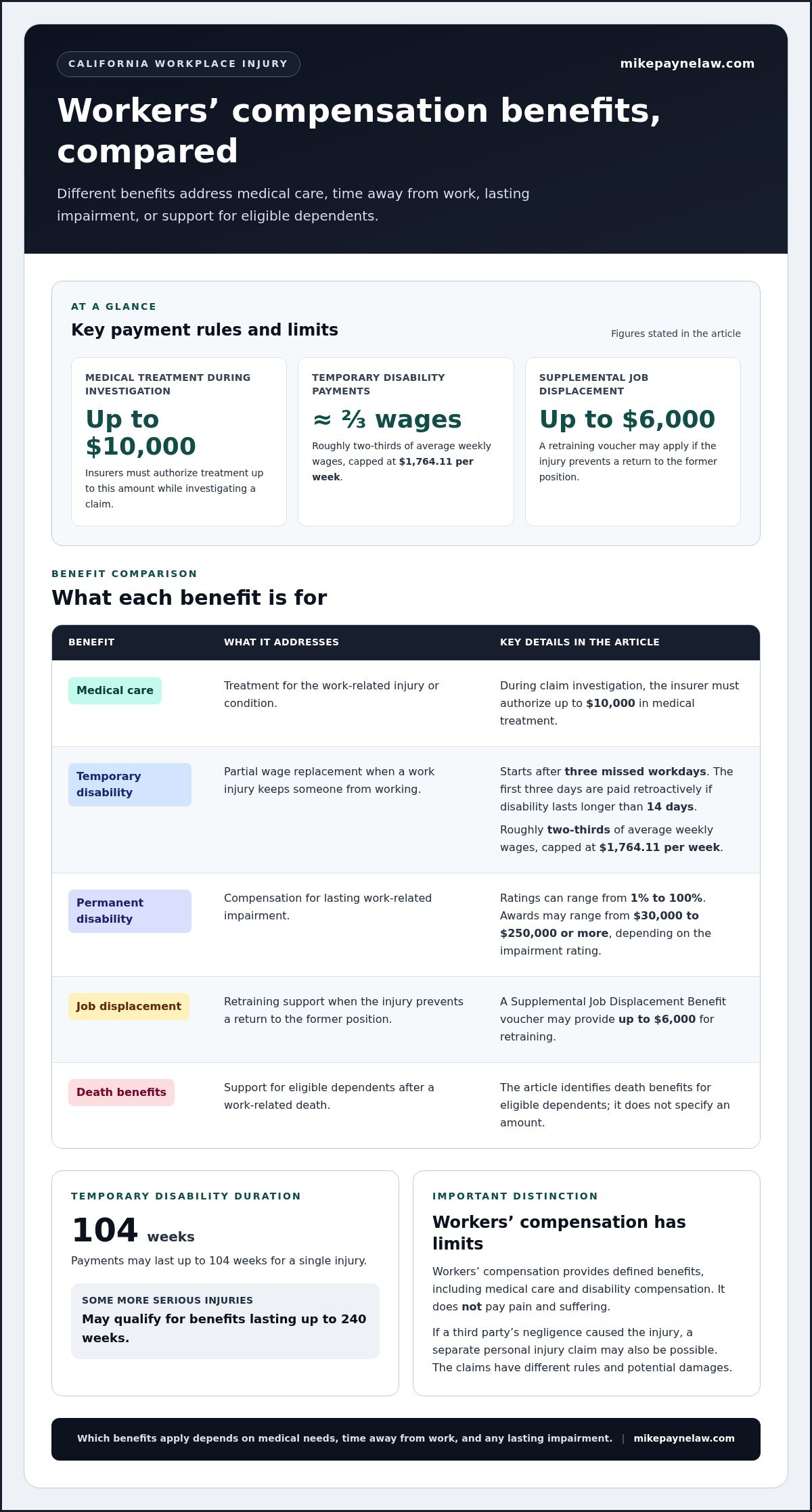
Benefits may include authorized medical care, temporary disability payments, permanent disability compensation, supplemental job displacement benefits, and death benefits for eligible dependents. Each addresses a different need: medical care treats the injury, while disability benefits relate to work capacity. Review medical reports and work restrictions carefully, since they help show how the injury affects your job and recovery.
Medical and Wage Benefits
During claim investigation, California workers’ compensation insurers must authorize up to $10,000 in medical treatment. Wage replacement starts after a worker misses three workdays. According to the California Department of Industrial Relations, Division of Workers’ Compensation, the first three days are paid retroactively if disability lasts longer than 14 days.
Temporary disability payments are roughly two-thirds of average weekly wages, capped at $1,764.11 per week. For example, compare payment records with recent wage statements and confirm that reported earnings reflect the worker’s pay before the injury. These payments may last up to 104 weeks for a single injury. Some more serious injuries may qualify for benefits lasting up to 240 weeks.
Permanent disability compensation addresses lasting work-related impairment. Ratings can range from 1% to 100%, and awards may range from $30,000 to $250,000 or more, depending on the impairment rating. Ask how the medical findings, work limits, and rating affect the calculation. If the injury prevents a return to the former position, a Supplemental Job Displacement Benefit voucher may provide up to $6,000 for retraining.
Workers’ compensation does not pay pain and suffering. It provides defined benefits, including medical care and disability compensation. If a third party’s negligence caused the workplace injury, a separate personal injury claim may be another avenue for compensation. Keep the claims distinct: their rules and potential damages differ, and resolving one can affect how the claims are handled together.
Insurers may dispute treatment, wage calculations, or disability ratings. A local attorney can review medical records, wage documentation, and insurer decisions, then identify what needs a response. The Law Offices of Michael D. Payne represents injured workers and accident victims in Southern California. A consultation can help you understand the issues in your work injury claim.
Employer injury-notification requirements
Report a work injury promptly, even if symptoms seem manageable during the shift. According to the California Department of Industrial Relations, Division of Workers’ Compensation, an employee should report a workplace injury to the employer within 30 days. Earlier notice gives the employer a clearer record of the incident and lets you request medical care without avoidable delay.
Tell your supervisor directly, then preserve a written record. Include the date, location, task, symptoms, and how the incident caused the injury. For example, a worker who develops back pain while lifting can describe the task and when symptoms began. If the pain worsens later, update the employer and medical provider.
Use the employer’s injury-reporting process and request the workers’ compensation claim paperwork. Describe what happened accurately, without guessing about details you can’t recall. Keep copies of forms, messages, and responses. If you report the injury verbally, make a dated note of the conversation and who heard it.
Some injuries develop over time rather than in one clear incident. Repeated job duties can cause cumulative trauma, even without a single dramatic accident. Report your symptoms and the work activities you believe caused them. A timeline can help connect recurring pain to specific tasks, such as repeated bending, typing, or lifting.
Preserve supporting evidence while details are fresh. Write down witness names, save relevant work messages, and photograph the hazard or equipment if it is safe. Keep medical records and appointment notes together. If a machine malfunctioned, record its location and condition, but don’t put yourself at risk to gather evidence.
If you’re concerned about retaliation, document what happens. If your employer changes your schedule, duties, or treatment after you report an injury, record what changed and when. Save related messages and note anyone who witnessed the change. These details can help explain the situation during a legal consultation, but one workplace action alone does not prove why it occurred.
Make sure your report accurately describes the incident and symptoms. Read forms before signing, correct factual errors, and keep a copy. If symptoms prevent you from doing your usual duties, tell the medical provider what tasks you perform and which movements make the injury worse.
For workplace injury claims in Fontana, prompt reporting, consistent medical records, and preserved communications can help clarify what happened. If your employer disputes the report or delays paperwork, organize the timeline and keep copies of each request and response. These records give an attorney concrete information to assess the claim and explain possible next steps.
Can you choose your own doctor for workers’ comp?
California workers’ compensation rules govern medical provider choice, treatment disputes, and disability payments after a job injury. Keep medical records, work restrictions, and employer communications together so the claim reflects how the injury affects your ability to work.
Your choice of doctor depends partly on what happened before the injury. A worker may choose a doctor after 30 days pass on a workers’ compensation claim, or immediately if they named a personal physician before being injured. That predesignation must be in writing. Keep a copy with your claim documents, and provide it when selecting the treating physician.
If you didn’t predesignate a physician, the claim’s timing matters. Track when the claim began and when the 30-day period passes. Keep appointment details and medical reports showing the symptoms, diagnosis, recommended treatment, and work restrictions. For example, a report limiting repetitive lifting can help explain why a worker cannot perform usual warehouse duties.
Treatment disputes need a clear paper trail. If an insurer’s utilization review denies a treatment request, a California worker has 30 days to challenge the denial through Independent Medical Review. Keep the denial notice, treatment request, and supporting medical records together. Those documents help show what care the treating provider recommended and why the disputed treatment relates to the work injury.
Disability-payment disputes also call for organized evidence. Compare wage statements with payment records, and retain medical notes explaining whether restrictions prevent you from doing your regular duties. If a provider limits you to modified tasks, document the restriction and the duties your employer offers. This helps show how the injury affects your ability to earn wages.
Medical leave and workers’ compensation address different parts of a work injury. Workers’ compensation concerns medical care and disability benefits; workplace leave concerns absence and scheduling. Tell your employer when treatment appointments or medical restrictions affect attendance, and keep copies of related notices. A calendar of appointments and missed shifts can help clarify the timeline.
After an accident, follow the treatment plan and report changes in symptoms at appointments. Ask the medical provider to document specific limits, such as difficulty standing, lifting, or using equipment. A personal injury claim involving a third party may require separate evidence about fault, while workers’ compensation records focus on the work injury and benefits.
If a medical denial or payment dispute threatens treatment or income, organize the notices, medical records, and wage documents before responding. A focused review can identify whether the issue concerns provider choice, treatment authorization, or disability evidence. Each issue calls for a different record, and a complete timeline helps keep the facts clear.
Workplace injury representation in Fontana
Fontana’s freight and industrial work brings varied job hazards, including lifting, equipment contact, falls, and transportation incidents. A workplace claim can involve one accident or symptoms that build through repeated duties. A clear timeline, medical records, and evidence about the job tasks can help connect the injury to work.
Not every claim begins with a dramatic event. Repeated lifting, bending, or other duties can cause cumulative trauma, even when no single accident explains the pain. Record when symptoms started, which tasks worsen them, and how the condition affects your work. Medical notes that describe these details can help connect the condition to your job duties.
Workers’ compensation and a third-party personal injury claim address different questions. Workers’ compensation uses a no-fault system; a personal injury claim is based on fault. If a contractor, equipment manufacturer, or another outside party’s negligence or misconduct caused the injury, you may have a claim against that party. Identify who controlled the hazard and preserve records showing what happened.
For example, if another driver causes a collision while you’re making a delivery, the work injury and the driver’s conduct raise separate claim issues. A serious injury may involve medical evidence, wage records, insurance details, witness accounts, and accident documentation. Organize these records by date so each claim has a clear factual basis.
Local context matters. Fontana sits along I-10 and I-15, major freight corridors, and workplace incidents can involve vehicles, loading areas, or industrial equipment. The setting alone doesn’t establish fault. Document the location, the task underway, equipment involved, and names of witnesses. Photos and preserved messages can help clarify conditions surrounding the incident.
Representation can help when an insurer disputes whether an injury is work-related, challenges treatment, or questions wage loss. A focused review should distinguish the workers’ compensation issue from any separate negligence claim. It can also identify missing records, such as a supervisor report, medical restrictions, or witness contact details. These steps help protect your rights and keep the claims from being treated as interchangeable.
Before discussing a settlement, organize the claim documents and understand which losses each claim addresses. Workers’ compensation does not provide pain-and-suffering compensation, while a third-party personal injury claim follows fault-based rules. The evidence and legal basis differ. A Fontana workplace injury lawyer can assess how the job injury, outside conduct, and available records fit together.
If an injury happened at work in Fontana, discuss your workplace injury claim and the evidence that supports it.
Law Offices of Michael D. Payne: Car Accident Representation
Payne can help when a work-related crash also raises questions about a separate car accident claim. Workers’ compensation addresses job-related benefits, while a claim against an at-fault driver may involve different evidence and legal issues. Organizing both timelines, medical records, and insurance communications helps clarify how each claim relates to the injury.
The firm also represents people in slip and fall, motorcycle accident, and bicycle accident cases. These services may be relevant when a workplace injury involves a fall or a crash involving another party. The important step is identifying how the incident happened and who may be responsible, rather than treating every workplace injury as the same kind of claim.
For a conversation about your circumstances, contact Law Offices of Michael D. Payne.
Take the Next Step With a Clear Plan
Before speaking with a lawyer, write down what you need answered. Note what part of the incident is disputed, how the injury affects your work, and whether another person or company may have contributed. A Fontana workplace injury lawyer can use these questions to focus the conversation on the issues that matter to you.
Some work-related incidents also involve a separate accident claim. Payne handles car accident, slip and fall, and motorcycle accident representation. If your injury involves one of these circumstances, explaining what happened can help clarify which legal issues need attention. A conversation can also help you understand what information to organize next, since workplace injuries do not all follow the same path.
Take the next step at your pace. Contact Law Offices of Michael D. Payne to discuss your situation and move forward with a clearer plan.
Frequently Asked Questions
How Long Do You Have to File a Personal Injury Claim in California?
In California, a personal injury claim generally must be filed within two years of the injury date. That deadline differs from the workers’ compensation timeline, so identify which type of claim applies before planning next steps. Preserve records that help establish when and how the injury happened, such as medical documents, photographs, and messages. A work injury involving another party may require careful review of both legal paths.
How do I find a workers’ compensation lawyer near me in Fontana?
Look for a lawyer who handles workplace injury claims and can explain how workers’ compensation differs from a possible third-party claim. A Fontana workplace injury lawyer should be able to discuss the medical records, work restrictions, and insurer communications relevant to your situation. Payne handles workplace injury representation in Fontana and nearby communities, including West Covina, Pomona, Ontario, Covina, Chino, Fontana, San Bernardino, Baldwin Park, and Azusa.
How long can you stay on workers’ comp in California?
Workers’ compensation benefits for a single injury may last up to 104 weeks in California, while benefits for some more serious injuries may extend up to 240 weeks. The applicable period depends on the benefit and injury circumstances. Keep a record of payment dates, medical appointments, and any change in work restrictions. That timeline can help you spot a gap between a medical update and a payment decision.
Can I Sue My Employer for Pain and Suffering in California?
Workers’ compensation does not provide compensation for pain and suffering. A separate personal injury claim may be available if a third party’s negligence or misconduct caused the workplace injury, but that does not automatically mean you have a claim against your employer. For example, an outside driver’s conduct in a work-related collision may raise a separate question of fault. The responsible party and evidence matter when assessing that possibility.
Can I have a claim if my pain developed gradually?
Yes. Repeated job duties can potentially support a cumulative trauma claim, even without one dramatic accident. Write down when symptoms began, which tasks aggravate them, and how they affect your work. For occupational disease or cumulative trauma, the one-year filing period begins when you know or should know the condition is work-related. Medical records describing symptoms over time can help establish that connection.
How Long Do I Have to File a Workers’ Compensation Claim?
An injured worker in California generally has up to one year from the injury date to file a workers’ compensation claim, according to the California Department of Industrial Relations, Division of Workers’ Compensation. For a gradual condition, the relevant date can depend on when you knew or should have known it was work-related. Keep a dated record of symptoms, job duties, and medical visits to clarify the timeline.
What should I do after a workplace injury in Fontana, California?
Seek medical care, tell your supervisor, and write down the task and conditions involved while details are fresh. If equipment or a hazard contributed, note its location and preserve relevant photographs or messages if it is safe. Save medical instructions and copies of workplace paperwork. For example, a worker hurt near a loading area can record the shift, work assignment, and coworkers who saw the incident.
How long do I have to report a workplace injury and file a workers’ compensation claim in California?
According to the California Department of Industrial Relations, Division of Workers’ Compensation, employees should report a workplace injury within 30 days. An injured worker has up to one year from the injury date to file a workers’ compensation claim. These are separate steps, so keep proof of the report and claim paperwork. A dated email to a supervisor can help document when notice was given.