

A strong consultation starts with a clear account of what happened and the records that show how it affected you. To understand how to prepare for your personal injury consultation, bring identification and contact details, any accident report, photos or videos, medical records, insurance correspondence, and documents showing missed work. Copies are useful, and you can schedule before gathering every record.
It’s natural to feel unsure about what to say or what the meeting will involve. Preparing for your personal injury consultation also means being ready to explain what you remember and ask about next steps. You’ll learn what to expect, which questions an attorney may ask, and how to organize notes so you can take part with greater confidence.
Key Takeaways
- Arrange records by type and timeline, and include witness names and contact details if you have them.
- Prepare a brief account of the incident and its effects so you can explain the key facts clearly during the meeting.
- Use the consultation to ask how the attorney evaluates liability, injuries, and the next steps in a potential claim.
- Under California’s pure comparative fault system, an injured person can still recover compensation even if they bear the majority of the blame for the accident.
What Documents Should You Bring to Your Consultation?
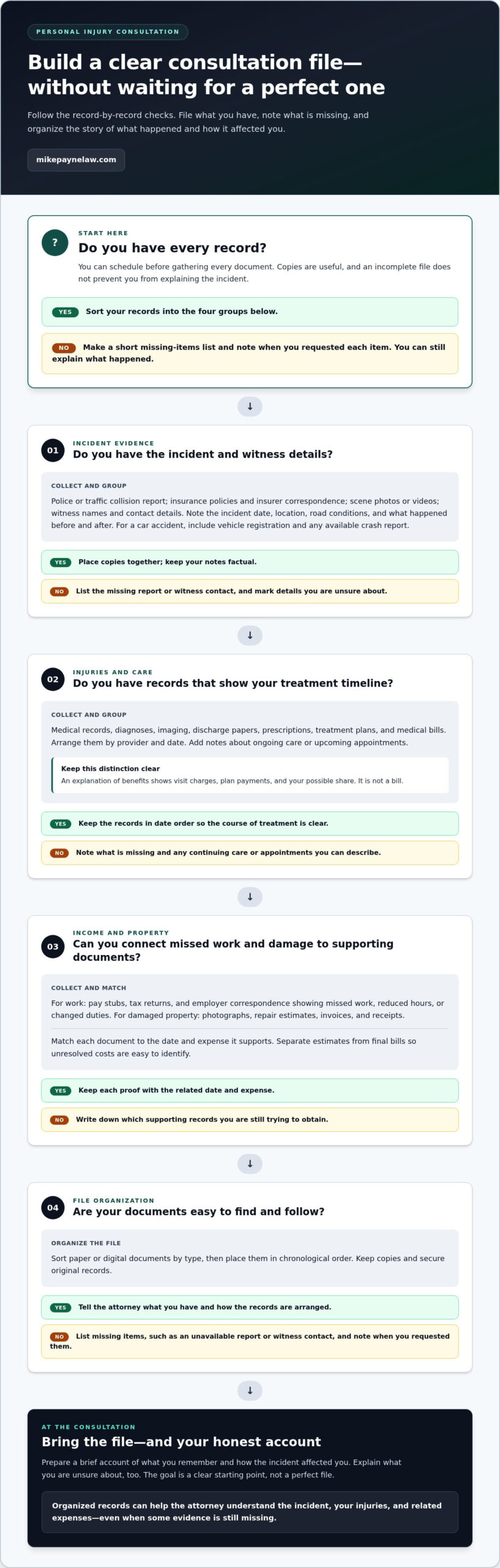
Build a file that helps the attorney understand the incident, your injuries, and related expenses. Copies are useful, and you can schedule before you have every record.
-
Gather Incident Records and Witness Documents
-
Compile Medical Records, Bills, and Treatment Documentation
Request copies of medical records and gather diagnoses, imaging, discharge papers, prescriptions, treatment plans, and medical bills. Arrange them by provider and date to show the treatment timeline and extent of your injuries. An explanation of benefits shows visit charges, plan payments, and your possible share. It isn’t a bill. Add notes about ongoing care or upcoming appointments.
-
Document Lost Income and Property Damage
Gather pay stubs, tax returns, and employer correspondence showing missed work, reduced hours, or changed duties. For damaged property, collect photographs, repair estimates, invoices, and receipts. Match each document to the date and expense it supports. Separate estimates from final bills so the attorney can see which costs remain unresolved.
-
Organize Documents and Identify Missing Evidence
Sort documents into paper or digital folders by type, then place them in chronological order. Keep copies and secure original records. Make a short list of missing items, such as an unavailable report or witness contact, and note when you requested them. Tell the attorney what you have and what you’re still trying to obtain. Gaps in your file don’t prevent you from explaining the incident.
What to expect during a personal injury consultation
Use the meeting to explain what happened, understand the lawyer’s assessment, and clarify possible next steps.
-
Ask About Claim Deadlines
Give the personal injury lawyer the accident date and location. Filing deadlines vary by state and claim type, so ask which limitations period applies to your situation. Explain whether a government entity or workplace injury may be involved, since those details can affect the applicable deadline. Don’t wait until a deadline is near to seek advice.
-
Clarify Consultation Fees
Ask whether the consultation is free before discussing the case. Whether a meeting carries a charge depends on the case; any price is provided after a quote request, with factors such as scope and complexity affecting it. Confirm what the charge covers and whether any later legal fees are separate. Keep the answer with your consultation notes.
-
Discuss Contingency Fees and Case Expenses
Ask how a contingency fee is calculated and when it becomes payable. Clarify whether the calculation uses a settlement or another recovery, and how case expenses are handled if the claim doesn’t recover compensation. Request the fee terms in writing before agreeing to representation. These details help you understand potential deductions and distinguish attorney fees from case expenses.
-
Review Insurance Communications and Pre-Consultation Signatures
Before speaking with an insurer about your claim, consult a personal injury lawyer. Bring correspondence and explain any calls, statements, or offers, sticking to facts rather than guesses about fault or recovery. Don’t sign a release or settlement document you don’t understand. Ask what it covers and which rights it affects. For a meeting, request a personal injury consultation.
Law Offices of Michael D. Payne: Car Accident Representation
The Law Offices of Michael D. Payne provides Car Accident Representation for people injured in a collision who need help understanding their legal options. The firm also represents people in Slip and Fall, Motorcycle, Bicycle, Truck, and Pedestrian accidents.
Consider reaching out when injuries, medical care, missed work, or insurer communications leave you unsure about next steps. Organized records can help explain what happened and how the incident affected you.
Contact Law Offices of Michael D. Payne to discuss your situation.
Take the Next Step With Confidence
Your next move doesn’t need to resolve every question at once. Use the consultation to understand what deserves attention, what information may still be needed, and how to make informed decisions about your recovery. Preparing for your personal injury consultation can help you take part with purpose, but you don’t need a perfect file or polished account to begin. Be candid about what you remember, what you’re unsure of, and how the injury has affected your life. Clear answers start with an honest discussion.
If you’re ready to talk through your situation, contact Law Offices of Michael D. Payne. Take this one step at a time. You deserve to understand your options and move forward with greater clarity.
Frequently Asked Questions
What Happens After Your Consultation?
If you decide to move forward, the attorney may investigate responsibility, preserve evidence, request additional records, and communicate with insurers. Next steps depend on your claim and the information available. Before leaving, ask who will update you, how to share new developments, and whether you should preserve anything specific, such as damaged property or messages related to the incident.
Can a family member attend with me?
Yes, you can ask to bring a family member for support, help recalling details, or note-taking. Tell the office beforehand and agree on what you’re comfortable discussing in front of them. For example, your relative might help explain changes to your daily routine, while you answer questions about your injuries and treatment. You can also ask to speak privately about sensitive details.
Should I delay the consultation until I have every record?
No. You can schedule while you’re still gathering records. At the meeting, identify what’s missing, such as a pending medical file or witness contact, and explain when you requested it. This lets the attorney discuss the information available and identify useful follow-up steps. Bring a short list of outstanding items so nothing gets lost in the conversation.
What Questions Should You Ask a Personal Injury Lawyer?
Ask whether the lawyer has handled claims like yours, how they would investigate liability and establish your losses, and who will communicate with you. You can also ask about the proposed strategy, challenges that may affect the claim, and factors that could influence the timeline. Clear answers help you understand the lawyer’s approach and decide whether it fits your needs.