

What if an insurance adjuster’s first move after your bicycle crash is to blame you? You may be facing serious injuries, time away from work, and a damaged bike or specialized gear, while the insurer looks for ways to limit its payout. Asking whether you need a bicycle accident attorney is reasonable. You deserve a clear answer and an advocate who understands how these claims are challenged.
This article explains how a trial-ready attorney can investigate the crash, preserve evidence, and respond when an insurer tries to shift fault. California’s pure comparative negligence rule means an injured cyclist may still recover compensation if they share some blame, though the recovery can be reduced. You’ll learn what damages may include, why acting quickly matters, and what to look for in a lawyer familiar with California cycling claims. Michael D. Payne brings more than 25 years of personal injury experience and a former insurance defense attorney’s insight to his advocacy for Southern California cyclists. The firm handles bicycle accident representation on a contingency fee basis, meaning no upfront cost and no fee if there’s no recovery. A free consultation can help you understand your options.
Key Takeaways
- Learn how traffic conditions in West Covina, Ontario, and the Inland Empire can affect cyclist safety and the evidence needed to explain a crash.
- Understand California cyclists’ rights on the road, including the three-foot passing requirement and how local rules may differ.
- Recognize common insurance tactics, such as recorded statement requests and early settlement offers, before they weaken your claim.
- A bicycle accident attorney can investigate fault, preserve evidence, and challenge attempts to unfairly blame the cyclist.
- Explore how Michael Payne’s insurance defense background and trial-ready approach can support your claim; the firm works on a contingency fee basis, so there’s no upfront cost.
Navigating Bicycle Accident Risks in Southern California’s Inland Empire
In West Covina, Ontario, Pomona, and San Bernardino, cyclists share busy roads with commuters, delivery vehicles, and turning traffic. A person on a bicycle has little protection when a driver misjudges a pass, turns across a cyclist’s path, or fails to see them. These collisions may be described as accidents, but they often involve preventable conduct or hazardous road conditions. Identifying what happened takes evidence, not assumptions.
High-Risk Corridors in West Covina, Pomona, and San Bernardino
Risk can rise where fast-moving traffic meets frequent turns, busy driveways, or intersections with limited visibility. Rather than treating an entire city as dangerous, an investigation should focus on the specific crash location: lane layout, sightlines, pavement defects, signs, signals, and whether a bike lane was present or obstructed. Heavy commuter traffic in the San Gabriel Valley can leave cyclists with less room and drivers with less time to react.
Those details can matter to liability. Photos, witness accounts, and available video may help show whether a driver’s actions, a roadway hazard, or both contributed to the collision. California’s rules for cyclists and drivers are summarized in this overview of California bicycle law, but the facts at the crash site still matter.
Why Bicycle Injuries Require Specialized Legal Attention
A fall or impact can cause painful road rash, fractures, or a traumatic brain injury, sometimes with symptoms that emerge later. Recovery may require follow-up care, rehabilitation, time away from work, and specialized medical equipment. A claim should account for more than the first emergency-room visit. It may need to reflect continuing treatment needs, lost income, damage to the bicycle and gear, and the effect of lasting pain or limitations.
A bicycle case also calls for close attention to cycling-specific details, such as the rider’s position, visibility, equipment, and the road design. A lawyer who overlooks those details may miss evidence that counters an insurer’s version of events.
Michael D. Payne serves as a local advocate for West Covina and the surrounding Inland Empire. With more than 25 years of personal injury experience and a former insurance defense attorney’s insight, he understands how adjusters assess claims and where their arguments may be challenged. A bicycle accident attorney can investigate the crash and stand between an injured cyclist and pressure to accept an unfair account. The firm handles bicycle accident representation on a contingency fee basis, meaning no upfront cost and no fee if there’s no recovery. If a collision involved an Uber vehicle, you can also read about the firm’s Uber accident representation.
California Bicycle Laws: Understanding Your Rights on the Road
California law doesn’t treat a bicycle as an outsider on the road. Cyclists generally have the same rights and responsibilities as drivers, subject to laws that specifically apply to bicycles. That matters when an insurer or driver argues you “didn’t belong” in a traffic lane. The NHTSA bicycle safety information offers additional guidance on sharing the road, but the California Vehicle Code helps establish the rules that apply to a specific collision.
CVC 21200: The Foundation of Your Rights
CVC 21200 is the cornerstone of California cycling litigation because it generally grants bicyclists the rights and duties of drivers while they ride on a roadway. A cyclist’s lawful presence in a traffic lane, therefore, does not by itself establish fault. Drivers and cyclists must follow applicable traffic rules, and the facts of the crash determine whether someone failed to do so.
The “Three Feet for Safety” Act also sets a clear standard for overtaking: drivers must change lanes to pass a cyclist when a lane is available; if that isn’t possible, they must leave at least three feet of clearance. At intersections, cyclists must obey applicable signals and right-of-way rules. A driver turning across a cyclist’s path may have failed to yield, but the sequence of movements and available evidence matter.
Common Legal Misconceptions Used Against Cyclists
Cyclists aren’t always required to ride at the far right edge. California generally requires riding as close to the right as practicable, but exceptions include passing, preparing for a left turn, avoiding hazards, and situations where a lane is too narrow to share safely side by side. Bike lanes don’t erase a rider’s right to make lawful movements or a driver’s obligation to pass safely.
Helmet rules are also narrower than some insurers suggest. California requires helmets for riders under 18 and for riders of Class 3 e-bikes, regardless of age. An adult riding a conventional bicycle isn’t covered by that statewide helmet requirement. Whether a helmet was worn doesn’t automatically decide who caused a crash; the applicable facts and law still matter.
California follows pure comparative negligence. If a cyclist shares responsibility, they may still recover damages, but the award can be reduced by their share of fault. An adjuster may argue the rider was hard to see or positioned improperly. A bicycle accident attorney can examine scene photos, lighting, vehicle damage, witness accounts, and available video to test that claim rather than accept it at face value.
If an insurer is disputing how California’s rules apply to your crash, you can contact Michael D. Payne’s office to discuss your options.
How Insurance Companies Fight Bicycle Claims (and How We Counter Them)
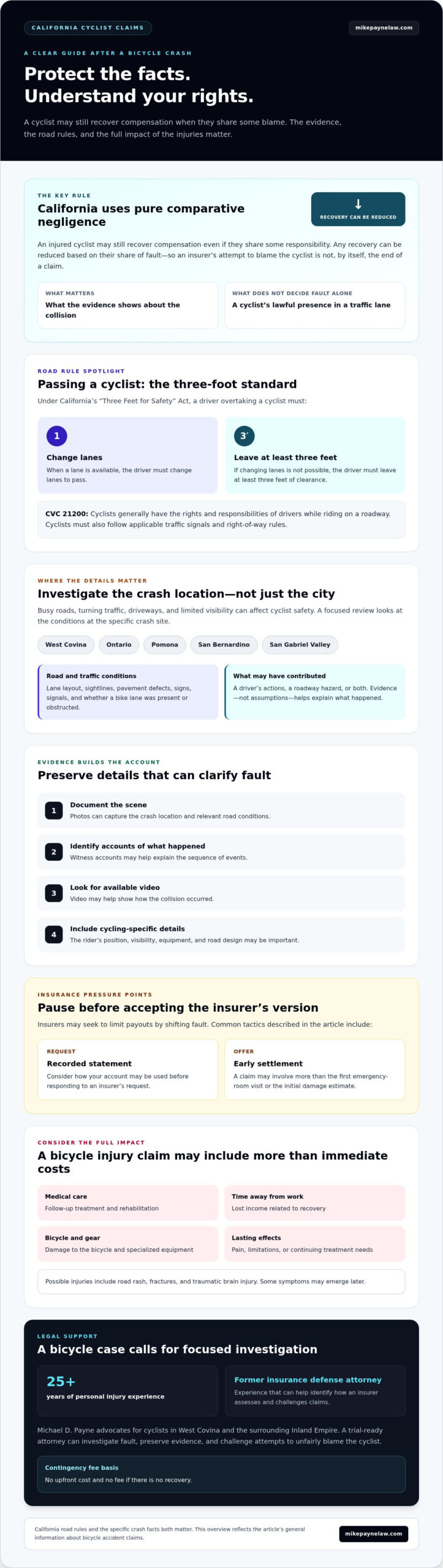
After a bicycle crash, an insurance adjuster may focus on whether the cyclist could have avoided the collision rather than on the driver’s conduct. That bias can show up as claims that the rider was hard to see, rode unpredictably, or caused the crash by being in the roadway. California’s comparative negligence rules make fault percentages important, so even an unsupported allegation can put pressure on a cyclist to accept less.
Adjusters may also request a recorded statement or make an early settlement offer before the full extent of an injury is clear. A quick offer can sound reassuring when medical bills and missed work are piling up, but accepting it may close the claim before future treatment needs are understood. A police report is useful evidence, not the final decision on civil liability. It may contain initial observations or statements that need to be checked against photographs, witnesses, medical records, and other available evidence.
The Advantage of Former Insurance Defense Experience
Michael D. Payne spent part of his career as an insurance defense attorney. That experience helps him understand how insurers evaluate claims, what documentation they may question, and how they may look for inconsistencies to dispute liability or damages. Knowing the defense playbook allows him to negotiate more aggressively and prepare evidence to challenge an unfair account of the crash.
Potential red flags can include gaps in treatment, incomplete records, uncertainty about how the collision happened, or statements that appear to minimize pain. These details don’t automatically defeat a claim, but an adjuster may use them to argue that an injury is unrelated, less serious, or partly the cyclist’s fault. Careful documentation and a consistent account can help answer those arguments.
Why You Should Never Give a Recorded Statement Alone
Questions can sound routine while inviting a response that leaves out important context. A cyclist who says, “I’m fine,” while still shaken or before seeing a specialist may later discover an injury that wasn’t obvious at the scene. Don’t guess about speed, distance, or what another person saw. You can ask who is requesting the statement, what it’s for, and whether it’s required under your own policy before responding.
A bicycle accident attorney can help manage insurer communications and keep the focus on the evidence. Michael Payne’s firm represents injured cyclists in West Covina and the surrounding Inland Empire, with no upfront cost under its contingency fee arrangement and no fee if there’s no recovery. A consultation can help you understand what to do before responding to an adjuster.
Steps to Protect Your Case After a Bicycle Crash
Your health comes first. Call 911 if anyone is seriously injured, move out of traffic if you can do so safely, and get medical care promptly. Then preserve details while they’re fresh. If you’re able, photograph the scene, vehicles, road conditions, traffic signs, your bicycle, helmet, and clothing. Collect witness names and contact information, and make sure the crash is reported to law enforcement.
Get checked even if your pain seems minor. Some injuries aren’t obvious right away, and a medical record can document symptoms, treatment, and how the crash affected you. Follow your provider’s care instructions and keep records of appointments, prescriptions, bills, and time missed from work. Don’t repair or discard your bicycle, helmet, or damaged clothing before documenting them; they may help show how the impact occurred.
Collecting Digital Evidence for Modern Cycling Claims
Save ride files from Strava, Garmin, or Wahoo devices, along with original helmet-camera footage. GPS data may help establish a route, timing, or position, but it doesn’t prove speed or fault by itself. Preserve the original files and note which device recorded them. Ask nearby businesses or witnesses about possible camera footage quickly, since recordings may be overwritten. A bicycle accident attorney can assess how digital evidence fits with other proof.
Deadlines, Medical Bills, and Insurance Paperwork
In California, a personal injury lawsuit generally must be filed within two years of the crash; a property-damage claim generally has a three-year deadline. If a government entity may be responsible, a formal claim generally must be filed within six months. Shorter government-claim deadlines make prompt investigation especially important. California also requires an SR-1 report to the DMV within 10 days when a crash causes injury or more than $1,000 in property damage. Confirm the requirements that apply to your situation.
While a case is pending, bills may involve health insurance, other applicable coverage, or medical liens, depending on the circumstances. Keep every bill and insurance notice, and don’t assume an offer will cover future care. A lawyer can help you understand the paperwork and explain what documents are needed. Michael D. Payne’s firm represents bicycle accident victims on a contingency fee basis, meaning no upfront cost and no fee if there’s no recovery. You can review the firm’s practice areas or contact the office to discuss your case.
Why Michael Payne is the Advocate You Need
After a serious cycling crash, you need more than someone to pass paperwork between you and an insurer. You need an advocate who understands how claims are challenged, listens to what recovery is costing you, and is prepared to build a case around the evidence. Michael D. Payne brings more than 25 years of personal injury experience to his work for Southern California accident victims, including cyclists in West Covina and the surrounding Inland Empire.
His former experience as an insurance defense attorney provides an insider’s perspective on how adjusters evaluate liability, injuries, and documentation. That insight can help anticipate arguments and prepare a response grounded in the facts. As a bicycle accident attorney, Payne works to serve as a shield for local clients facing the demands of an insurance claim while they focus on healing.
A Trial-Ready Approach to Representation
Preparing a case for the possibility of trial means taking evidence seriously from the start: investigating the collision, organizing medical records, and assessing how the injuries affect a client’s life. This preparation can strengthen settlement negotiations, but no lawyer can promise a particular offer or result. The goal is to pursue a fair resolution and be ready to take the next step if negotiations fall short.
Payne’s work is rooted in personal advocacy, not just a claim file. A cyclist may be dealing with pain, time away from work, and uncertainty about what comes next. The firm’s boutique structure supports a more personal approach, with attention to the client’s circumstances and well-being throughout the case.
Starting a Claim Without Upfront Legal Fees
During a free consultation, you can explain how the crash happened, describe your injuries, and share available records or insurance communications. The discussion can help identify questions to investigate and outline possible next steps. You don’t need to have every document in hand to start that conversation.
The firm handles injury cases on a contingency fee basis: there’s no upfront cost, and no fee is owed if there’s no recovery. That arrangement can make legal representation more accessible while you deal with the consequences of a crash. For a free consultation about bicycle accident representation, secure your future with Michael D. Payne.
Take the Next Step Toward Recovery
A bicycle crash can leave you facing painful injuries, lost income, damaged gear, and an insurer questioning your account. Preserve evidence, follow your medical care plan, and remember that a police report or adjuster’s version doesn’t settle every issue of fault. A bicycle accident attorney can help investigate the collision and push back when an insurer tries to minimize your losses.
Michael D. Payne brings more than 25 years of legal experience and the perspective of a former insurance defense attorney to his advocacy for Southern California cyclists. The firm prepares cases to pursue a fair outcome and handles representation on a contingency fee basis: there’s no upfront cost and no fee unless there’s a recovery.
You don’t have to face the claims process alone. Fight for the compensation you deserve by contacting Michael D. Payne to discuss your situation. Take the next step with an advocate ready to protect your interests while you focus on recovery.
Frequently Asked Questions
How much is my bicycle accident claim worth?
There’s no reliable value without reviewing your injuries, losses, evidence, and available insurance coverage. A claim may include documented medical expenses, lost income, bicycle and gear damage, and compensation for pain and other effects of the injury. Future treatment needs can also matter. Keep bills, repair estimates, and records of missed work. A bicycle accident attorney can assess the evidence and explain factors that may affect a potential recovery.
What if the driver who hit me doesn’t have insurance?
You may still have options, but the available paths depend on the facts and insurance policies involved. Ask your insurer whether your own auto policy or a household policy may provide uninsured motorist coverage for the crash. Health insurance may help address medical bills, subject to its terms. A driver may also be personally responsible, though collecting compensation can be difficult. Preserve the crash details and have the available coverage reviewed before deciding what to do.
Can I still recover damages if I wasn’t wearing a helmet?
Possibly. Not wearing a helmet doesn’t automatically prevent an adult cyclist from recovering damages in California. State helmet requirements apply to riders under 18 and riders of Class 3 e-bikes, regardless of age. The circumstances still matter, including whether a helmet rule applied and whether the absence of a helmet relates to the injuries claimed. Don’t assume an insurer’s argument decides the issue. Get medical care and preserve evidence about the crash and your injuries.
How long do I have to file a bicycle accident lawsuit in California?
Generally, you have two years from the crash date to file a personal injury lawsuit in California. Property damage claims generally have a three-year deadline. If a government entity may be responsible, a formal claim generally must be filed within six months, a much shorter window. Deadlines can depend on the circumstances, so don’t wait to get legal guidance. These time limits apply whether the crash happened in West Covina, Pomona, Ontario, or elsewhere in California.
What if I was partially at fault for the accident?
You may still be able to recover damages. California follows pure comparative negligence, which means a cyclist can seek compensation even if partly responsible, but the recovery is reduced by the cyclist’s share of fault. For example, if an insurer alleges you contributed to the crash, that claim should be tested against evidence such as witness accounts, scene photos, and available video. Don’t accept an adjuster’s fault assessment as the final word.
Should I get my bike repaired before talking to a lawyer?
Document the damage before repairs if you can do so safely. Take clear photos of the bicycle, helmet, and clothing, and keep repair estimates, receipts, and replaced parts. The bike may provide useful evidence about the impact, so don’t discard it or authorize repairs before recording its condition. If it must be repaired for safety or practical reasons, keep detailed records and ask the repair shop to preserve damaged components where possible.
Do I have to go to court for a bicycle accident claim?
Not necessarily. Many claims are resolved through negotiations, but whether yours settles depends on issues such as fault, injuries, evidence, and the available coverage. If negotiations don’t produce an acceptable resolution, filing a lawsuit may be considered, and a case could proceed in court. A trial-ready bicycle accident attorney can explain the options and prepare the case while pursuing settlement. No attorney can promise that a claim will settle or that a court appearance can be avoided.
How long does a typical bicycle accident settlement take?
There’s no fixed timeline for a bicycle accident settlement. The process can depend on how long treatment takes, whether the extent of the injuries is clear, how quickly evidence is gathered, and whether the insurer disputes fault or damages. Rushing to settle before understanding your medical needs can leave important losses unaddressed. Law Offices of Michael D. Payne represents cyclists in West Covina, Covina, Chino, Fontana, San Bernardino, Baldwin Park, and Azusa on a contingency fee basis, with no upfront cost and no fee if there’s no recovery.